(seafood.vasep.com.vn) A Story from Cà Mau’s Coast It’s 5 AM in Cà Mau. Minh, a third-generation fisherman, is ready to set sail. But unlike his father and grandfather, his boat no longer runs on an old diesel engine that burns fuel and clouds the sky with smoke. Instead, it’s powered by a hybrid engine that saves 40% fuel—funded by an ESG program from a major seafood exporter.
Onboard, Minh doesn’t use destructive bottom trawls anymore. He’s switched to selective nets—catching only the right species, the right size, leaving space for future generations of fish. Every trip, he logs details into an app: fishing location, species, weight—all traceable under MSC (Marine Stewardship Council) standards.
Back at the dock, his catch sells for 15–20% higher than the market average. Why? Because those shrimp and fish aren’t just fresh—they’re certified sustainable, and highly sought after in markets like the EU, US, and Japan.
This isn’t a vision of the future. This is Vietnam’s seafood industry in 2026. And Minh’s story is being replicated across Vietnam’s coasts—from Quảng Ninh to Kiên Giang, from shrimp farms to processing plants, from packaging to export logistics.
1. Why Sustainability Is No Longer Optional
Global trade has shifted. Importing countries don’t just ask about price and quality anymore—they demand proof of sustainability.
EU:
- EUDR: Products must prove no link to deforestation
- CBAM: Carbon-heavy products face border taxes
- Due Diligence Directive: Full supply chain transparency
US:
- SIMP: Strict monitoring of seafood origins
- Magnuson-Stevens Act: Ban on IUU (illegal, unreported, unregulated) fishing products
- ESG Reporting: Big corporations require ESG compliance from suppliers
Japan:
- Green Purchasing Law: Preference for eco-friendly products
- Plastic Resource Circulation Act: Limits on single-use plastics
- According to Seafood Source (2025):
- 78% of global importers rank sustainability as their top supplier criteria
- 65% of consumers are willing to pay 10–15% more for certified products
- 90% of major retailers (Walmart, Carrefour, AEON) pledge 100% sustainable seafood by 2030
If you’re not sustainable—you’re out of the global supply chain.
2. ESG Standards: The Heart of Transparency
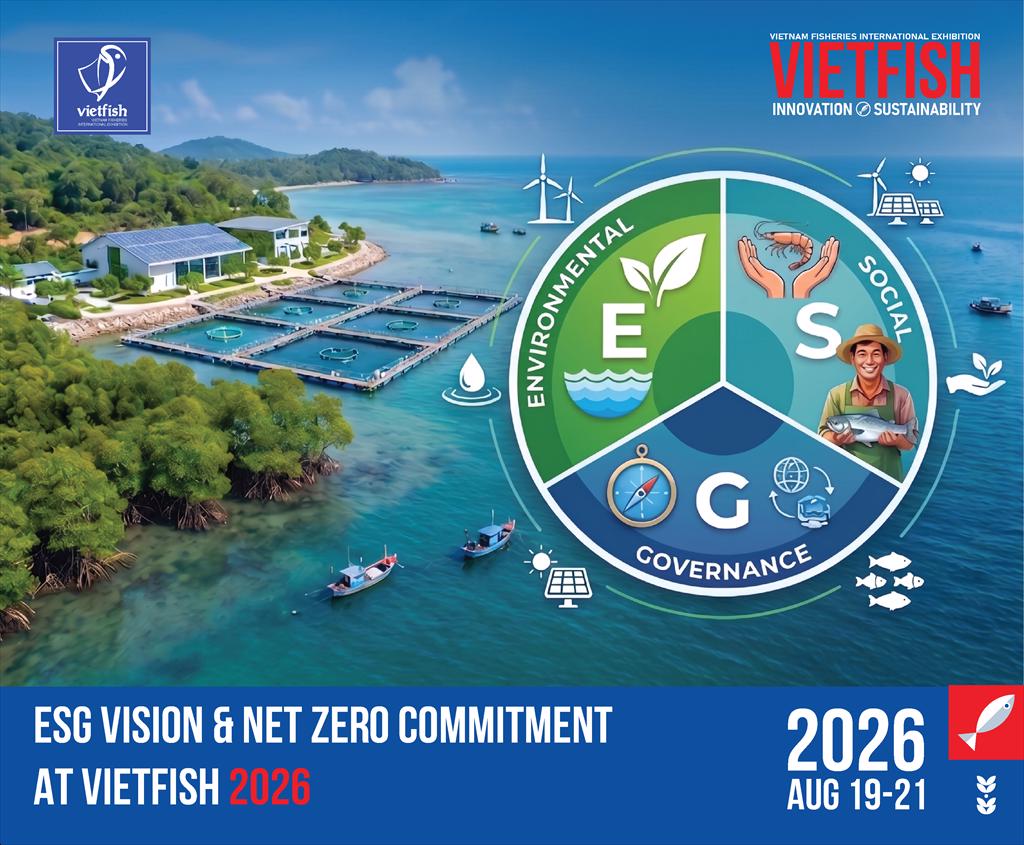
Buyers today don’t just purchase seafood—they buy the story behind it. ESG (Environmental – Social – Governance) is reshaping Vietnam’s seafood industry:
- E – Environmental: Combat IUU fishing, protect biodiversity, cut carbon emissions, manage waste, adopt renewable energy.
- S – Social: Fair labor, safe working conditions, no forced or child labor.
- G – Governance: 100% digital traceability, anti-corruption, financial transparency, full legal compliance.
3. Fuel Efficiency & The Road to Net Zero
Fuel accounts for 30–40% of fishing costs. With volatile oil prices and rising carbon taxes, Net Zero is both a necessity and an opportunity.
Net Zero = Total emissions – (Reductions + Carbon offsets) = 0
Breakthrough solutions include:
- Advanced sonar & radar: pinpoint fish schools, cut wasted fuel.
- Optimized boat design: reduce drag, boost engine efficiency.
- Carbon footprint tracking: measure emissions per kilogram of exported seafood, laying the foundation for Vietnam’s Net Zero pledge.
4. The Green Packaging Revolution
Eight million tons of plastic enter oceans every year. A sustainable product can’t be wrapped in harmful packaging.
Vietnamese processors are leading the shift to Green Packaging:
- Materials: Bioplastics, recycled rPET, water-resistant kraft paper
- Decomposition: Compost-friendly, biodegradable
- Design: Lightweight, minimal, cost-efficient for logistics
- Branding: Eco-conscious messaging that resonates with global consumers
This not only helps partners bypass EU plastic taxes but also elevates brand value in the eyes of eco-aware shoppers.
Conclusion: Strategic Partners for a Sustainable Future
The story of Mr. Minh—a fisherman in Ca Mau—is not an exception. It is the future unfolding across Vietnam's waters. From fuel-efficient vessels and eco-shrimp farms to solar-powered factories and packaging made from shrimp shells—the Vietnamese seafood industry is rewriting its own narrative.
In 2026, Vietnam Seafood delivers a powerful and consistent message to the international community: “Vietnam Seafood – Delicious for Today, Green for Tomorrow.”. If we do not protect the ocean today, there will be no seafood tomorrow.
"We don't just sell shrimp—we sell a story of sustainability. And that story is invaluable." — Mr. Le Van Quang, Chairman of Minh Phu Seafood Corp.
Don't miss the opportunity to shape the future of your supply chain!
We cordially invite importers, investors, and international partners to Vietfish 2026—the ultimate platform to connect with the leaders of change and discover tailor-made solutions for your business. Engage in in-depth ESG panel discussions. Network with pioneering suppliers. Experience the most practical, real-world sustainable development solutions firsthand. Come. Learn and Take Action!
📅 Date: Aug 19–21, 2026
📍 Venue: SECC, Ho Chi Minh City
🌐 Website: www.vietfish.com.vn
Hashtags: #Vietfish2026 #SustainableSeafood #ESGSeafood #NetZeroSeafood