OVERVIEW ON VIETNAM SHRIMP INDUSTRY
I. Production
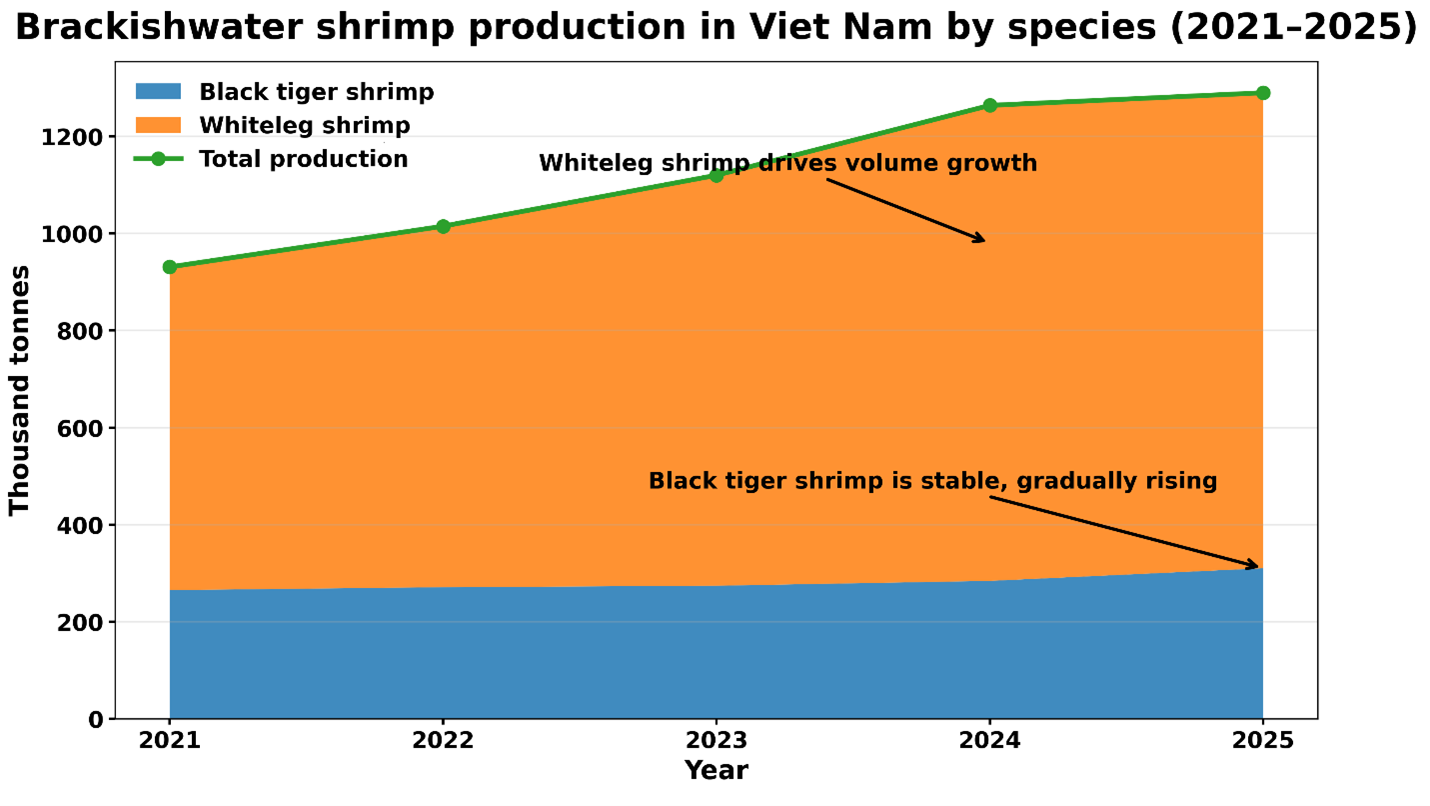
Vietnam has over 700,000 hectares of shrimp farming, with two main species: whiteleg shrimp and black tiger shrimp.
Vietnam is the world’s leading producer of black tiger shrimp, with an annual output of around 300,000 tons. This is the country’s traditional farmed species, while whiteleg shrimp has been cultivated in many provinces since 2008.
The main farming areas are concentrated in the Mekong Delta provinces. 5 provinces with the largest shrimp farming areas are Ca Mau, Bac Lieu, Soc Trang, Ben Tre, and Kien Giang.
II. Processing and Export
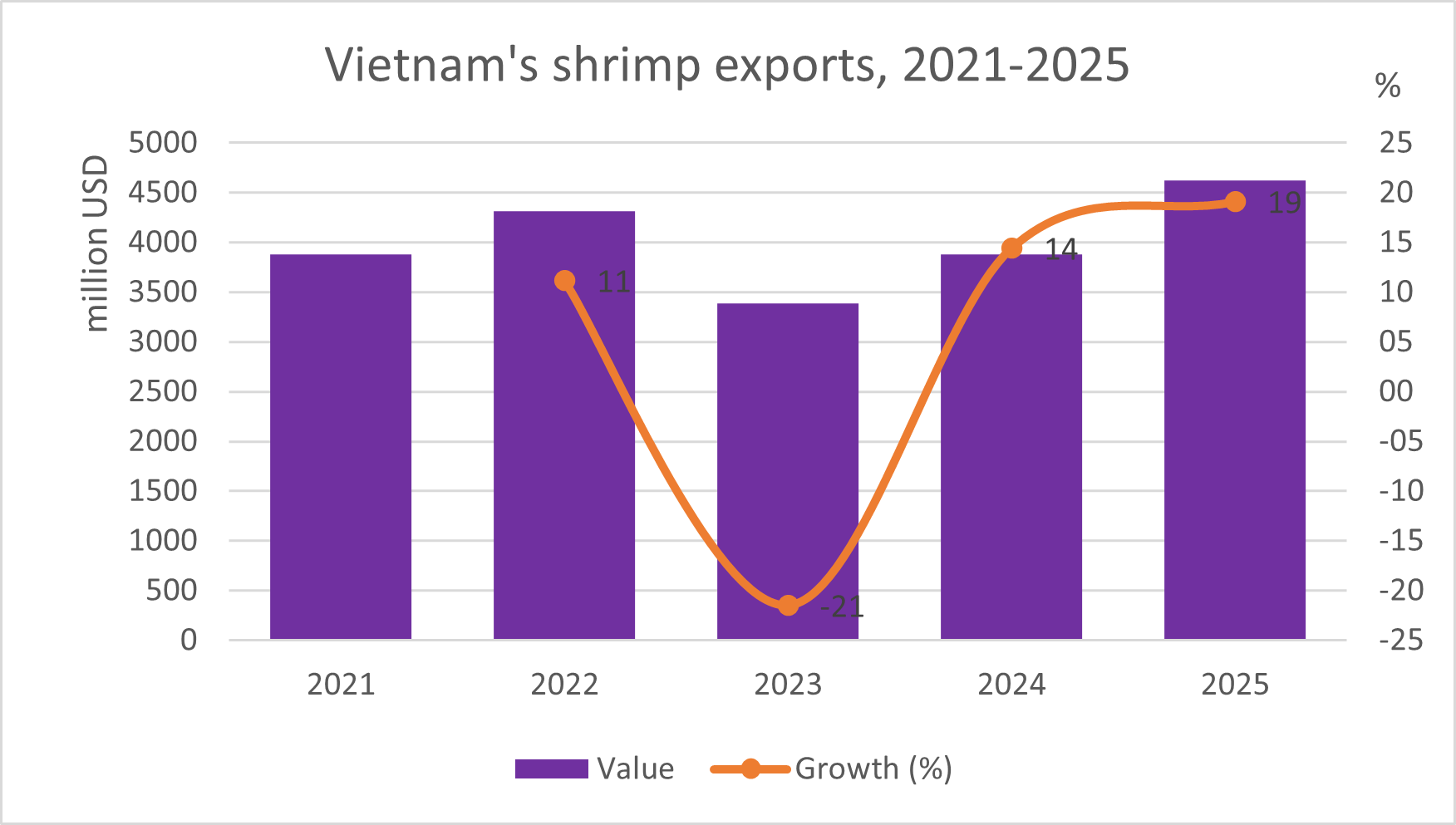
The shrimp industry has played a crucial role in Vietnam’s seafood exports over the past two decades. Each year, shrimp accounts for approximately 40–45% of the total seafood export value, ranging from USD 3.5 to 4.6 billion. Currently, Vietnamese shrimp is exported to more than 100 countries, with the five largest markets being the United States, the European Union, Japan, China, and South Korea. Through continuous efforts, Vietnam has become the world’s third-largest shrimp supplier, after Ecuador and India.
Vietnam has many advantages for developing its shrimp industry, particularly in the Mekong Delta, which accounts for 95% of total shrimp production and is also the hub for shrimp processing plants.
The industry has developed in terms of scale, technical management, and capabilities in quality control, traceability, and environmental impact management across the entire supply chain—from hatcheries and feed mills to farms, processing plants, and exports through modern cold storage systems. Strong evidence of the safety and sustainability of shrimp farming in Vietnam is the growing number of certifications from international organizations for good aquaculture practices, including BAP (Best Aquaculture Practices), GlobalG.A.P., and ASC (Aquaculture Stewardship Council).
In 2025, Vietnam’s shrimp export value reached USD 4.6 billion, up 19% compared to 2024—the highest level ever recorded.