(seafood.vasep.com.vn) In August 2026, Vietnam’s seafood exports reached $1.14 billion, up 6% year on year. Cumulative eight-month exports rose 11.8% to $8.00 billion, though momentum has cooled compared to the 12.8% growth seen through July. China - Hong Kong and ASEAN are offsetting weakness in the U.S, EU and partly Japan. This divergence will likely widen in Q4 as trade tariffs and traceability requirements directly weigh on new orders.
China - Hong Kong maintains market momentum
China - Hong Kong remains the biggest growth driver, generating $287.7 million in August (up 26.2% YoY). Cumulative exports surged 33.4% to $2.03 billion, accounting for 25.35% of total export value. Notably, this market generated an additional $508.61 million, equivalent to 60.17% of the seafood sector’s overall growt, driven by demand for shrimp, pangasius, crabs and marine fish.
In contrast, the U.S fell 11.4% in August to $167.74 million, leaving the eight-month total nearly flat at $1.24 billion. Steep declines in shrimp and pangasius offset gains in tuna, crab, and mollusks. EU exports declined 1.6% in the eight-month period to $749.9 million, dragged down by weakening shrimp and tuna shipments. Japan edged up 2% to $1.11 billion, while South Korea increased 4.9% to $566.3 million. ASEAN stood out with $544.9 million, up 20%, with a striking 31% spike in August alone.
Shrimp leads but Q4 eadwinds mount
Shrimp exports ticked up 5.7% in August to $485.5 million. The eight-month aggregate reached $3.29 billion, marking a 12.3% increase and accounting for roughly 41% of total export turnover. China - Hong Kong was the key growth engine, soaring 37.6% to $1.13 billion. In August, shrimp shipments to Japan, South Korea and ASEAN climbed by 10%, 16% and a remarkable 48%, respectively.
By contrast, shrimp exports to the U.S plunged 22% in August to $70 million, dragging the eight-month total down 13.4% to $427.6 million. EU exports fell 18% for the month and 2.7% cumulatively. The Section 301 - currently at 12.5% compared to the 10% levied on some competitors - have deepened Vietnam's pricing disadvantage. Furthermore, preliminary results of anti-dumping duty (ADD) reviews have signaled significant rate hikes. The final results, expected at the end of September, will be critical in dictating Q4 order flows. If tariffs remain high, shipments will continue to shift toward Asian markets, putting additional pressure on selling prices.
Pangasius growth driven by non-U.S markets
Pangasius exports edged up a marginal 0.4% in August to $194.8 million, bringing the eight-month total to $1.5 billion, a 9% year-on-year increase. Exports to China - Hong Kong jumped 26.5% to $435.21 million. The EU market saw a robust 42.04% in August, pushing its cumulative total up 11.4% to $131.7 million. Shortages of wild-caught whitefish supplies in Europe, combined with high cod prices, have created additional market opportunities for pangasius.
The U.S remains the weakest link: August shipments plummeted 54.8% to a mere $12.5 million, pulling the eight-month total down 13.9% to $201.7 million. The final POR21 results announced on August 12 were unfavorable with sharp increases in anti-dumping duties prompting extreme caution among US importers. Pangasius is unlikely to recover quickly in the U.S; future growth will depend on China, the EU, ASEAN, the Middle East and niche markets.
Tuna stalls out while other seafood products finds pockets of growth
Tuna exports hit a wall in August, sliding 11% to $78.1 million and leaving the year-to-date figure virtually flat at $622 million (+0.5%). Exports to the U.S rose 8% to $247.7 million, while eight-month shipments to Europe shrank 20% to $113.6 million, including a brutal 43.6% plunge in August alone. Exporters are being squeezed on both ends: raw skipjack prices in Bangkok are rebounding, while fierce tariff competition in the EU and stricter origin requirements are narrowing profit margins. A 30.7% August bump from ASEAN was too small to plug the hole left by the traditional giants.
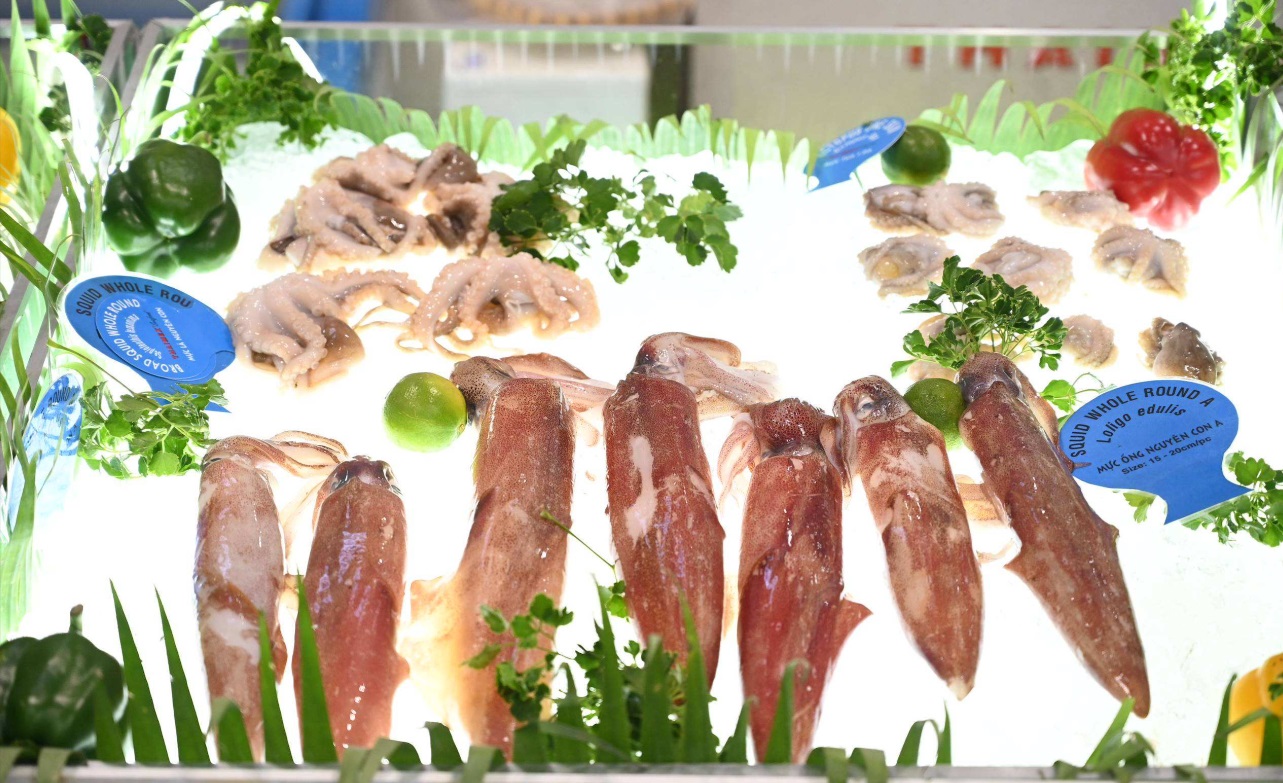
Squid and octopus exports rose 5.7% in August to $75 million, lifting the eight-month total to $524 million - a solid 14.4% gain. The rally was spearheaded by South Korea (up 18.7%) and ASEAN (up 33.1%). Declining squid supplies in South Korea, rising retail prices and stronger Chinese imports have supported demand, although domestic raw material supplies remain limited.
Crab and other crustaceans emerged as the standout stars, rocketing 50.7% in August to $55 million. Sales to the U.S essentially doubled to $84.7 million, while those to China - Hong Kong increased 41.8% to $154.7 million. The U.S recognition of the equivalence of Vietnam’s swimming crab fishery, together with a court’s dismissal of a related lawsuit, has reduced some of the legal uncertainty.
Bivalve mollusks also rode a wave of strong demand, climbing 30.9% in August to $29.4 million and matching that pace for the year-to-date with $209.6 million (+30.8%). Exports to the EU rose 29.5% and those to the U.S. surged 96%, while China - Hong Kong declined 30.8%. Clams are gaining ground in Spain, Italy, and the US, while a surge in scallop exports is being partly driven by the processing and re-exports of imported raw materials.
Year-end outlook: growth to remain divergent
Heading into the final stretch of the year, seasonal demand and restocking cycles could keep top-line revenues elevated, but policy risks will dictate the actual shape of growth. For shrimp, the one-two punch of late-September ADD rulings and Section 301 tariffs will make or break US order books, dictate asking prices and determine the pace of the pivot toward Asia. For pangasius, the sting of POR21 casts a long shadow over US prospects, leaving exporters heavily reliant on the EU and China to plug the gap.
For tuna, cephalopods and other wild-caught seafood products, the EU’s IUU yellow card, the CATCH system and ever-stricter traceability rules will handicap exporters’ ability to capitalize on orders. In the U.S, MMPA mandates rigorous compliance documentation for flagged product codes - acting as both a formidable technical barrier and a brutal filter that separates top-tier suppliers from the rest of the pack. Crabs face a friendlier horizon, though compliance costs remain stubbornly high.
Eclipsing the $12 billion mark for 2026 remains within reach, provided Greater China's appetite holds and peak-season supply chains remain undisrupted. However, Q4 growth could be slower than the first eight months: shrimp faces a slow grind, pangasius is relying on non-U.S. markets, tuna boxed in by regulations, while cephalopods, crabs and bivalves remain selective bright spots. Growth is increasingly becoming a race for markets, documentation and resilience in the face of trade-related costs.