(seafood.vasep.com.vn) In February 2026, Vietnam’s shrimp exports reached nearly USD 310 million, up 17% year-on-year. Cumulatively for the first two months of the year, shrimp export value totaled USD 690 million, an increase of 20% compared with the same period last year. Compared with the 22% growth recorded in January, the pace of increase in February slowed somewhat, reflecting seasonal factors as the Lunar New Year holiday partially disrupted processing and shipment activities. Nevertheless, the nearly 20% growth in the first two months indicates that shrimp orders from Vietnam are maintaining a more positive trend than in the same period last year.
China drives growth while the U.S. declines
The market picture in February shows clear divergence. China continued to be the main growth driver for Vietnam’s shrimp exports. In February alone, export value to this market reached USD 168 million, up 131% year-on-year; for the first two months, exports totaled USD 298 million, up 61%. Including China and Hong Kong, export value reached USD 309 million in the first two months, up 58%, accounting for 45% of Vietnam’s total shrimp exports.
In contrast, the U.S. market saw a sharp decline in February. Shrimp exports to the U.S. reached only USD 16 million, down 61% year-on-year; cumulative exports for the first two months totaled nearly USD 60 million, down 22%.
Exports to Japan reached USD 25 million in February, down 28%, while the two-month total reached USD 70 million, slightly up 1%. South Korea imported USD 14 million worth of Vietnamese shrimp in February, down 42%, with the two-month total reaching USD 41 million, down 14%.
Meanwhile, the EU remained a relatively stable bright spot, with exports reaching USD 30 million in February, up 18%, and USD 77 million for the first two months, up 28%. In terms of cumulative scale, after China come the EU, Japan, the U.S., and South Korea. This indicates that the growth axis of Vietnam’s shrimp exports in early 2026 is shifting more clearly toward China and the EU, while the U.S., Japan, and South Korea remain more cautious.
Lobster surges, contributing significantly to overall growth
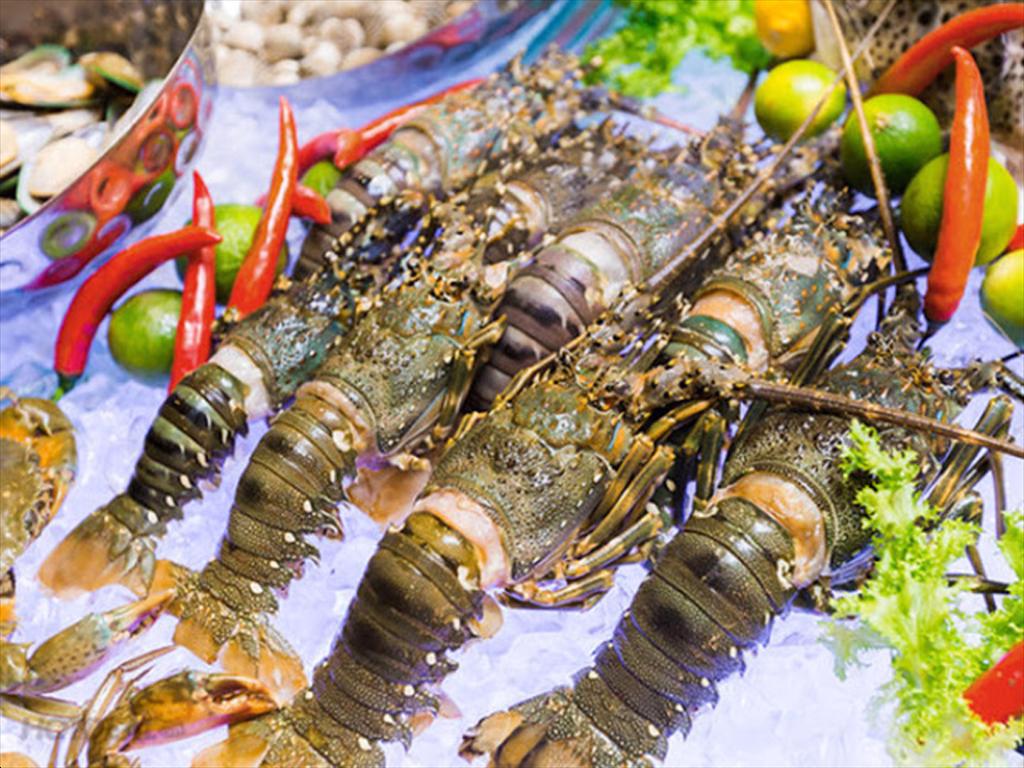
The most notable development in the product structure during the first two months of the year is the strong surge in lobster exports. Total lobster export value reached USD 259 million, skyrocketing 6,214% compared with the same period in 2025.
Among them, green lobster exports reached USD 206 million, up 32% year-on-year. Spiny lobster exports totaled nearly USD 1.3 million, up 43%, while other lobster varieties reached USD 52 million, increasing 6,138%.
Meanwhile, whiteleg shrimp remained the main export product with USD 341.5 million, accounting for 49.5% of total shrimp export value, but growing only 4.5%. Black tiger shrimp reached USD 44.6 million, up 13%.
Thus, the nearly 20% overall growth of Vietnam’s shrimp industry in early 2026 is no longer driven mainly by whiteleg shrimp as in previous years, but also significantly supported by lobster and other shrimp categories, such as giant freshwater prawns (+142%), Macrobrachium rosenbergii (+199%), and striped shrimp (+466%).
The sharp increase in lobster exports also helps explain the surge in exports to China, which is a major consumer of live, high-value seafood products, particularly in the period before and after the Lunar New Year. As demand in this market recovers strongly, lobster is emerging as a new growth driver, complementing the traditional role of whiteleg shrimp.
Pressure from the U.S. market remains the biggest uncertainty
Developments in the U.S. market currently represent the largest pressure on Vietnam’s shrimp exports. The first direct factor is the final results of the 19th administrative review (POR19) on frozen warmwater shrimp from Vietnam. According to the official announcement by the U.S. Department of Commerce, two mandatory respondents were assigned a margin of 25.76%, while 22 companies received a separate rate of 4.58%. These tariffs not only increase cost risks but also make U.S. importers more cautious in placing new orders.
The second factor is the additional 10% import tariff announced by the White House on February 20, 2026, under Section 122, which will be applied for 150 days. As this policy only took effect from February 24, its impact is not yet fully reflected in February’s export data, but it has already begun affecting trading sentiment and price negotiations. For shrimp products, which are highly price-sensitive, any additional tariff could weaken exporters’ competitiveness in the short term.
In addition to tariffs, the U.S. market is also tightening technical controls on imported seafood. Requirements related to antibiotics, HACCP compliance, traceability, and import alert mechanisms have been strengthened since early March. For shrimp products, this increases risks and may affect customs clearance, delivery schedules, and additional compliance costs for exporters. As exports to the U.S. already declined in February, these technical barriers make the market even more unpredictable.
Beyond this, logistics risks stemming from tensions in the Middle East remain another factor to monitor. Disruptions along international shipping routes could increase delivery costs to the Middle East and parts of Europe, putting pressure on exporters’ profit margins in the coming months. Although these impacts are not yet clearly reflected in February’s data, they remain a potential downside risk for an industry already facing strong price competition.
Outlook for March: growth continues but with caution
The export performance in the first two months of 2026 shows that Vietnam’s shrimp exports are still maintaining growth momentum, although the structure of growth has shifted. China has clearly become the leading growth market, the EU maintains a positive pace, while the U.S. remains the largest bottleneck.
From a product perspective, lobster has emerged as a particularly important growth driver, while whiteleg shrimp continues to serve as the industry’s foundation but is no longer the sole engine of growth.
Moving into March, as production and shipments return to normal after the Lunar New Year holiday, shrimp exports may recover in terms of transaction activity. However, strong growth will not come easily, as the U.S. market remains under pressure from anti-dumping duties, additional import tariffs, and increasingly strict technical requirements.
In this context, the shrimp industry’s ability to sustain growth will depend largely on effectively tapping demand in China, maintaining stable market share in the EU, and leveraging the advantages of value-added and high-value products, particularly lobster, within the export structure.