(seafood.vasep.com.vn) In Vinh Tuy commune (Kien Giang Province), many shrimp farmers are adopting bottom aeration systems and reporting clear economic benefits, helping increase income and reduce production risks.
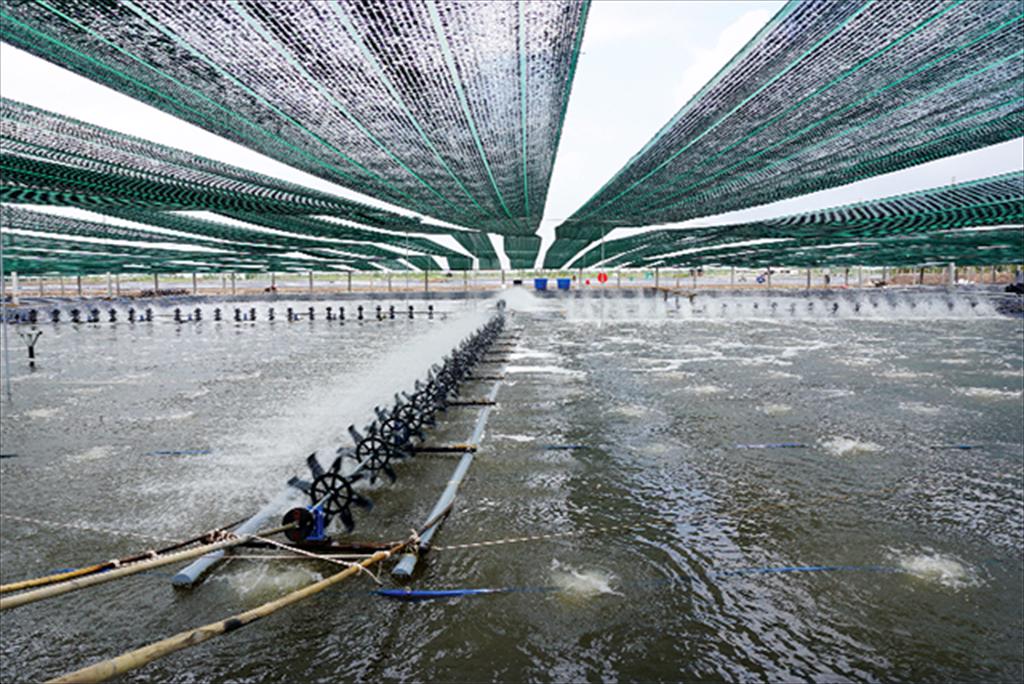
Amid increasingly erratic weather, prolonged heatwaves alternating with unseasonal rains have caused fluctuations in pond environments. Shrimp farming is facing multiple challenges such as oxygen depletion, accumulation of organic matter, and the generation of toxic gases at the pond bottom (H₂S, NH₃). These factors slow shrimp growth, reduce survival rates, and increase the risk of disease outbreaks.
Unlike traditional paddlewheel aerators that mainly supply oxygen at the surface, bottom aeration systems are installed directly on the pond floor, delivering oxygen evenly to areas where sludge accumulates. As a result, oxygen stratification is minimized, pond conditions become more stable, shrimp are less likely to surface, and stress is reduced under extreme weather conditions.
In practice, the model has helped improve survival rates, enhance growth performance, and reduce environmental treatment costs thanks to better water quality control. Some farmers have also reported higher productivity and economic returns when combining bottom aeration systems with improved farming practices.
However, to achieve optimal results, the model needs to be implemented alongside comprehensive management measures such as controlling stocking density, selecting high-quality seed, and closely monitoring water quality. This approach is considered a promising direction for high-tech and sustainable shrimp farming in the locality.