(seafood.vasep.com.vn) – Many farmers in Ca Mau are successfully adopting zero water discharge - recirculating shrimp farming systems. The approach not only reduces costs and increases profitability but also promotes sustainable development that meets international export standards.
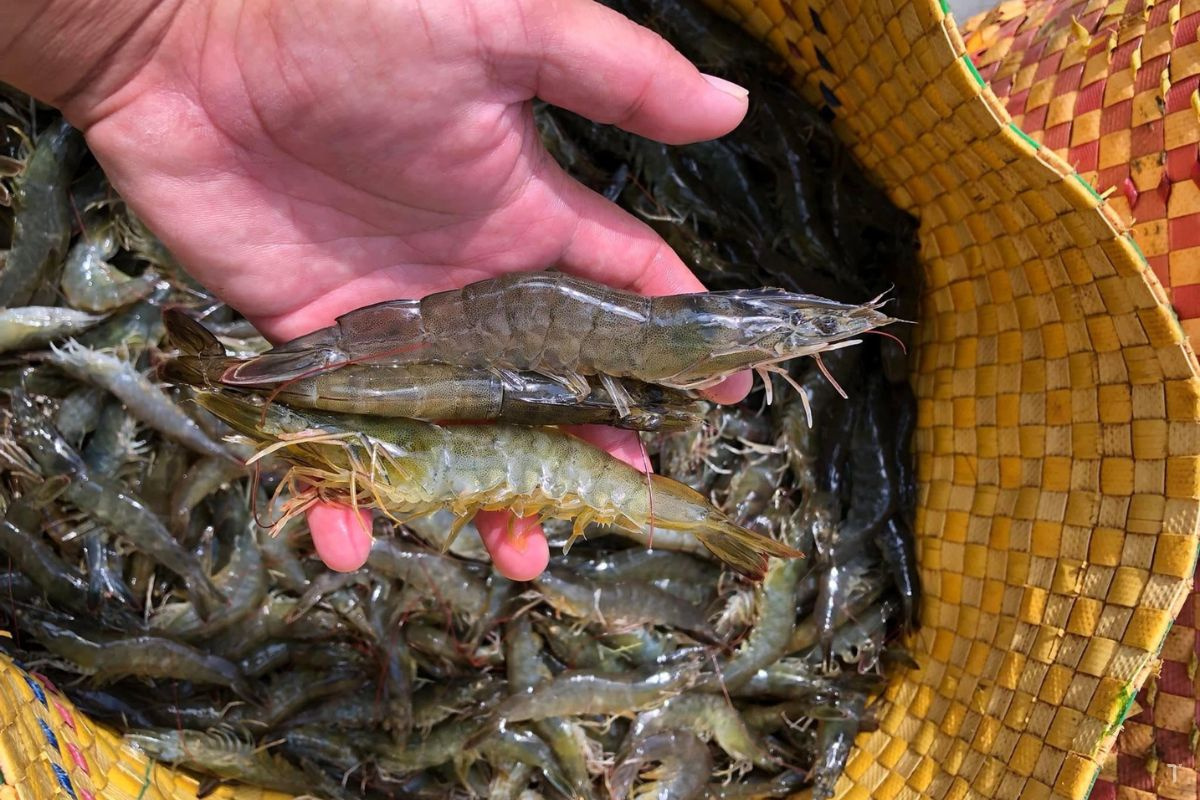
In Phu Tan Commune, farmers are deployed large-scale closed-loop systems comprising main shrimp ponds, water treatment ponds, tilapia ponds and seaweed ponds. Wastewater from shrimp ponds is first filtered by tilapia to remove organic matter, then further purificated and disinfected in seaweed ponds before recirculation. This maintains stable rearing conditions without environmental pollution.
Farmers report that the model helps cut production costs by around 20% and shortens harvest cycle by 15-20 days compared to conventional methods. Success rates range from 70-90%, with average yields of 35 tons per hectare per crop. All harvested shrimp are purchased under contract by partnering enterprises, ensuring stable market access.
The design allocates only a portion of the area is used for shrimp ponds, while the remainder dedicated to water treatment and regeneration functions. Farmers must strictly follow technical protocols – from water treatment and 15-20 days of nursery phasesrearing to the periodic use of organic acids and bio-nutrients for disease prevention.
According to the Ca Mau’s Department of Science and Technology, the model has been researched and piloted for over two years. It now covers around 100 hectares of super-intensive, low-water exchange recirculating shrimp farms. The goal is to secure international certifications such as ASC and BAP for exports to Europe, the United States and Japan.
This year, the province plans to expand by an additional 1,500 hectares with participation from major enterprises. Among them, De Heus Vietnam Co., Ltd. is partnering with local farmers on 1,000 hectares, while Minh Phu Seafood Corporation is developing another 500 hectares.
Provincial authorities affirm that with over 13,000 hectares of existing super-intensive shrimp area, scaling the recirculating quaculture model will modernize Ca Mau’s shrimp sector, enhance biosecurity and environmental compatibility - building a solid foundation for sustainable exports.