(seafood.vasep.com.vn) The year 2025 marked a significant milestone for China’s lobster market, with total imports reaching a record high and the supply structure undergoing major changes. Amid this surge, Vietnam’s lobster exports—especially green lobster—accelerated dramatically, reaching new highs and contributing substantially to Vietnam’s overall record shrimp export value.
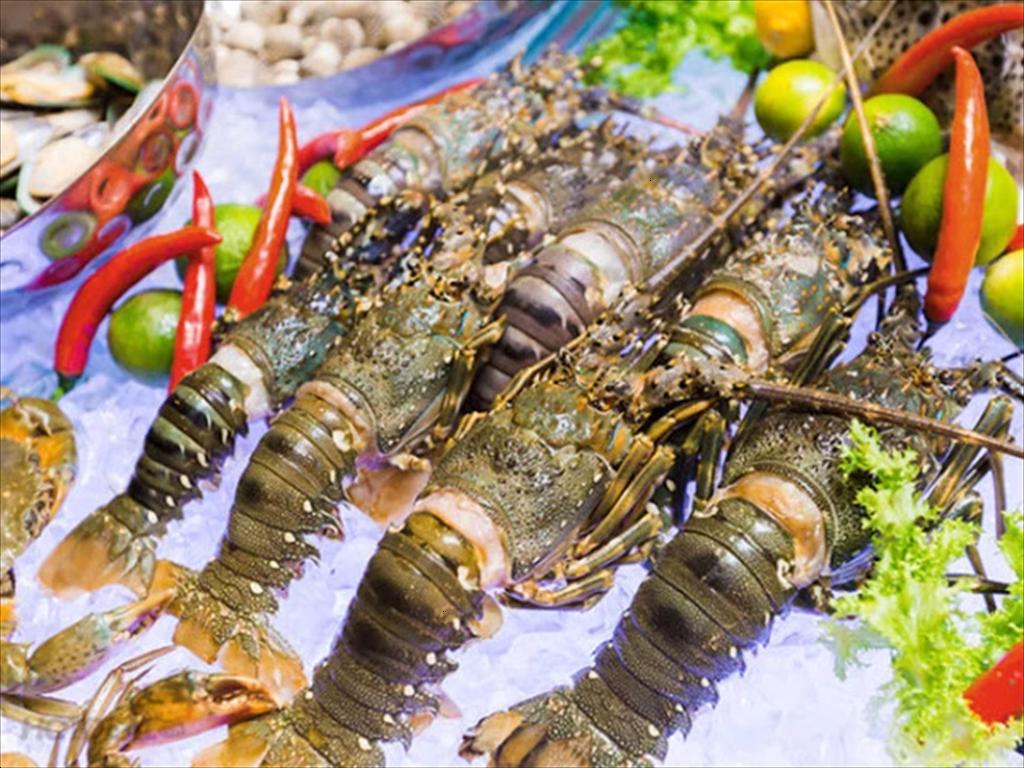
Premium demand drives lobster imports in China
Seafood consumption in China is becoming increasingly polarized. Budget-conscious consumers are purchasing more low-priced products, while high-income consumers continue to sustain strong demand for premium seafood such as large shrimp, live seafood including lobster, and processed or convenience products. The expansion of modern retail, e-commerce, and restaurant chains has also shifted consumers away from low-priced frozen shrimp, creating more room for high-value products like lobster.
This trend is particularly important for lobster suppliers, as lobster is a premium product closely tied to income levels and tends to see strong growth when demand for fine dining, experiential consumption, and gifting recovers. At the same time, mid-range products face pressure, while premium and convenience segments continue to grow steadily—areas where Vietnam has clear strengths in quality, flexibility, and processing capability.
China’s lobster imports reach record high in 2025
According to China Customs data, China’s lobster imports reached 69,774 metric tons in 2025, up from 60,834 metric tons in 2024, marking the highest level during the 2020–2025 period. Notably, the supply landscape shifted significantly within just one year.
In 2024, Canada was the largest supplier with 26,920 metric tons, accounting for about 44% of total imports, followed by Vietnam with 10,865 metric tons (about 18%). By 2025, Vietnam had risen to the top position with 24,067 metric tons, representing approximately 34.5% of total imports, while Canada’s exports declined to 15,355 metric tons, or about 22% market share. The United States supplied 9,931 metric tons (about 14.2%), and Australia increased sharply to 6,950 metric tons (nearly 10%), reflecting China’s growing diversification of suppliers.
Tariffs on Canada reshape trade flows in 2025
One of the most important factors influencing the market in 2025 was China’s tariff policy on Canadian seafood. China imposed an additional 25% tariff on several Canadian seafood products, including lobster, effective March 20, 2025.
As a high-value product with price-sensitive buyers, Canadian lobster became less competitive during this period, prompting Chinese buyers to seek alternative suppliers. Vietnam held clear advantages, including geographic proximity, shorter delivery times, flexible shipment volumes, and strong suitability for live and fresh products—critical factors for lobster exports.
By early 2026, a bilateral agreement between China and Canada removed the 25% tariff on Canadian lobster and crab, effective March 1, 2026. As a result, competition among lobster suppliers in China is expected to enter a new phase in 2026.
Australia returns, increasing premium supply
Australia also played a significant role in reshaping supply. The Australian government announced that live rock lobster exports to China resumed immediately on December 20, 2024, reopening the trade after a prolonged suspension. This development was reflected in 2025 import data, with Australian lobster exports rising sharply, contributing to China’s record import volume and intensifying competition in the premium segment.
Vietnam achieves record lobster exports to China in 2025
According to Vietnam Customs, 2025 was a breakthrough year for Vietnam’s lobster exports to China. Total shrimp export value from Vietnam to China and Hong Kong reached USD 1.3 billion, up 55% compared with 2024.
Within this total, green lobster was the key growth driver. Export value reached USD 840 million in 2025, up 131% from USD 363.5 million in 2024. In January 2026 alone, Vietnam’s green lobster exports to China and Hong Kong reached approximately USD 100.2 million, up 6% compared with USD 94.2 million in January 2025. These figures indicate continued strong demand entering 2026, despite increasing competition.
Vietnam’s competitive advantage in 2025 stemmed largely from shorter transportation times and more consistent quality upon delivery. While Canadian lobster faced tariff disadvantages and Australia re-entered the market, Chinese buyers diversified sourcing to optimize both pricing and supply reliability, benefiting Vietnam significantly.
2026: strong opportunities but fiercer competition ahead
Export data for January 2026 shows Vietnam maintaining positive momentum. However, from March 2026 onward, the removal of tariffs on Canadian lobster could quickly reshape competition. Canada will likely seek to regain market share, particularly in premium restaurant and gifting segments, while Australia continues strengthening its presence following trade normalization.
As Chinese consumption remains polarized, premium seafood continues to see strong demand, but buyers are becoming more selective. To maintain growth, Vietnamese exporters must focus on consistent quality, standardized product specifications, optimized logistics for live and fresh products, and stronger direct connections with modern distribution networks.
The record import levels in 2025 demonstrate China’s strong appetite for lobster when premium demand recovers. However, 2026 will be a test of competitiveness. Suppliers that maintain quality, delivery speed, and distribution access will be best positioned to retain market share as Canada returns and competition intensifies in the premium segment.