(vasep.com.vn) Australia is emerging as one of the most stable and promising growth markets for Vietnamese shrimp. Amid global trade disruptions driven by geopolitical tensions—particularly conflicts in the Middle East—strengthening and expanding into stable markets like Australia has become increasingly important for Vietnam’s shrimp industry.
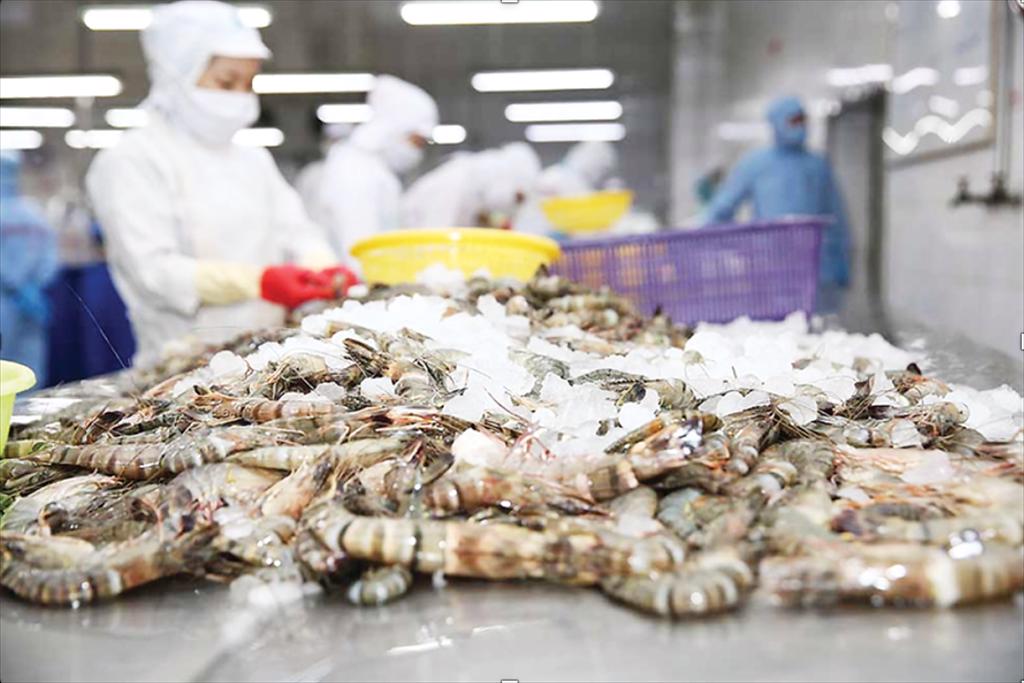
Shrimp exports to Australia maintain an upward trend over five years
From 2021 to 2025, Vietnam’s shrimp exports to Australia generally sustained an upward trajectory, despite cyclical market fluctuations. In 2021, export value reached approximately USD 188 million. In 2022, exports surged to USD 271.6 million, supported by post-COVID-19 demand recovery and tariff advantages under free trade agreements such as the CPTPP, AANZFTA, and RCEP.
In 2023, export value declined to around USD 233 million due to global inflation and weakened seafood consumption across multiple markets. However, the period from 2024 to 2025 saw a recovery, with exports reaching USD 254.3 million in 2025, indicating gradually stabilizing demand in the Australian market.
Australia is currently among the top five importers of Vietnamese shrimp, accounting for about 7–8% of the country’s total shrimp export value.
This growth trend has continued into early 2026. In the first two months of the year, Vietnam’s shrimp exports to Australia reached USD 35.3 million, up 2% year-on-year.
Vietnam remains the largest shrimp supplier to Australia
According to international trade data, Australia has strong import demand for shrimp due to limited domestic supply. Total shrimp imports increased from USD 317 million in 2021 to USD 360.5 million in 2025, with some fluctuations driven by consumption cycles and inventory levels.
Vietnam is the largest shrimp exporter to Australia, accounting for approximately 65–70% of the market’s total import value.
Competing suppliers such as Thailand, China, Malaysia, and Indonesia have significantly smaller shares. Thailand typically ranks second with around USD 45–57 million annually, mainly in processed shrimp, while China and Malaysia hold relatively minor shares.
Australia’s relatively high dependence on Vietnamese shrimp reflects the competitive advantages of Vietnam’s shrimp industry, particularly in processed and value-added segments.
Stable demand and favorable consumption trends
Australia is a high-income market with strong demand for healthy food. Seafood in general—and shrimp in particular—is considered a healthy source of protein, resulting in relatively stable consumption.
Although Australia’s population is only around 25–26 million, per capita shrimp consumption averages about 1.5 kg per year, generating substantial import demand. Consumers are increasingly favoring convenient, value-added products such as cooked shrimp, breaded shrimp, and ready-to-cook items suited to modern retail and foodservice channels.
In terms of product structure, whiteleg shrimp dominates, accounting for approximately 93–96% of total export value to Australia.
Products such as peeled shrimp (PD/PDTO), cooked shrimp (Cooked-RTE), and breaded shrimp are gaining a growing share, reflecting the market’s preference for convenience products.
Stringent requirements that create competitive advantages
One notable feature of the Australian market is its strict biosecurity and food safety system. Imported shrimp must comply with rigorous regulations on disease control, traceability, and food safety as required by Australian quarantine authorities.
While these requirements pose technical barriers, they also help protect the market from lower-standard suppliers. For Vietnamese exporters accustomed to international standards, this can be an advantage in maintaining their market position.
Opportunities to further develop the Australian market
Prolonged tensions in the Middle East are increasing risks along key shipping routes such as Bab-el-Mandeb and the Strait of Hormuz, forcing vessels to take longer detours. This leads to higher transportation, logistics, and fuel costs, as well as extended delivery times. Export routes to the U.S. and EU are also affected, impacting pricing and trade planning.
In this context, expanding into stable markets like Australia is becoming increasingly important for Vietnam’s shrimp industry.
With its position as the leading shrimp supplier to Australia, Vietnam still has significant room to expand its market share, particularly in processed and value-added segments.
Amid growing global trade uncertainty, strengthening stable markets like Australia, while diversifying export destinations, will be key for Vietnam’s shrimp industry to sustain growth and mitigate risks from geopolitical disruptions worldwide.