(seafood.vasep.com.vn) Vietnam’s seafood exports reached $989.5 million in November 2025, up 64.6% year-on-year. The robust monthly performance played a pivotal role in driving the total export turnover for the first 11 months of 2025 to $10.5 billion, representing a 19% increase compared with the same period in 2024.
Vietnam’s seafood exports in 2025 not only recovered in tandem with global trends but also witnessed a decisive acceleration toward the year-end. This surge was driven by rising demand for the festive season and year-end consumption in major markets, while also reflecting the proactive and flexible responses to market volatility.
Key markets
By market, CPTPP countries continued to be a major export driver for Vietnam’s seafood exports, benefiting from tariff preferences and relatively stable markets such as Japan, Canada and Australia. In the first 11 months, exports to CPTPP markets reached $2.85 billion, up 28.6% year-on-year.
China & Hong Kong recorded the strongest growth among Vietnam’s key destinations. Seafood exports to this region in the 11-month period reached $2.26 billion, a sharp 36% increase year-on-year. The high growth underscores the rising role of China & Hong Kong in export structure, particularly for fresh and live products such as lobster, crab, scallops and clams.
Exports to the U.S reached $1.8 billion in the first 11 months, up nearly 11% over the same period. This growth was lower than that of the CPTPP and China & Hong Kong due to various challenges, including a 20% reciprocal tariff, high anti-dumping duties on shrimp and MMPA regulations for wild-caught seafood. Nevertheless, the U.S remains a key high-value market, especially for core products such as shrimp, pangasius and tuna.
For the EU, seafood export turnover surpassed $1 billion in the first 11 months, rising 17.4% year-on-year. The growth indicates that demand in the EU is gradually improving with advantages leaning toward farmed seafood products, while wild-caught seafood exports to this market continue to be affected by the IUU yellow card.
Exports to South Korea reached $803.9 million, up 14.7% year on year, marking a market with relatively stable growth, making consistent contributions to Vietnam’s overall seafood export value.
Key products
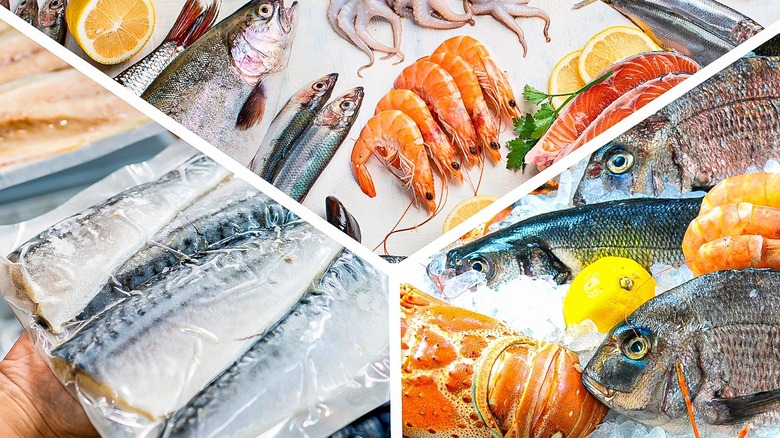
By product group, in the first 11 months of 2025, shrimp continued its leading role with a turnover of approximately $4.32 billion, up 27.7% year-on-year - the highest growth rate among major product categories. This reflects a clear recovery in import demand as well as the market expansion capabilities of Vietnamese shrimp. A diverse product structure, ranging raw shrimp to deep-processed items, has helped maintain competitiveness despite price pressures and trade barriers.
Pangasius exports exceeded $2 billion over 11 months, up 11.8% over the previous year. Stable demand in Asian markets, particularly China, continued to play a primary role, while exporters stepped up market diversification to offset difficulties in some traditional markets.
Tuna exports totaled about $856 million, down slightly 3.4% year-on-year. Although the industry remains impacted by raw material supply, logistics and strict traceability requirements, recent months have shown signs of recovery, especially in processed and value-added products.
The squid and octopus segment recorded robust growth with a turnover of approximately $704 million, up 21.5% year-on-year. This reflects improving demand in Asian markets and the EU, particularly in foodservice and tourism consumption.
Meanwhile, the other marine fish group (including mackerel, anchovy, tilapia and other wild-caught species) generated nearly $2 billion, up 16.5% year-on-year, continuing to make important contributions to the total turnover, demonstrating the diversification of supply and markets.
December slows, full-year exports to top $11.3 Billion
Overall, export results for November and the first 11 months of 2025 indicate that Vietnam’s seafood sector is maintaining a relatively firm growth momentum, driven primarily by shrimp and pangasius, while other seafood categories are also recovering positively. However, rising costs, trade barriers and increasingly high standards remain significant challenges, requiring the industry to further enhance value-added, strengthen quality control and proactively adapt to sustain growth momentum.
In December 2025, seafood exports are estimated at around $840 million, down 4% year-on-year and 15% compared to November, as enterprises being more cautious when exporting to the U.S amid MMPA-related import bans on several key species and concerns over higher anti-dumping duties on shrimp from early 2026. On this basis, full-year seafood exports in 2025 are projected to exceed $11.3 billion, up 11% compared with 2024.