(seafood.vasep.com.vn) Can Tho’s fishery industry sustained steady growth in 2025 with total aquatic and marine output reaching nearly 783,000 tons, fulfilling 100% of the annual target. Aquaculture, capture fisheries and fishing fleet management were further strengthened, aiming for sustainable development in the coming years.
According to the Can Tho Department of Agriculture and Environment, the city’s total aquaculture area reached 97,078 hectares in 2025. Total aquatic and marine production was estimated at nearly 783,000 tons, meeting 100% of the annual target and representing a 2.81% year-on-year increase. Of this total, aquaculture production accounted for 705,958 tons, while capture fisheries contributed approximately 77,000 tons.
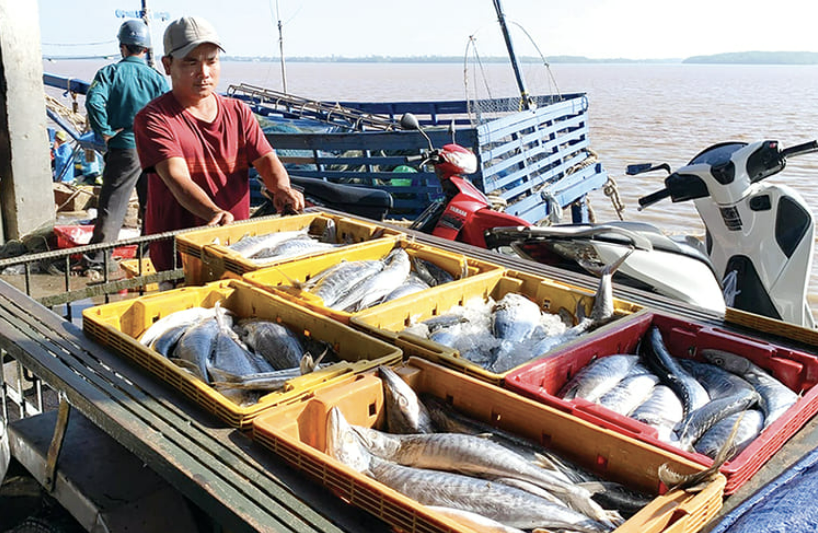 Wild capture fishery production in 2025 reached approximately 77,000 tons. Photo: Can Tho Newspaper
Several of the city’s flagship aquatic species continued to record positive results. Pangasius farming spanned 820 hectares, equivalent to 8.04% of the plan with harvested output exceeding 250,000 tons - achieving 100% of the planned goal. Meanwhile, bronze featherback fish production totaled 13,500 tons across 100 hectares. Whiteleg shrimp farming reached 38,878 hectares, surpassing the plan by 1.51%, yielding an output of 205,200 tons. Black tiger shrimp hit 12,700 hectares, meeting 100% of the target and rising 3.67% year-on-year, while output reached 24,500 tons, up 34.78% compared to 2024.
Currently, Can Tho city has 79 aquatic seed production and nursery facilities. In 2025, these establishments produced and nursed 228.6 million black tiger and whiteleg shrimp post-larvae, along with 175.9 million fingerlings of various species, largely meeting farmers’ demand for high-quality and biosecure seed stock.
In recent years, the city’s fisheries sector has continuously implemented comprehensive solutions for aquaculture management, harvesting and the protection of aquatic resources, while enhancing environmental monitoring and promptly issuing advisories to support local farmers. In 2025, authorities issued 34 food safety certificates for aquaculture zones and 7,560 registration certificates for cage farming and key aquatic species.
Regarding the harvesting sector, Can Tho currently has 784 fishing vessels registered and managed with a combined capacity of 210,631 CV. Of these, 341 vessels measuring 15 meters or longer (100% of these vessels have been equipped with VMS) with a total capacity of 186,335 CV; 47 vessels are engaged in fisheries logistics services. For vessels 12 meters or longer, 383 out of 465 have had their inspection certificates renewed, representing 82.37%, while 100% of fishing vessels have been granted fishing licenses.
The municipal fisheries sector, in coordination with local authorities, has intensified the management of prohibited fishing practices; comprehensive reviews, information campaigns and outreach activities to ensure fishermen commit to regulatory compliance and refrain from using banned fishing gear in capture fisheries.
Data from the VnFishbase system reveals that 177 fishing vessels currently have expired inspection certificates. These vessels have all returned to port and ceased fishing operations by the end of 2025. Among them, 40 long-term delinquent vessels have been listed, gathered and required to sign formal pledges against further activity. For the remaining 137 vessels, functional authorities are supporting fishermen in completing inspection renewals ahead of the Lunar New Year 2026.
Heading into 2026, Can Tho city will continue to prioritize support for businesses and households in the fisheries sector, aiming for a model of sustainable and high-efficiency development. The Can Tho Department of Agriculture and Environment will further strengthen the management of the fishing fleet, while maintaining rigorous monitoring and control over both aquaculture and harvesting activities. At the same time, the department will provide hands-on assistance to vessel owners to streamline registration renewals, ensure comprehensive data integration intothe National Fisheries database and maintain 100% monitoring of fishing vessels operating at sea through the VMS system, with strict enforcement measures applied to violations.