(seafood.vasep.com.vn) Vietnam’s tuna exports to the Middle East in 2025 have faced significant turbulence, as geopolitical conflicts, rising logistics costs, and increasingly strict Halal and traceability requirements have become “survival benchmarks” for exporters and importers.
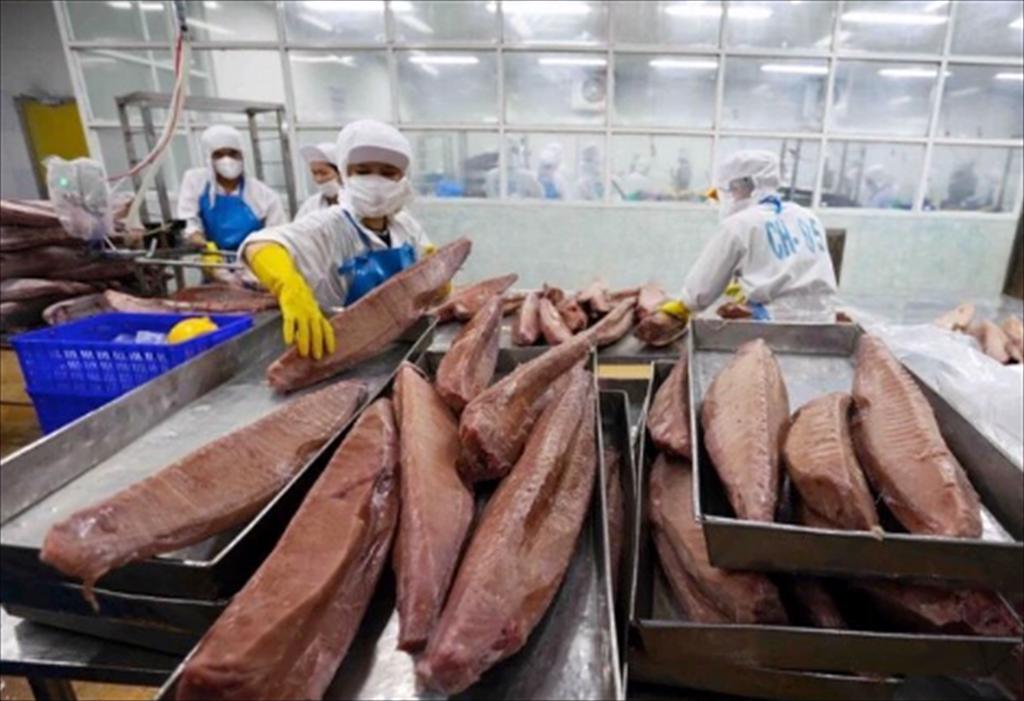
2025 Overview: Strong demand, disrupted imports
According to industry reports, the Middle Eastern market for processed and canned tuna reached around 328,000 tons in 2024, valued at USD 1.3 billion. The region remains a net importer, with Saudi Arabia, the UAE, and Israel leading in import value.
However, 2025 has seen major disruptions: tuna imports in most key Middle Eastern markets have dropped sharply.
Data from Vietnam Customs show that Vietnam’s tuna exports to this region fell 23% year-on-year in the first eight months of 2025, totaling nearly USD 60 million. Exports to Israel declined by 48%, Lebanon by 9%, Jordan by 37%, and Saudi Arabia by 63%. These declines were largely due to regional conflicts and higher shipping costs, as maritime routes through the Red Sea became increasingly unstable.
Despite the downturn, there were some bright spots: exports to Egypt surged 141%, and to the UAE rose 16%, providing some balance to the regional picture.
Drivers and challenges: logistics and compliance pressures
One positive aspect for the Middle Eastern tuna market is the continued demand for packaged and canned products, which is expected to grow steadily. Reports suggest that the Middle East & Africa tuna market could achieve higher revenues by 2030.
The Gulf Cooperation Council (GCC) countries already represent a tuna market worth USD 862.6 million in 2024. However, future growth is expected to slow as the region transitions from a purely import-dependent model toward developing domestic processing facilities to strengthen local supply chains.
Rising logistics and energy costs, particularly for refrigerated containers, insurance for shipments through the Red Sea, and cold storage operations, remain major pressures. Exporters are therefore compelled to invest more heavily in cold chain infrastructure, transshipment hubs, and traceability systems.
Moreover, growing Halal certification requirements, combined with sustainability and ethical sourcing demands, have increased operational costs and called for stricter quality management systems.
Outlook for 2025 and beyond: modest growth ahead
In 2025, demand for processed tuna, especially canned and pouch products, is expected to continue rising in the Middle East. Vietnam has the opportunity to expand its market share by strengthening exports to Egypt and Saudi Arabia—two strategic markets—while maintaining stable positions in the UAE and Israel.
Globally, tuna imports are projected to reach 1.75–1.8 million tons in 2025, with an estimated value exceeding USD 9 billion. Within the Middle East, forecasts for 2025–2030 indicate modest but steady growth, with the processed tuna market in the Middle East and Africa expected to expand gradually.
By 2035, the regional processed tuna market is forecast to reach around 366,000 tons, worth approximately USD 1.6 billion. Most growth will likely come from Gulf countries, where improvements in infrastructure, strategic import management, and domestic processing capacity are priorities.
Major risks for tuna exporters to this region include continued instability in the Red Sea corridor—which raises transport costs and delivery times—as well as potential trade disruptions if conflicts spread further.
The year 2025 stands out as a testing period for the Middle Eastern tuna market: demand remains strong, but import disruptions and high costs are squeezing profit margins. In the longer term, growth is expected to continue, albeit at a slow and steady pace. Given the decisive role of logistics infrastructure, cold chain management, and compliance with Halal, traceability, and sustainability standards, Vietnamese exporters with flexible strategies and strong risk management will have a competitive edge in navigating this challenging yet opportunity-rich market.