(seafood.vasep.com.vn) Vietnam’s shrimp industry is entering a period of strong transformation with the emergence of various high-tech farming models, helping improve productivity and competitiveness. Over the past 5–10 years, farming practices have shifted from traditional methods to intensive and super-intensive systems, featuring lined ponds, environmental sensors, automated feeding, and data management.
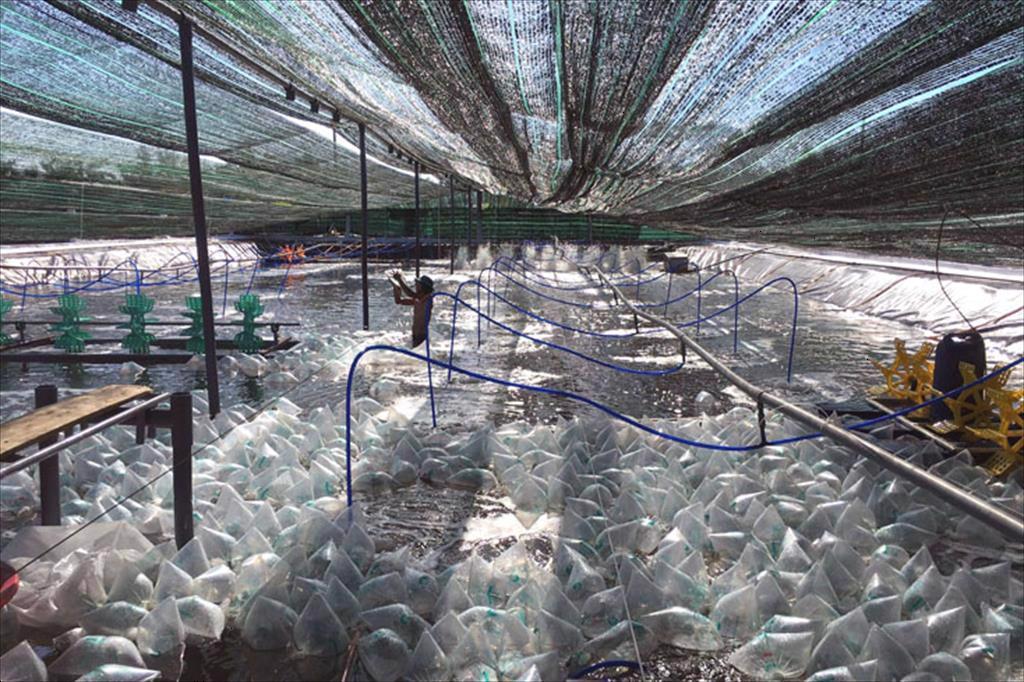
One notable example is the TLSS (Thang Long Smart System), which applies a multi-stage farming process and achieved a success rate of around 84% during the period from December 2024 to October 2025. Meanwhile, the CPF-Combine model developed by C.P. Vietnam helps shorten the farming cycle to 2–3 months, producing larger shrimp sizes of approximately 15 pieces per kilogram.
Minh Phu’s MPBio technology applies microbiology and data analytics, achieving a survival rate of about 80%, reducing costs by up to 50%, and increasing profits by 10–20%. GROFARM PRO by Grobest has recorded a success rate of over 92%, thanks to its comprehensive control system and mobile laboratory support.
Other models such as TOMGOXY™ (pure oxygen supply), CTU-RAS (recirculating aquaculture systems with only 10–20% water supplementation), and Uni-President’s “3 Good” model aim to reduce costs, minimize environmental impact, and enhance sustainability.
The participation of enterprises and research institutions is creating strong momentum for innovation, enabling Vietnam’s shrimp industry to move toward modern, efficient, and high-value production.