(seafood.vasep.com.vn) Vietnam’s pangasius industry is facing new opportunities to expand its development space as many localities and businesses begin promoting marine farming models aimed at diversifying farming areas and adapting to climate change. However, for pangasius to truly “go offshore” and develop into a large-scale industry segment, significant challenges related to technology, broodstock, and markets still need to be addressed.
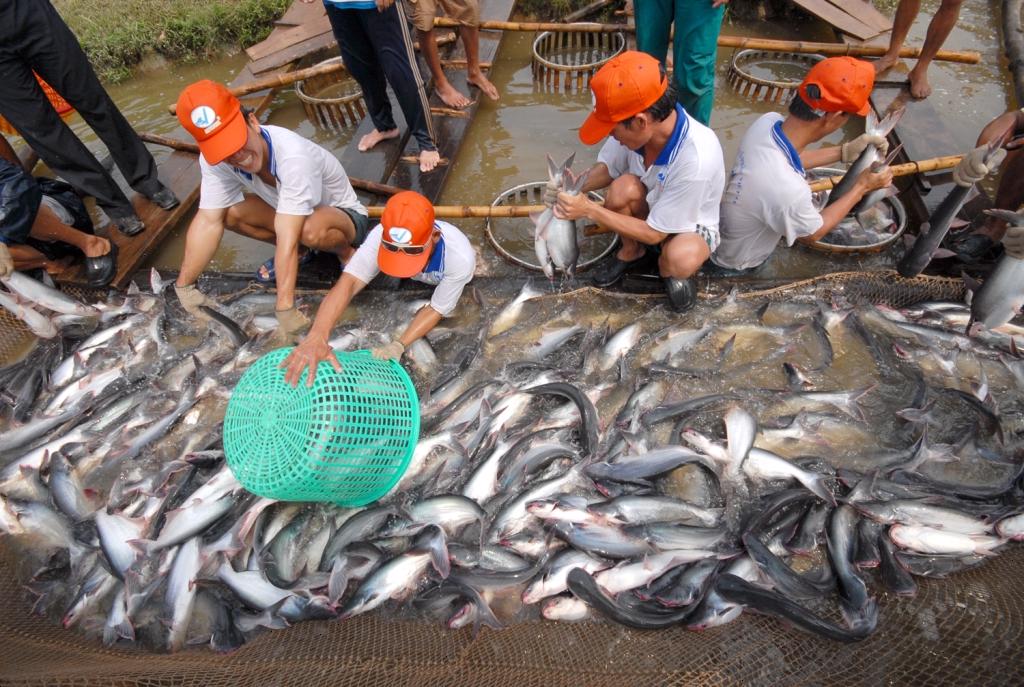
According to experts, farming pangasius in brackish and coastal waters is not a new concept. Several studies and pilot models have shown that pangasius can adapt to saline environments within certain limits. This opens up prospects for reducing pressure on traditional farming areas in the Mekong Delta while making use of the region’s vast untapped coastal water surfaces.
However, the biggest challenge at present is the lack of synchronized infrastructure and suitable farming technologies. Offshore or brackish-water pangasius farming requires cage systems, environmental management, and technical processes that differ significantly from traditional pond farming. In addition, salt-tolerant fingerlings are still in the research stage and are not yet capable of meeting large-scale production demand.
Beyond technical issues, market concerns are also emerging. Businesses believe that if offshore pangasius farming is to expand, the industry must develop a distinct product strategy targeting higher-value market segments rather than directly competing with existing freshwater supply.
Many experts view offshore pangasius farming as a promising long-term trend, especially as climate change and saltwater intrusion continue to intensify in the Mekong Delta. However, achieving this goal will require stronger support policies for breeding research, investment credit, farming area planning, and market linkages in order to build a sustainable foundation for the future development of Vietnam’s pangasius industry.