(seafood.vasep.com.vn) As importing markets increasingly focus on biosecurity and traceability, Vietnam has established a relatively comprehensive legal framework and disease management system for aquaculture, covering tilapia farming as well as other cultured species. This system is based on the Law on Animal Health, regulations on the prevention and control of aquatic animal diseases, the National Plan for the Prevention and Control of Major Diseases in Farmed Aquatic Species, and environmental monitoring and early warning programs for aquaculture areas.
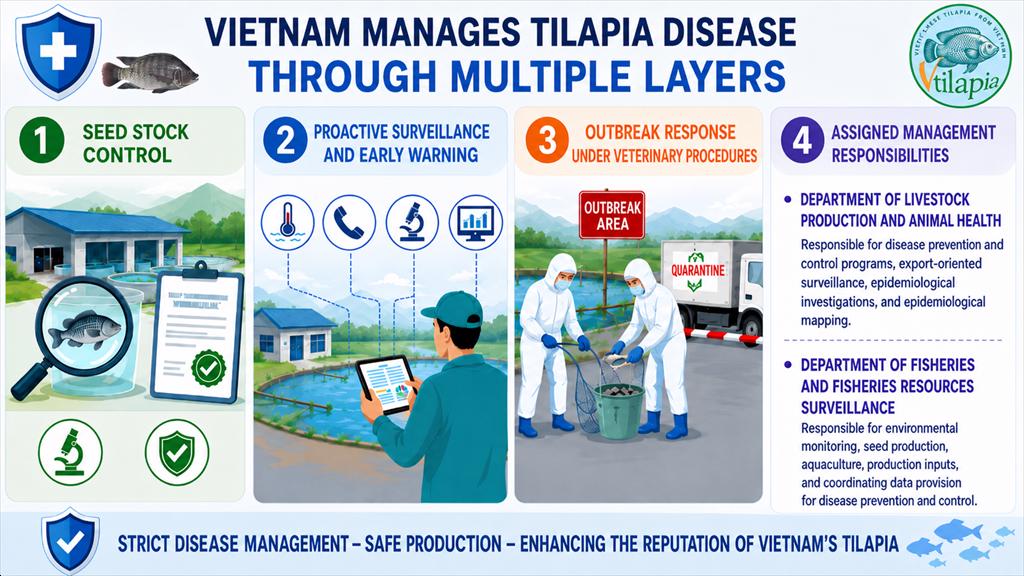
Disease Control Begins at the Hatchery Stage
Disease management measures are implemented from the seed production stage. Under current regulations, tilapia fingerlings transported outside their locality must undergo monitoring or testing for quarantine-listed diseases before receiving a quarantine certificate.
In addition, local authorities are required to develop hatcheries and farming areas that meet biosecurity and disease-free standards in order to minimize the risk of disease outbreaks and transmission.
Proactive Surveillance and Early Warning Systems
The Ministry of Agriculture and Environment has instructed local authorities to strengthen environmental monitoring in farming areas, establish hotlines for reporting disease incidents, and conduct epidemiological investigations, diagnostics, and laboratory testing whenever abnormal signs are detected.
At the same time, environmental monitoring data and disease surveillance information are uploaded to an online management system to support monitoring, early warning, and timely response measures.
Disease Outbreaks Managed Under Veterinary Protocols
When a disease outbreak is detected, provincial veterinary authorities work closely with local governments to implement response measures in accordance with established regulations.
The movement of aquatic animals from infected areas is strictly controlled. Only consignments that have been treated in accordance with official guidelines and have obtained quarantine certification are permitted to be transported and traded.
Aquaculture facilities located in outbreak areas are required to strengthen biosecurity measures, refrain from stocking new susceptible species, and limit water exchange or replenishment to reduce the risk of pathogen spread.
Clear Allocation of Responsibilities
Disease management responsibilities are clearly divided among specialized agencies. The Department of Livestock Production and Animal Health is responsible for developing and implementing disease prevention and control programs, conducting export-related surveillance, carrying out epidemiological investigations, and establishing epidemiological maps.
Meanwhile, the Department of Fisheries and Fisheries Surveillance is responsible for environmental monitoring, management of seed production and aquaculture activities, oversight of production inputs, and coordination in providing data to support disease prevention and control efforts.
Through this multi-layered management system—ranging from seed quality control and environmental monitoring to outbreak response and clearly defined institutional responsibilities—Vietnam is implementing a nationwide, standardized disease management framework for tilapia farming.