(seafood.vasep.com.vn) – On March 19, at the Government Headquarters, Prime Minister Pham Minh Chinh held a meeting with the European Commission (EC) inspection delegation on combating illegal, unreported and unregulated (IUU) fishing, led by Mr. Fernando Andresen Guimaraes, Head of Unit at the Directorate-General for Maritime Affairs and Fisheries (DG MARE).
At the meeting, the Prime Minister emphasized that the EC inspection mission is highly significant in the context of the growing relationship between Vietnam and the European Union (EU), which has recently been upgraded to a Comprehensive Strategic Partnership. This marks a new phase of cooperation with greater trust, broader scope, and deeper strategic substance.
Acknowledging the EU’s global role and position, the Prime Minister affirmed that Vietnam values and seeks to strengthen comprehensive cooperation with the EU across various sectors, from economics and trade to investment. In particular, sustainable development, green growth, and a circular economy—priorities strongly promoted by the EU—are also key focuses for Vietnam in its current development phase.
Reflecting on 35 years of diplomatic relations, the Prime Minister expressed satisfaction with the positive progress in bilateral cooperation. The effective implementation of the EU–Vietnam Free Trade Agreement (EVFTA) has contributed to making the EU one of Vietnam’s largest trading partners, while Vietnam has become the EU’s largest trading partner in ASEAN. Cooperation in areas such as defense-security, climate change, agriculture, science and technology, and environment continues to expand with significant potential.
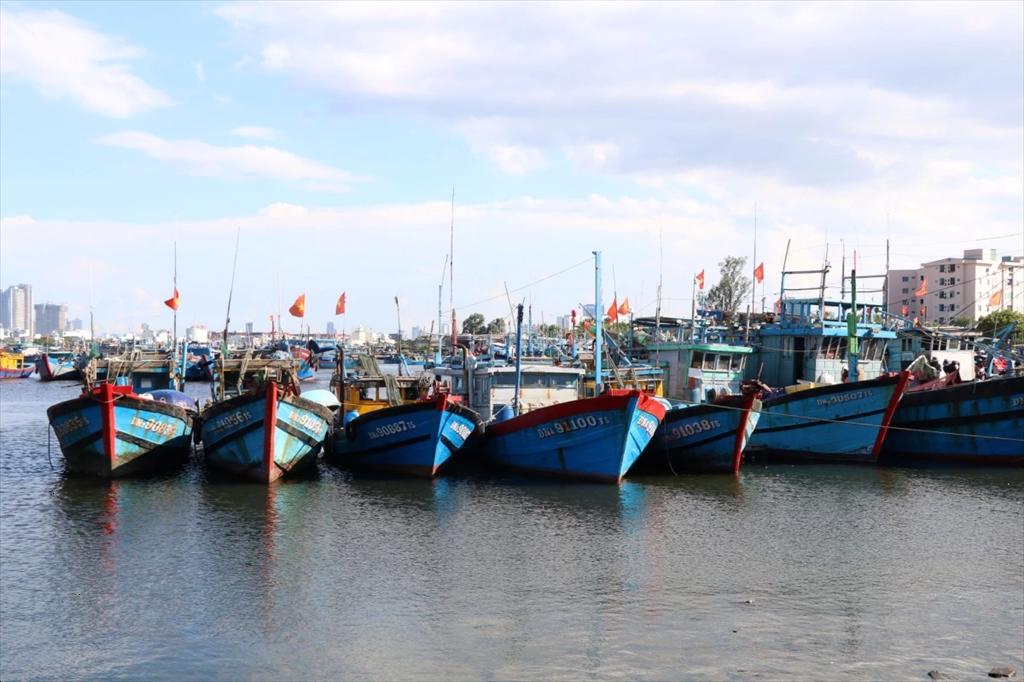
Regarding fisheries, the Prime Minister noted that Vietnam, as a coastal nation, pays special attention to sustainable marine economic development, including responsible fishing practices. He expressed appreciation for the EC’s support in helping Vietnam improve its fisheries sector and highlighted Vietnam’s determined efforts, such as institutional reforms, traceability control, vessel monitoring, and strict handling of violations.
The Prime Minister called on the EC delegation to recognize Vietnam’s efforts and continue supporting the country in achieving the shared goal of building a modern, sustainable fisheries sector that ensures fishermen’s livelihoods, maintains stable supply for the EU market, and contributes to global food security.
Earlier, on March 16, Deputy Prime Minister Tran Hong Ha, Head of the National Steering Committee on IUU Fishing, chaired a working session with the EC delegation to review Vietnam’s implementation of EC recommendations.
During their visit from March 6–16, the EC delegation worked with various localities, ministries, sectors, and businesses in Ho Chi Minh City, Khanh Hoa, Dak Lak, and Hanoi, conducting on-site inspections of anti-IUU measures at both central and local levels.
At the meeting, Deputy Prime Minister Tran Hong Ha stressed that since 2017, EC recommendations through inspection missions have had a profound impact, helping Vietnam improve institutions, strengthen governance capacity, and gradually build a sustainable fisheries sector with environmental responsibility and resource conservation.
Vietnam has proactively integrated internationally, participated in and implemented relevant international commitments, and developed a sustainable fisheries strategy. The country has completed and issued the Fisheries Law and related guiding documents, along with numerous technical standards and regulations.
Importantly, the Deputy Prime Minister affirmed that Vietnam does not view compliance with IUU recommendations merely as a means to remove the “yellow card,” but as a strategic step to protect marine resources, ensure fishermen’s livelihoods, and demonstrate global responsibility in addressing regional and international challenges.
At the meeting, EC delegation head Fernando Andresen Guimaraes acknowledged Vietnam’s “remarkable efforts” over the past period. He noted that Vietnam has achieved many positive results in building a transparent, accountable fisheries management system oriented toward sustainable development.
Key achievements recognized by the EC include the establishment and operation of the national fisheries database (VNFishbase), the implementation of electronic catch documentation and traceability systems (eCDT), and near-100% installation of vessel monitoring systems (VMS) on fishing vessels. The EC also highly appreciated Vietnam’s comprehensive approach, strong leadership, and consistent direction from the Government and Prime Minister through regular meetings of the National Steering Committee on IUU Fishing.
“Vietnam is on the right track and making rapid progress in combating IUU fishing,” the EC delegation head stated.
However, alongside these positive outcomes, the EC delegation pointed out several remaining issues that require continued attention. These include cases of illegal fishing, insufficient traceability for raw materials supplied to export processing plants, and instances where vessels have lost VMS connectivity or engaged in fraudulent practices, such as transferring devices to other vessels to evade inspection.
The EC delegation also recommended that Vietnam strengthen deterrent measures, including increasing administrative penalties and applying additional sanctions such as suspending fishing licenses or confiscating vessels involved in violations in foreign waters.
Responding to these recommendations, Deputy Prime Minister Tran Hong Ha stated that Vietnam is continuing to improve its legal framework toward stronger enforcement, with administrative penalties already raised to the highest levels under current regulations, along with stricter sanctions for serious violations such as disabling VMS or falsifying traceability.
On the technology front, Vietnam is upgrading its monitoring systems to ensure continuous tracking of vessel movements, enabling early detection of violations. Only vessels that meet all legal requirements are allowed to operate, while those failing to meet standards are prohibited from going to sea.
In terms of enforcement, Vietnam is mobilizing all maritime forces and strengthening coordination between law enforcement and local authorities. High-risk cases of illegal fishing in foreign waters are promptly detected and handled.
At the same time, Vietnam is reforming its management model by decentralizing authority to local governments based on the principle that “localities understand, supervise, and handle violations directly.”
Regarding seafood traceability systems, Vietnam aims to ensure that data is accurate, complete, transparent, and fully synchronized with systems such as VMS and VNFishbase, while expanding access for enterprises and relevant stakeholders.
Addressing remaining issues, the Deputy Prime Minister stated that Vietnam will review and amend legal documents, supplement regulations where necessary, and strictly handle violations with public disclosure of cases.
In the long term, Vietnam is also focusing on restructuring its fisheries sector by reducing fishing intensity, promoting high-tech marine aquaculture, and developing alternative sustainable livelihoods for fishermen. The target is to increase marine aquaculture output to over 6% by 2030, contributing to environmental protection and marine biodiversity conservation.
The Deputy Prime Minister also proposed strengthening cooperation between Vietnam and the EU in areas such as digital transformation, sustainable fisheries development, energy transition, particularly offshore wind power, within international initiatives like JETP.
EU Ambassador to Vietnam Julien Guerrier welcomed Vietnam’s proposals and affirmed that both sides have many areas for cooperation, with IUU fishing being one of the key priorities, bringing practical benefits to both parties.