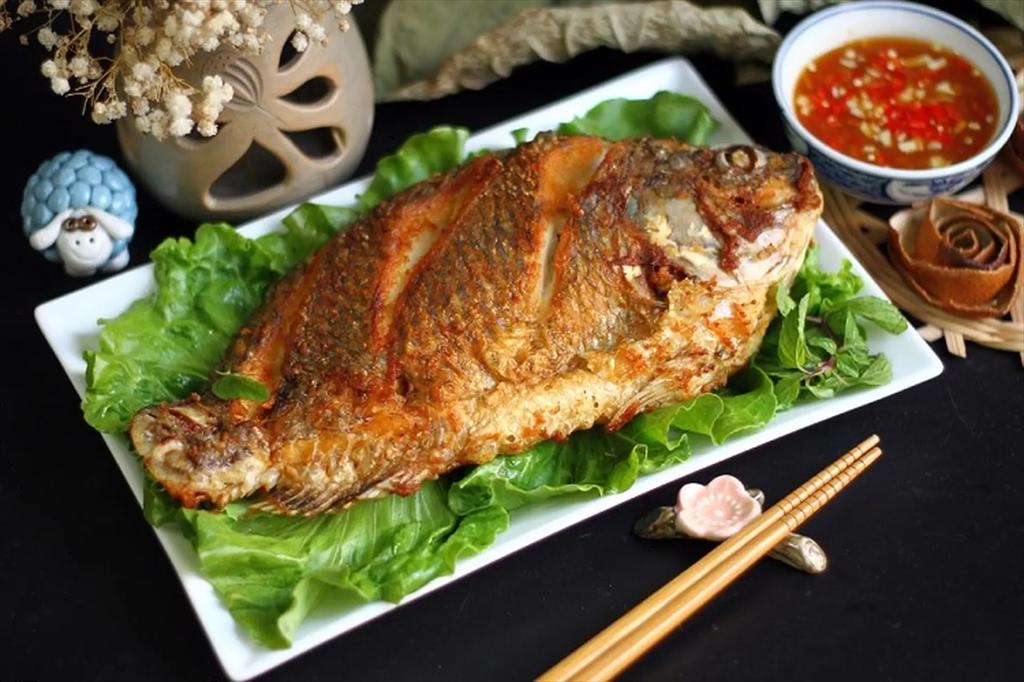
However, the current domestic production landscape reveals several structural weaknesses that have not kept pace with this growth momentum. Vietnam’s tilapia processing and export industry is facing a series of unresolved challenges, ranging from dependence on imported fingerlings and low farming productivity to concentrated export markets and intensifying competition. Without comprehensive solutions, the current growth momentum may prove difficult to sustain in the long term.
Still dependent on imported high-quality fingerlings
Vietnam remains heavily reliant on imported tilapia fingerlings, increasing production costs and reducing the industry’s self-sufficiency. At the same time, domestic broodstock quality has shown signs of deterioration, with slower growth performance becoming more evident.
Comprehensive investment in domestic breeding research and better credit support for farmers remain issues that have yet to be addressed systematically.
Growing competition from China
Last year, Chinese farmers reduced production due to losses caused by US tariff policies, creating opportunities for Vietnam. However, this year Chinese farmers have resumed expansion, increasing competitive pressure in the US market. Beyond its scale advantage, with annual production exceeding 3.3 million tons, China is also investing heavily in genetic technology to develop larger tilapia with thicker fillets aimed at premium market segments — a direction that Vietnam, with its still-limited breeding research capacity, is unlikely to match in the short term.
Dependence on a few key markets
Brazil and the US accounted for nearly 75% of Vietnam’s total tilapia export turnover in Q1/2026. In Brazil, import regulations vary across states, with some local authorities imposing technical barriers or local tariffs to protect domestic aquaculture industries. In the US, Vietnam’s current advantages partly stem from a specific tariff environment that could change if trade policies are adjusted. Meanwhile, the growing presence of Vietnamese tilapia in Mexico has already triggered reactions from local farmers — indicating similar risks could emerge in other markets once Vietnam’s market share becomes large enough.
Disease risks, technical barriers, and financing costs
Disease outbreaks remain a persistent risk as farming areas expand rapidly without fully coordinated zoning and management plans. The industry is also facing high interest rates and limited access to credit, affecting the ability of farmers and businesses to invest in better fingerlings and production expansion. On the market side, the EU and Japan are tightening requirements on antibiotic residues, food safety, and sustainability standards — barriers that require coordinated industry-wide investment rather than isolated efforts by individual companies alone.
(vasep.com.vn) After a period of strong growth, with export turnover reaching USD 38 million in Q1/2026 — up 174% year-on-year — the sector’s rapid expansion clearly reflects growing market opportunities.
(vasep.com.vn) In the first quarter of 2026, Vietnam’s pangasius exports to the ASEAN bloc reached USD 44 million, up 7% compared to the same period in 2025. After falling to the lowest level of the quarter at USD 9 million in February — reflecting the seasonal slowdown in orders after the festive period — exports recovered strongly to USD 18 million in March, the highest monthly value of the quarter. This development shows that import demand for pangasius in ASEAN remains relatively stable despite short-term fluctuations.
(seafood.vasep.com.vn) On May 11, 2026, the US National Oceanic and Atmospheric Administration (NOAA) announced a positive comparability finding for Vietnam’s swimming crab fisheries, along with those of Indonesia and Sri Lanka, under the Marine Mammal Protection Act (MMPA). With this decision, seafood and seafood products harvested from Vietnam’s swimming crab fisheries will continue to be eligible for import into the US market.
(seafood.vasep.com.vn) After a slowdown in 2025, Vietnam’s tuna exports to Germany showed more positive signs in the first quarter of 2026. However, the recovery remains uncertain as consumer demand in Germany is still cautious, while market competition is increasingly driven by pricing and supply stability.
(seafood.vasep.com.vn) After a sharp decline in 2025, Vietnam’s tuna exports to Israel are showing positive signs of recovery in the early months of 2026. According to Vietnam Customs data, export turnover to this market grew steadily month by month in Q1/2026, reaching nearly USD 10 million, up 33% compared to the same period in 2025. However, compared to Q1/2024, this level remains significantly lower, indicating that the recovery is still in its early stage following last year’s strong adjustment.
(seafood.vasep.com.vn) Entering 2026, the U.S. whitefish market has shown complex developments as global cod supply continues to tighten, while the U.S. trade environment becomes less stable. In this context, the U.S. market has had to become more flexible in sourcing alternative whitefish. However, relying heavily on Alaska pollock is not a long-term solution, as it is a strictly managed fishery with quotas and sustainability regulations, limiting any rapid increase in output to offset cod shortages.
(seafood.vasep.com.vn) Aquaculture, capture fisheries, and seed production activities in Lam Dong in the early months of 2026 continued to show positive signs, with both output and farming area slightly increasing compared to the same period, contributing to maintaining overall industry stability.
(seafood.vasep.com.vn) According to Vietnam Customs data, tuna exports in the first month of 2026 reached over USD 75 million, up 13% compared to the same period in 2025. Notably, exports increased in most key markets such as Japan, the EU, and Russia, while exports to the United States fell by 6%—a contrasting development amid ongoing adjustments in U.S. import tariff policies and new compliance requirements under the Marine Mammal Protection Act (MMPA), which took effect at the beginning of the year.
(seafood.vasep.com.vn) In March 2026, Vietnam’s tilapia exports recorded strong growth, reaching USD 15 million, up 109% compared to the same period in 2025. Cumulatively, in the first three months of 2026, export value reached USD 38 million, an increase of 174% year-on-year. This result highlights the sector’s robust expansion and reflects rapid growth across multiple markets.
(seafood.vasep.com.vn) In March 2026, Vietnam’s pangasius export value reached USD 182 million, up 1% compared to the same period in 2025. Cumulatively, exports in the first three months of 2026 totaled USD 514 million, an increase of 17% year-on-year, indicating that the growth momentum is being maintained despite signs of slowdown in some markets during March.
VASEP - HIỆP HỘI CHẾ BIẾN VÀ XUẤT KHẨU THỦY SẢN VIỆT NAM
Chịu trách nhiệm: Ông Nguyễn Hoài Nam - Phó Tổng thư ký Hiệp hội
Đơn vị vận hành trang tin điện tử: Trung tâm VASEP.PRO
Trưởng Ban Biên tập: Bà Phùng Thị Kim Thu
Giấy phép hoạt động Trang thông tin điện tử tổng hợp số 138/GP-TTĐT, ngày 01/10/2013 của Bộ Thông tin và Truyền thông
Tel: (+84 24) 3.7715055 – (ext.203); email: kimthu@vasep.com.vn
Trụ sở: Số 7 đường Nguyễn Quý Cảnh, Phường An Phú, Quận 2, Tp.Hồ Chí Minh
Tel: (+84) 28.628.10430 - Fax: (+84) 28.628.10437 - Email: vasephcm@vasep.com.vn
VPĐD: số 10, Nguyễn Công Hoan, Ngọc Khánh, Ba Đình, Hà Nội
Tel: (+84 24) 3.7715055 - Fax: (+84 24) 37715084 - Email: vasephn@vasep.com.vn