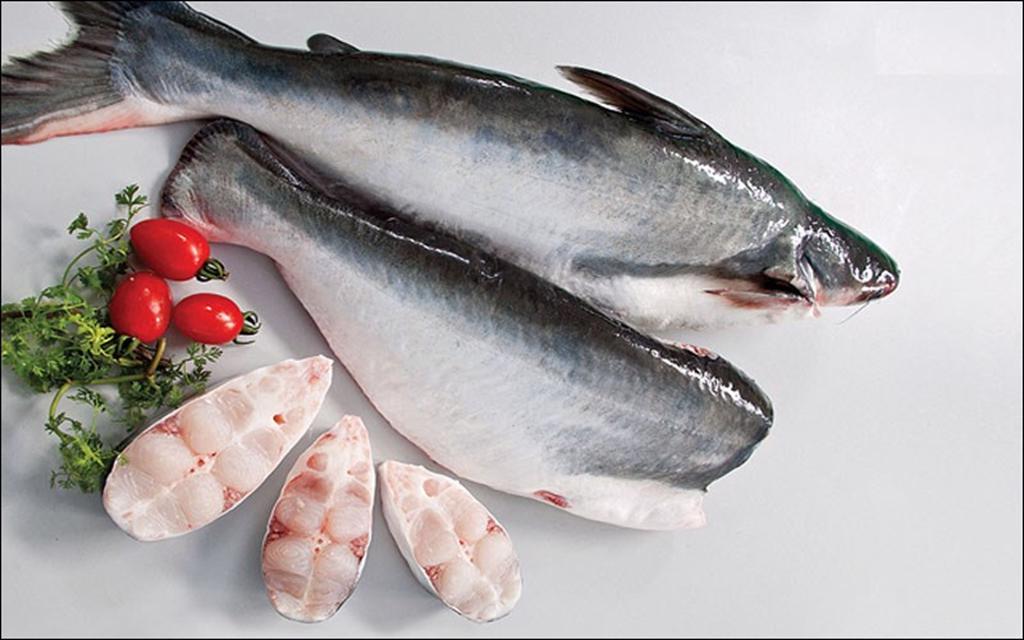
At the workshop, delegates agreed that pangasius remains one of Vietnam’s key aquaculture sectors, particularly in the Mekong Delta. Beyond its significant contribution to exports and job creation for hundreds of thousands of households, the industry also plays an important role in the Mekong region’s food system.
However, despite its growth achievements, the sector is facing numerous challenges, including climate change, increasing production costs, international market requirements, traceability standards, disease outbreaks, and green development pressures. Notably, food losses and waste throughout the value chain are affecting production efficiency and the industry’s competitiveness.
According to Associate Professor Dr. Vo Tat Thang, Director General of the Institute of Policy and Strategy for Agriculture and Rural Development, losses in the pangasius sector are not limited to physical product losses but also include wasted resources such as feed, fingerlings, labor, and water. If these losses can be reduced, the industry will improve economic efficiency, enhance livelihoods, and lessen environmental pressures.
The project, titled “Food Loss Assessment in the Pangasius Value Chain in the Mekong River Region,” has been implemented over three years, from April 1, 2023, to June 30, 2026, with funding from the Australian Centre for International Agricultural Research (ACIAR) and the International Development Research Centre (IDRC) of Canada. The project involves research institutions, government agencies, businesses, and stakeholders throughout the pangasius value chain.
According to M.Sc. Trinh Thi Lan, lecturer at the Department of Aquaculture, An Giang University and Deputy Project Coordinator in Vietnam, the project surveyed key stakeholders in the pangasius value chain across An Giang and Vinh Long provinces to assess current levels of food loss and forecast future trends.
Research findings indicate that losses occur at almost every stage of the production chain, including hatcheries, nursery operations, grow-out farming, harvesting, transportation, processing, and distribution.
M.Sc. Vo Van Oc of An Giang University noted that technical efficiency in pangasius production remains relatively low, with food losses estimated at around 30–50%. Key causes include unstable fingerling quality, environmental fluctuations in farming areas, and inconsistent technical management practices. In some cases, mortality rates may exceed 80%, causing significant economic losses for farmers.
Additionally, bacterial diseases continue to pose major risks, especially as rising input costs coincide with unstable productivity and output quality.
Experts identified processing as the biggest bottleneck in the value chain. Producing 1 kilogram of pangasius fillet requires approximately 2.8 kilograms of raw fish, meaning that skins, bones, heads, fat, and other by-products account for around 65% of total weight if not further processed.
Research also shows that the industry wastes roughly 50% of its by-products annually, equivalent to approximately 276,000 tons of untreated organic matter. This occurs because the industry has traditionally focused on volume growth rather than value creation.
According to Nguyen Van Nguyen, Director of APOTEC Center under the Research Institute for Aquaculture No. 2, Vietnam’s pangasius farming area reached approximately 5,500 hectares in 2025, with production of about 1.74 million tons and export turnover of nearly USD 2.2 billion. Along with this growth, the industry generates an estimated 700,000–900,000 tons of by-products annually.
Nguyen emphasized that if efficiently utilized, by-products such as heads, bones, skin, fat, internal organs, and trimmings could provide raw materials for the food, cosmetics, pharmaceutical, animal feed, and agricultural sectors. This approach aligns with the principles of the circular economy and green development in today’s seafood industry.
At the workshop, participants discussed and proposed five key solutions to reduce losses across the pangasius value chain. Priority should be given to improving fingerling quality, managing broodstock, strengthening biosafety, and enhancing disease control to reduce losses from the production stage.
Experts also recommended standardizing technical procedures across hatchery, nursery, grow-out farming, harvesting, grading, transportation, and storage activities to minimize losses during production. At the same time, stronger linkages among businesses, farmers, government agencies, and supporting organizations were identified as critical to improving overall chain efficiency.
Many participants suggested that the pangasius industry should shift from competing primarily on low costs toward creating higher value through by-product utilization, traceability, brand development, and expansion into premium market segments.
Delegates also highlighted the importance of human resources in industry development. Improving the capabilities of farmers, businesses, management agencies, and researchers will be essential to ensuring the long-term sustainability of technical solutions.
Nguyen Hoang Huy, Deputy Director of the An Giang Fisheries and Fisheries Surveillance Sub-Department, emphasized that pangasius has been identified as a strategic industry under An Giang Province’s development orientation through 2045. Findings from the project will provide an important scientific basis for policymakers and businesses to apply in future production practices.
(seafood.vasep.com.vn) As of the end of August 2026, Vietnam’s tilapia exports to the United States reached $21 million, representing a steep 48% year-over-year decline and accounting for 23% of the country's total tilapia export turnover. Frozen fillets accounted for 78% with the remainder consisting of whole frozen tilapia and frozen cuts.
(seafood.vasep.com.vn) After a volatile first half of the year, Vietnam’s pangasius exports to Brazil registered robust growth in July and August 2026. In August alone, export turnover reached $19 million, surging 73% compared to the same period in 2025. Cumulatively for the first eight months, total export value reached $124 million, reflecting an 8% year-over-year increase.
(seafood.vasep.com.vn) Besides modifying their boats, many fishermen in Dak Lak province are making efforts to venture out to sea to harvest seafood during the rough sea season.
(seafood.vasep.com.vn) At the Responsible Seafood Summit and TCRS Shrimp Summit 2026, organized by the GSA (Global Seafood Alliance) in Bangkok, Thailand, the conversation about the future of the shrimp industry began with one of its most important foundations: seedstock quality.
(seafood.vasep.com.vn) In the first eight months of 2026, Vietnam’s tuna exports to Lithuania surpassed $14 million, up 8% year on year. While the increase remains modest, it is notable given the continued pressure on Vietnamese tuna exports to the EU as a whole. More importantly, export turnover to Lithuania has shown a clearer recovery in recent months, making the market a destination worth monitoring for Vietnamese businesses in Europe.
(seafood.vasep.com.vn) Vietnam’s squid and octopus exports exceeded $527 million in the first eight months of 2026, marking a 15% year-on-year increase. This growth is particularly notable given the strong baseline established in 2025, when export turnover for the same period reached $458 million, a 13% rise from 2024.
(seafood.vasep.com.vn) Vietnamese pangasius is gaining traction in Japan, where competitive prices and reliable supplies have helped the fish enter professional distribution channels and a major sushi chain.
(vasep.com.vn) A circular economy does not create a “new type of shrimp” or a new certification. Its value lies in helping the shrimp value chain use resources more efficiently, stabilize production, generate additional value from by-products and build the data and evidence needed to meet increasingly stringent market requirements. This was the perspective shared by VASEP at the Public-Private Partnership (PPP) Forum on Promoting a Circular Economy in the Shrimp Industry in the Mekong Delta, held in Can Tho on September 21.
(vasep.com.vn) Vietnam’s pangasius exports to CPTPP markets reached $264 million in the first eight months of 2026, up 12% year-on-year and accounting for 17% of the nation’s total pangasius export turnover. In August alone, export value reached $34 million, inching up 3%.
(seafood.vasep.com.vn) Golden pompano is being selected as a high-value species for the development of high-tech marine aquaculture in Lam Dong Province. In 2026, the provincial Agricultural Extension Center launched a golden pompano farming model using circular HDPE cages in Lien Huong Commune, opening opportunities to apply technology to marine farming at a scale suited to local coastal conditions.
VASEP - HIỆP HỘI CHẾ BIẾN VÀ XUẤT KHẨU THỦY SẢN VIỆT NAM
Chịu trách nhiệm: Ông Nguyễn Hoài Nam - Phó Tổng thư ký Hiệp hội
Đơn vị vận hành trang tin điện tử: Trung tâm VASEP.PRO
Trưởng Ban Biên tập: Bà Phùng Thị Kim Thu
Giấy phép hoạt động Trang thông tin điện tử tổng hợp số 138/GP-TTĐT, ngày 01/10/2013 của Bộ Thông tin và Truyền thông
Tel: (+84 24) 3.7715055 – (ext.203); email: kimthu@vasep.com.vn
Trụ sở: Số 7 đường Nguyễn Quý Cảnh, Phường An Phú, Quận 2, Tp.Hồ Chí Minh
Tel: (+84) 28.628.10430 - Fax: (+84) 28.628.10437 - Email: vasephcm@vasep.com.vn
VPĐD: số 10, Nguyễn Công Hoan, Ngọc Khánh, Ba Đình, Hà Nội
Tel: (+84 24) 3.7715055 - Fax: (+84 24) 37715084 - Email: vasephn@vasep.com.vn