Under the theme “Innovation and Sustainable Development,” Vietfish 2026 will showcase a modern exhibition featuring a comprehensive range of seafood products, including fresh and frozen seafood, value-added seafood products, aquaculture inputs, processing equipment, advanced technologies, and export solutions. The exhibition is expected to attract 335 domestic and international exhibitors, representing 568 booths from 17 countries and territories.
Beyond the exhibition floor, Vietfish 2026 will host a series of specialized seminars addressing key industry issues, including digital transformation, traceability, sustainability certification, market diversification, and opportunities for developing greener seafood supply chains.
U.S. Soybean Partnership Promoting Sustainable Nutrition
A highlight of Vietfish 2026 is the continued collaboration between VASEP and the U.S. Soybean Export Council (USSEC) to promote the application of U.S. soy in aquaculture. U.S. soy ingredients provide advanced nutritional solutions that help improve seafood quality, optimize production efficiency, and support the sustainable growth of Vietnam’s aquaculture industry.
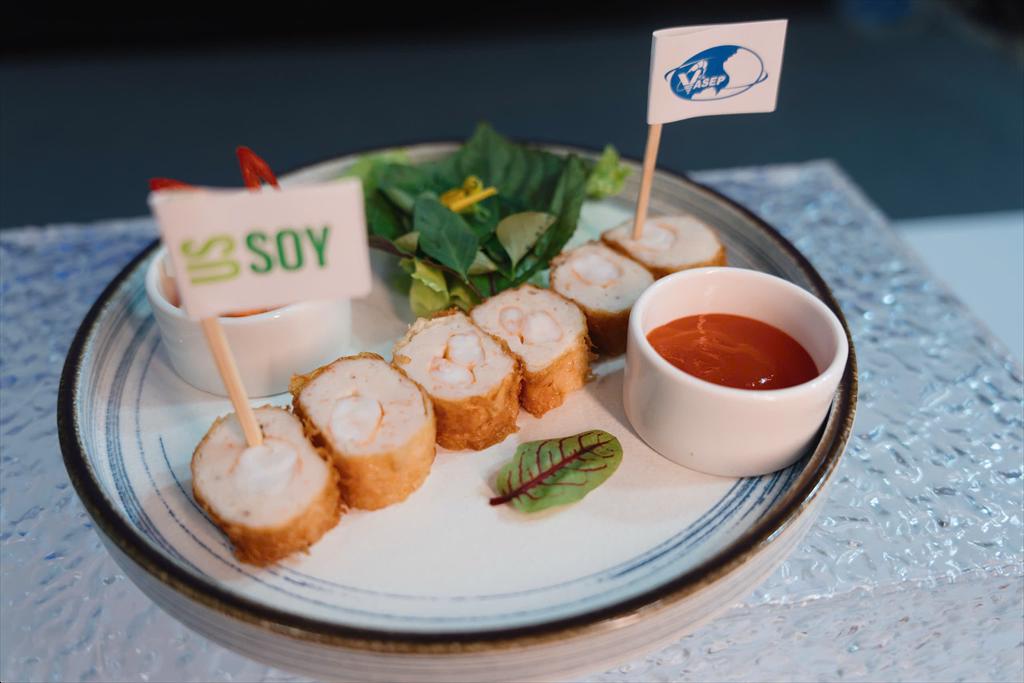
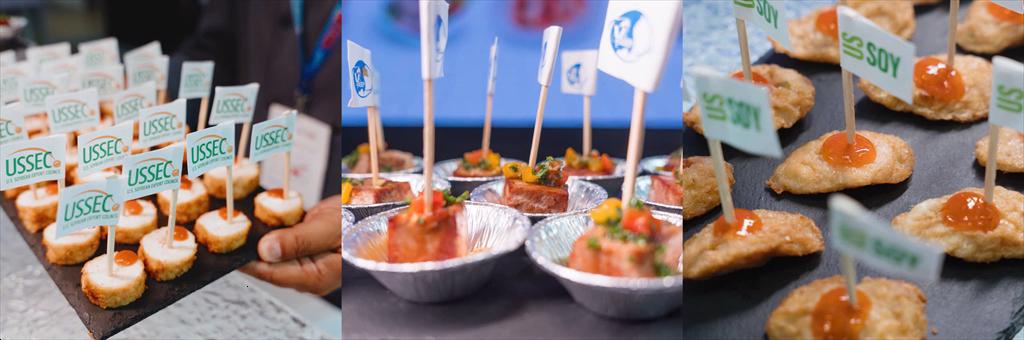
Visitors will have the opportunity to experience live culinary demonstrations featuring products carrying the Sustainable U.S. Soy (SUSS) label, alongside seafood products bearing the Fed with Sustainable U.S. Soy (FSUSS) label. These interactive activities demonstrate the important role that U.S. soy plays in enhancing both nutritional value and sustainability in Southeast Asia’s rapidly expanding aquaculture sector.
By showcasing SUSS- and FSUSS-certified products at Vietfish 2026, USSEC once again reinforces the position of U.S. soy as a trusted partner in supporting responsible aquaculture development while meeting the growing demand for sustainable and traceable protein sources.
U.S. soy plays a vital role in global food security and nutrition by providing a high-quality, sustainable source of protein for both human consumption and animal feed. Produced by dedicated U.S. farmers committed to continuous improvement, U.S. soy contributes to building a more responsible food system through verified sustainable farming practices. It represents an essential link in meeting Southeast Asia's growing demand for nutritious and sustainably produced food.
As Vietnam's aquaculture industry continues to advance, U.S. soy remains a reliable ingredient and a committed partner in promoting modern, sustainable production throughout the seafood value chain. Vietfish 2026 is set to serve as a strategic platform for collaboration, innovation, and business growth, bringing together stakeholders to help shape the future of Vietnam’s seafood industry.
(vasep.com.vn) Markets are changing faster, buyer requirements are becoming more demanding, and trade barriers are growing increasingly complex. In this environment, seafood businesses need more than an understanding of current market conditions. They need a longer-term perspective to answer a critical question: Where will growth opportunities come from in 2027–2029, and what should businesses do now to prepare? This is one of the key reasons why VASEP is organizing Vietnam Seafood Summit 2026.
(vasep.com.vn) In the first eight months of 2026, Vietnam’s pangasius exports to the Middle East reached US$113 million, up 7% year on year from the same period in 2025. Growth has become more pronounced in recent months. In August alone, exports to the region totaled US$20 million, an increase of 24%. This indicates that demand for Vietnamese pangasius in the Middle East is gradually recovering after a slowdown in March, although the pace of recovery varies across markets.
(vasep.com.vn) China’s shrimp imports continued to grow strongly in 2026, while Vietnam’s shrimp exports to the market also recorded notable growth. However, behind these positive figures lie two distinct trends: Chinese consumption is growing more slowly than imports, and lobster accounts for a substantial share of Vietnam’s shrimp exports to China, making its product mix significantly different from those of Ecuador and India. Exporters therefore need to assess each segment carefully to understand the opportunities and risks.
(vasep.com.vn) Changing markets, shifting buyer demand, and increasingly complex trade barriers are raising a key question for Vietnam’s seafood industry: Where will the new growth opportunities lie in 2027–2029?
(seafood.vasep.com.vn) As of the end of August 2026, Vietnam’s tilapia exports to the United States reached $21 million, representing a steep 48% year-over-year decline and accounting for 23% of the country's total tilapia export turnover. Frozen fillets accounted for 78% with the remainder consisting of whole frozen tilapia and frozen cuts.
(seafood.vasep.com.vn) After a volatile first half of the year, Vietnam’s pangasius exports to Brazil registered robust growth in July and August 2026. In August alone, export turnover reached $19 million, surging 73% compared to the same period in 2025. Cumulatively for the first eight months, total export value reached $124 million, reflecting an 8% year-over-year increase.
(seafood.vasep.com.vn) Besides modifying their boats, many fishermen in Dak Lak province are making efforts to venture out to sea to harvest seafood during the rough sea season.
(seafood.vasep.com.vn) At the Responsible Seafood Summit and TCRS Shrimp Summit 2026, organized by the GSA (Global Seafood Alliance) in Bangkok, Thailand, the conversation about the future of the shrimp industry began with one of its most important foundations: seedstock quality.
(seafood.vasep.com.vn) In the first eight months of 2026, Vietnam’s tuna exports to Lithuania surpassed $14 million, up 8% year on year. While the increase remains modest, it is notable given the continued pressure on Vietnamese tuna exports to the EU as a whole. More importantly, export turnover to Lithuania has shown a clearer recovery in recent months, making the market a destination worth monitoring for Vietnamese businesses in Europe.
(seafood.vasep.com.vn) Vietnam’s squid and octopus exports exceeded $527 million in the first eight months of 2026, marking a 15% year-on-year increase. This growth is particularly notable given the strong baseline established in 2025, when export turnover for the same period reached $458 million, a 13% rise from 2024.
VASEP - HIỆP HỘI CHẾ BIẾN VÀ XUẤT KHẨU THỦY SẢN VIỆT NAM
Chịu trách nhiệm: Ông Nguyễn Hoài Nam - Phó Tổng thư ký Hiệp hội
Đơn vị vận hành trang tin điện tử: Trung tâm VASEP.PRO
Trưởng Ban Biên tập: Bà Phùng Thị Kim Thu
Giấy phép hoạt động Trang thông tin điện tử tổng hợp số 138/GP-TTĐT, ngày 01/10/2013 của Bộ Thông tin và Truyền thông
Tel: (+84 24) 3.7715055 – (ext.203); email: kimthu@vasep.com.vn
Trụ sở: Số 7 đường Nguyễn Quý Cảnh, Phường An Phú, Quận 2, Tp.Hồ Chí Minh
Tel: (+84) 28.628.10430 - Fax: (+84) 28.628.10437 - Email: vasephcm@vasep.com.vn
VPĐD: số 10, Nguyễn Công Hoan, Ngọc Khánh, Ba Đình, Hà Nội
Tel: (+84 24) 3.7715055 - Fax: (+84 24) 37715084 - Email: vasephn@vasep.com.vn