In particular, revenue in most markets recorded positive growth compared to the same period in 2023. Specifically, revenue in the Vietnamese market increased by 47%, reaching 329 billion VND; the European market increased by 21%, reaching 172 billion VND; the Chinese market increased by 12%, reaching 104 billion VND; and other markets increased by 26%, reaching 154 billion VND. In contrast, revenue from the US market decreased by 0.3% to 372 billion VND.
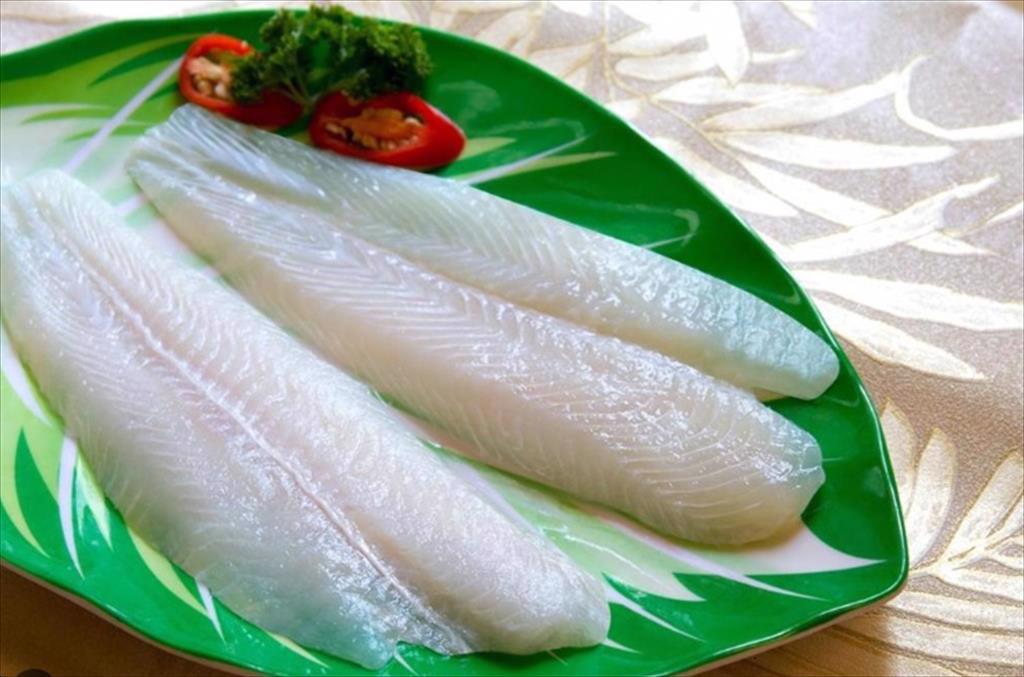
In terms of structure, revenue from pangasius products accounted for 53% of the total revenue in May 2024 of Vinh Hoan Corp, reaching 598 billion VND, up 1% over the same period in 2023. Followed by revenue from other products (accounting for 19%), reaching 217 billion VND, an increase of 98%; by-products (accounting for 14.5%), reaching 164 billion VND, an increase of 15%...
This year, Vinh Hoan Corp plans its business with two scenarios. For the basic scenario, the company sets a revenue target of 10,700 billion VND, an increase of 6.6% compared to the implementation level in 2023. However, profit after tax is expected to decrease by 12.9%, only reaching 800 billion VND.
For the high scenario, Vinh Hoan Corp targets revenue of 11,500 billion VND and profit after tax of 1,000 billion VND, an increase of 14.6% and 8.8%, respectively, compared to the implementation level 2023.
In the first quarter of 2024, due to pressure on input costs and falling selling prices, Vinh Hoan Corp gross profit margin decreased by 800 basis points, to 9.3%. At the same time, profit after tax decreased by 16%, to only 189 billion VND.
According to the assessment of some financial institutions, the business results of Vinh Hoan Corp have "created a bottom" and are expected to recover more clearly in the second half of this year, especially when the US market is recording a series of positive signals.
In the two main export markets, the US and Europe, Vietnamese pangasius is advantageous when the US has banned importing seafood from Russia and reduced anti-dumping duties on seafood. Vietnamese pangasius products; Europe increased the tax applied to fille pollock (a substitute for fillet pangasius) from 0% to 13.7%. Thereby, it creates advantages for Vietnamese pangasius when exporting to these markets.
In addition to demand recovery, the driving force to increase export pangasius prices also comes from the shortage of raw fish supply in the near future.
This year's net revenue of Vinh Hoan Seafood is expected to increase by 13.8% compared to 2023, reaching 11,426 billion VND, and net profit will increase by 17,000 VND, reaching 1,117 billion VND.
(vasep.com.vn) On November 11, 2026, in Can Tho, the Vietnam Association of Seafood Exporters and Producers (VASEP) will organize the Vietnam Seafood Summit 2026 (VSS 2026) under the theme “Seafood Market Outlook 2027–2029: Opportunities and Headroom for Double-Digit Export Growth.”
(seafood.vasep.com.vn) Business leader Do Ngoc Tai, General Director of Tai Kim Anh Seafood Processing Joint Stock Company, was honored by the Vietnam Chamber of Commerce and Industry (VCCI) with the title “Outstanding Vietnamese Entrepreneur – Thanh Giong Cup 2026” at a ceremony celebrating Vietnam Entrepreneurs’ Day (October 13). The event took place on the evening of October 11, 2026, at the National Convention Center in Hanoi.
(vasep.com.vn) The global tilapia market is becoming increasingly segmented, not only among producing countries but also by product type and destination market. Supply is divided into groups with distinct competitive advantages: large volumes of whole fish and frozen fillets from Asia, high-value fresh fillets from Latin America, and substantial domestic consumption in several major producing countries.
(vasep.com.vn) Vietnam’s tuna exports to the UK grew in the first eight months of 2026, despite signs of slowing import demand in the market. However, sharp fluctuations in orders, competition from major suppliers, and new traceability requirements are creating challenges for Vietnamese exporters.
(seafood.vasep.com.vn) Vietnam is stepping up efforts to combat illegal fishing, protect marine ecosystems, expand digital monitoring, and develop science-based management to ensure the sea can support communities and the economy for generations to come.
(seafood.vasep.com.vn) The EU remains a critical market for Vietnamese shrimp; however, purchasing demand and import patterns are undergoing notable changes. According to Vietnam Customs data, as of September 15, 2026, Vietnam’s shrimp exports to the EU reached nearly $374 million, down 5% year-over-year and accounting for 10.7% of the country’s total shrimp export value. Meanwhile, the EU’s stotal shrimp imports through July 2026 contracted by 7% in volume, exhibiting divergent trends across Southern Europe, Northwestern Europe and Eastern Europe. These dynamics necessitate that Vietnamese enterprises closely monitor individualized market demand, rather than approaching the EU as a monolithic consumer block.
(seafood.vasep.com.vn) In the first eight months of 2026, Vietnam’s exports of surimi and fish cakes remained relatively stable year-over-year compared to 2025. Following a contraction in the initial months, export performance demonstrated improvement from June onward, peaking in August. However, the recovery has been uneven, characterized by divergent trends across major markets: robust growth was recorded in China, Japan, Malaysia, the United States, and Taiwan, whereas export volumes to South Korea, Indonesia, and select European markets contracted.
(seafood.vasep.com.vn) Pangasius remains one of Dong Thap’s key aquaculture species, with the province focusing on developing an integrated value chain covering seed production, commercial farming, deep processing and by-product utilization. The province is promoting high-tech, circular pangasius farming models featuring reduced water exchange and enhanced biosecurity, aiming to improve production efficiency and strengthen control over raw material quality.
(vasep.com.vn) Vietnam’s seafood exports in September 2026 are estimated at US$1.135 billion, up 11.9% year-on-year, bringing total exports in the first nine months of the year to US$9.103 billion, up 11.4%. Behind this double-digit growth, however, increasingly divergent market trends are emerging: China–Hong Kong and ASEAN posted strong growth, while the U.S., EU and Japan all recorded declines in September.
(vasep.com.vn) In the first eight months of 2026, Brazil became the largest market for Vietnamese tilapia, with export value reaching US$44 million, up 22,142% year-on-year and accounting for 49% of Vietnam’s total tilapia exports. In August alone, exports to Brazil reached US$4 million. However, behind this remarkable growth is a market that is imposing increasingly stringent requirements on imported supplies.
VASEP - HIỆP HỘI CHẾ BIẾN VÀ XUẤT KHẨU THỦY SẢN VIỆT NAM
Chịu trách nhiệm: Ông Nguyễn Hoài Nam - Phó Tổng thư ký Hiệp hội
Đơn vị vận hành trang tin điện tử: Trung tâm VASEP.PRO
Trưởng Ban Biên tập: Bà Phùng Thị Kim Thu
Giấy phép hoạt động Trang thông tin điện tử tổng hợp số 138/GP-TTĐT, ngày 01/10/2013 của Bộ Thông tin và Truyền thông
Tel: (+84 24) 3.7715055 – (ext.203); email: kimthu@vasep.com.vn
Trụ sở: Số 7 đường Nguyễn Quý Cảnh, Phường An Phú, Quận 2, Tp.Hồ Chí Minh
Tel: (+84) 28.628.10430 - Fax: (+84) 28.628.10437 - Email: vasephcm@vasep.com.vn
VPĐD: số 10, Nguyễn Công Hoan, Ngọc Khánh, Ba Đình, Hà Nội
Tel: (+84 24) 3.7715055 - Fax: (+84 24) 37715084 - Email: vasephn@vasep.com.vn