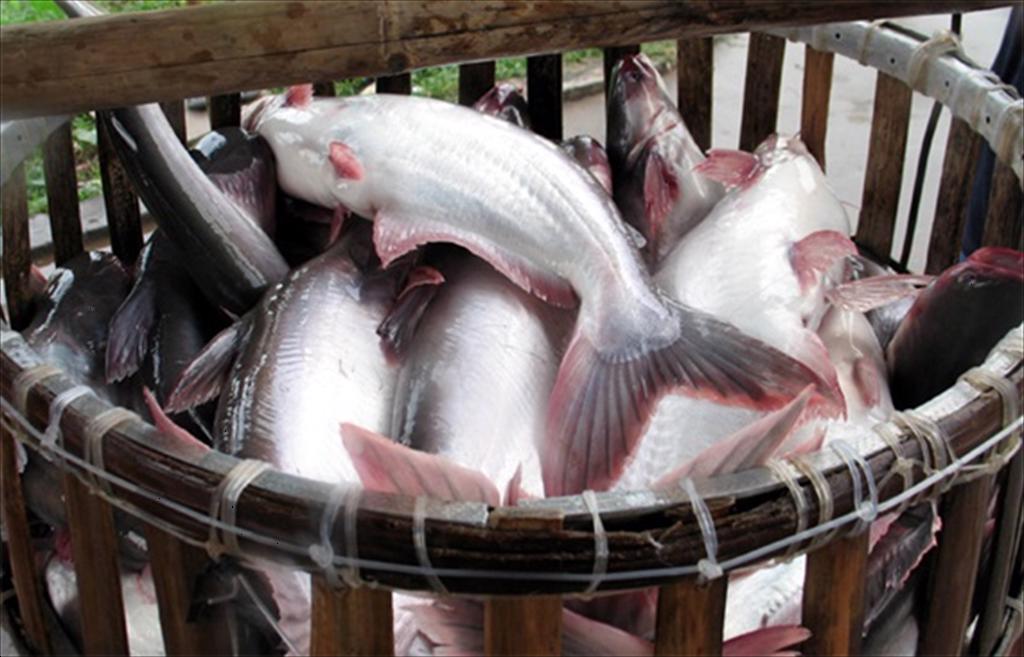
Mexico records the strongest growth among major CPTPP markets
Mexico emerged as the most dynamic CPTPP market for Vietnamese pangasius in the first four months of 2026. Export value reached nearly USD 31 million, accounting for 4% of Vietnam’s total pangasius exports. Compared with the same period in 2025, exports to Mexico surged by 57%, the highest growth rate among CPTPP markets.
In terms of product structure, Mexico has the simplest import profile. The market is almost entirely focused on fresh and frozen pangasius products under HS Chapter 03. Frozen pangasius fillets under HS code 0304 accounted for 91% of export value, while the remaining 9% consisted of other HS 03 products.
This structure indicates that pangasius exports to Mexico continue to rely heavily on traditional products, particularly frozen fillets. The 57% growth rate reinforces Mexico’s position as one of the most important CPTPP markets to watch.
Japan rises 27% in the first four months, with processed products accounting for 25%
Pangasius exports to Japan reached nearly USD 16 million during the first four months of 2026, representing 2% of Vietnam’s total pangasius export turnover. Export value increased by 27% year-on-year.
Frozen fillets remained the dominant product category, accounting for 70% of exports. Notably, processed products under HS Chapter 16 represented 25% of total pangasius exports to Japan, while other HS 03 products contributed approximately 5%.
Compared with Mexico, Japan’s import structure is more diversified. In addition to frozen fillets, processed products account for a significant share of imports. This reflects differences in consumer demand across CPTPP markets and Japanese consumers’ preference for processed and value-added seafood products.
Exports to Canada reach USD 15 million, with a more balanced product mix
Pangasius exports to Canada totaled USD 15 million during the first four months of 2026, accounting for 2% of Vietnam’s total pangasius export value. Compared with the same period in 2025, exports declined slightly by 0.3%.
A notable feature of the Canadian market is its more balanced product structure between fresh and frozen products and processed products. Frozen fillets accounted for 54% of exports, while value-added products under HS Chapter 16 represented as much as 43%. Other HS 03 products accounted for approximately 2%.
With such a high proportion of processed products, Canada differs significantly from Mexico and more closely resembles Japan in its preference for value-added imports. However, in terms of growth, the market remained largely flat compared with the previous year.
Australia declines 6%, while frozen fillets remain dominant
Pangasius exports to Australia reached USD 10 million during the first four months of 2026, accounting for 1.4% of Vietnam’s total pangasius export turnover. Compared with the same period in 2025, exports to Australia declined by 6%.
Frozen fillets remained the leading product category, accounting for 73% of export value, while processed products under HS Chapter 16 represented 27%.
Among the four major CPTPP markets reviewed, Mexico recorded the strongest growth and maintained a product structure focused almost entirely on frozen pangasius products under HS Chapter 03. Japan and Canada demonstrated stronger demand for processed products, which accounted for 25% and 43% of imports, respectively. Although Australia recorded a slight decline in export value, it continued to import both frozen fillets and processed products.
Consumer preferences across CPTPP markets are becoming increasingly differentiated. In Mexico, Vietnamese pangasius continues to capitalize on its strengths in frozen fillets and other frozen products under HS Chapter 03. Meanwhile, Japan, Canada, and Australia offer significant growth potential for value-added pangasius products.
Overall, Vietnam’s pangasius exports to CPTPP markets increased by 21% during the first four months of 2026, although growth rates and product import structures varied considerably across individual markets.
(seafood.vasep.com.vn) Hai Phong's aquaculture sector is accelerating the adoption of high technologies in aquaculture to adapt to climate change, with red tilapia and tilapia identified as the key cultured species for priority development.
(vasep.com.vn) Vietnam’s seafood exports reached nearly US$1.1 billion in June 2026, up 21.0% year-on-year. Cumulative exports in the first half of 2026 totaled nearly US$5.8 billion, representing a 12.8% increase compared with the same period last year. Exports to China and Hong Kong continued to accelerate, while shipments to the United States rebounded strongly in June. In contrast, exports to the EU, Japan, and the Middle East remained sluggish or recorded slight declines.
(vasep.com.vn) Tilapia is playing an increasingly important role in Vietnam’s aquaculture sector, driven not only by growing market opportunities but also by its ability to meet increasingly stringent requirements on quality, food safety, and traceability. In practice, tilapia farming in Vietnam is not a spontaneous or loosely regulated activity; rather, it operates under a comprehensive legal and technical framework covering the entire value chain—from hatcheries and farming to processing and exports.
(seafood.vasep.com.vn) Vietnam’s shrimp exports reached USD 1.9 billion in the first five months of 2026, up 12% compared with the same period last year. Amid continued volatility in the global seafood market, this result demonstrates that the shrimp sector has maintained positive growth momentum, supported by improving demand in several Asian markets, particularly China.
(seafood.vasep.com.vn) On June 16, the Department of Agriculture and Environment of Ca Mau Province announced that the locality has established a farming area code for nearly 30,400 hectares of mud crab aquaculture and granted export facility codes to five enterprises eligible to export mud crab officially to markets such as China, Cambodia, Singapore, and the United Arab Emirates (UAE).
(seafood.vasep.com.vn) The United States remains one of the largest export markets for Vietnamese pangasius. In the first four months of 2026, pangasius exports to the US reached USD 106 million, up 4% compared to the same period in 2025. In April 2026 alone, export value totaled USD 38 million, marking a 20% year-on-year increase and the first positive growth recorded after an extended period of decline.
(seafood.vasep.com.vn) While Vietnam’s shrimp exports to many major markets continued to post positive growth in the first months of 2026, exports to the United States declined, highlighting growing competitive pressures and trade barriers facing the Vietnamese shrimp industry.
(seafood.vasep.com.vn) Egypt is emerging as one of the most promising destinations for Vietnamese tuna exports in 2026. During the first four months of the year, export turnover to this market exceeded USD 7.3 million, marking a sharp increase compared to the same period over the previous two years. As Egypt’s tuna imports continue to recover and demand for canned tuna remains strong, the market is becoming increasingly attractive for Vietnamese tuna processors and exporters.
(seafood.vasep.com.vn) During the first four months of 2026, Vietnam’s pangasius exports to CPTPP member countries reached nearly USD 128 million, accounting for 18% of the country’s total pangasius export value and increasing by 21% compared to the same period in 2025. Demand patterns varied significantly across the bloc: Mexico primarily imported fresh and frozen pangasius products, while Japan and Canada recorded substantial shares of processed products. Australia remained focused on frozen fillets but continued to maintain a portion of processed imports.
(seafood.vasep.com.vn) Despite the slow recovery of the U.S. market and continued trade-related challenges facing Vietnam’s shrimp industry, Minh Phu Seafood Corporation (MPC) has set ambitious targets for 2026. The company aims to produce 68,800 metric tons of finished shrimp products, generate consolidated revenue of VND 19.9 trillion, and achieve VND 1.059 trillion in pre-tax profit. If achieved, these figures would represent the highest revenue and profit levels in the company’s history.
VASEP - HIỆP HỘI CHẾ BIẾN VÀ XUẤT KHẨU THỦY SẢN VIỆT NAM
Chịu trách nhiệm: Ông Nguyễn Hoài Nam - Phó Tổng thư ký Hiệp hội
Đơn vị vận hành trang tin điện tử: Trung tâm VASEP.PRO
Trưởng Ban Biên tập: Bà Phùng Thị Kim Thu
Giấy phép hoạt động Trang thông tin điện tử tổng hợp số 138/GP-TTĐT, ngày 01/10/2013 của Bộ Thông tin và Truyền thông
Tel: (+84 24) 3.7715055 – (ext.203); email: kimthu@vasep.com.vn
Trụ sở: Số 7 đường Nguyễn Quý Cảnh, Phường An Phú, Quận 2, Tp.Hồ Chí Minh
Tel: (+84) 28.628.10430 - Fax: (+84) 28.628.10437 - Email: vasephcm@vasep.com.vn
VPĐD: số 10, Nguyễn Công Hoan, Ngọc Khánh, Ba Đình, Hà Nội
Tel: (+84 24) 3.7715055 - Fax: (+84 24) 37715084 - Email: vasephn@vasep.com.vn