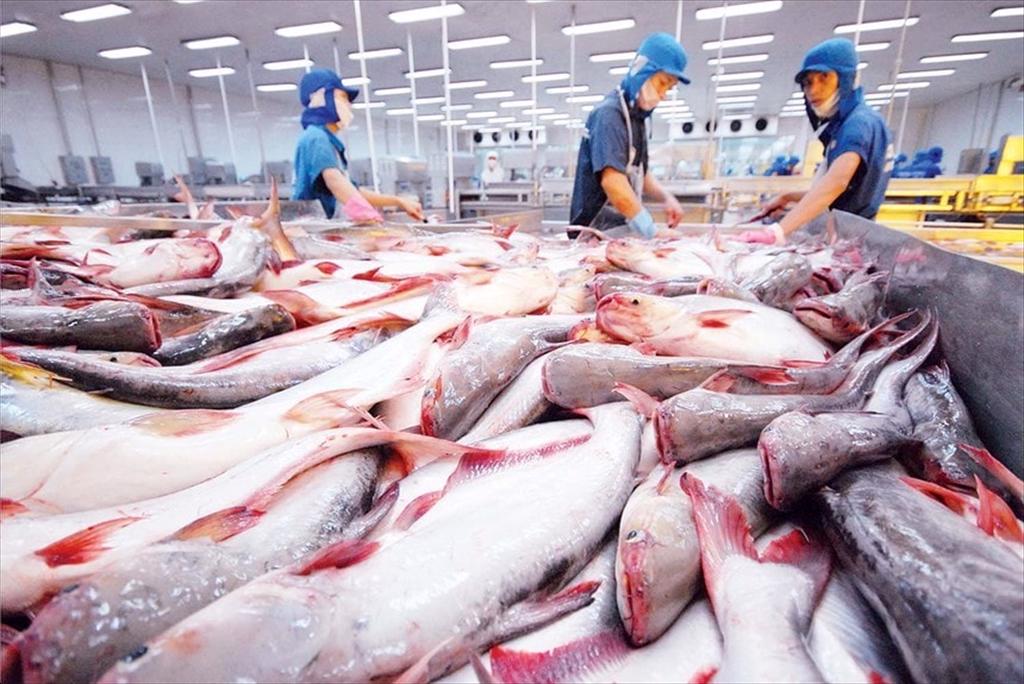
However, for this recovery to translate into sustainable growth, the pangasius industry must continue strengthening key foundations throughout the value chain—from seed quality and raw material supply stability to environmental risk management, processing efficiency, and by-product utilization. These are not only immediate requirements but also essential conditions for enhancing the competitiveness of Vietnamese pangasius as global markets increasingly demand higher standards of quality, traceability, and value addition.
Seed Quality: A Foundation That Needs Continued Improvement
Seed quality remains one of the most critical factors directly affecting farming performance and the competitiveness of the entire pangasius value chain.
While seed supply is relatively abundant in terms of quantity, quality remains inconsistent among hatcheries and breeding facilities. The survival rate from fry to fingerlings is still modest, and losses during the nursery stage continue to be a challenge that requires further improvement.
Improving seed quality should therefore remain a long-term priority for the industry. Healthy, uniform, and well-managed fingerlings can help farmers reduce disease risks, improve survival rates, increase productivity, and contribute to a more stable raw material supply for processing and export enterprises.
Raw Material Supply: Enhancing Stability for Long-Term Production Planning
For processors and exporters, fluctuations in raw material supply can affect production schedules, delivery commitments, and the ability to fulfill long-term contracts.
Strengthening linkages among processors, farming areas, hatcheries, and farmers remains a key solution for reducing volatility, sharing risks, and creating a more stable foundation for the entire pangasius value chain.
Deep Processing and By-products: Significant Potential for Value Creation
Beyond farming, processing and by-product utilization offer substantial opportunities to enhance the value of the pangasius industry.
Producing 1 kilogram of finished pangasius fillet typically requires about 2.8 kilograms of whole fish. The remaining portions—including heads, bones, skin, fat, trimmings, and other by-products—can become valuable raw materials for industries such as food processing, animal feed, pharmaceuticals, cosmetics, and other value-added products if utilized effectively.
In fact, several leading pangasius companies have already invested in deep processing and by-product utilization to produce fish oil, fishmeal, collagen, gelatin, and other higher-value products. This approach aligns with circular economy principles, helping businesses reduce waste, improve resource efficiency, and enhance profit margins.
However, at the industry level, by-product utilization remains uneven. A considerable portion of by-products is still not being fully exploited. With better organization and investment, this segment could become an important pillar helping Vietnamese pangasius shift from a volume-driven advantage to a value-driven advantage.
Climate Change and Disease Risks: Challenges Requiring Proactive Management
The pangasius industry in the Mekong Delta is increasingly affected by climate variability, salinity intrusion, water quality changes, and disease risks.
Due to its intensive farming characteristics, pangasius is particularly sensitive to fluctuations in temperature, water quality, and pond environmental conditions.
In this context, the industry's priority is not merely to expand production but also to strengthen farming area management, environmental monitoring, disease control, and the adoption of safer and more resource-efficient farming practices.
Proactive adaptation to climate-related challenges will help farmers reduce risks while enabling processors to maintain a stable supply and better meet sustainability requirements from importing markets.
Strengthening the Entire Value Chain to Enhance Competitiveness
The export recovery seen in the first months of 2026 is a positive signal for Vietnam’s pangasius sector. However, for growth to be driven by more than just production volume and raw material prices, the entire value chain must continue evolving toward greater stability, efficiency, and value addition.
This requires close coordination among hatcheries, farmers, processors, local authorities, and government agencies. Key priorities include improving seed quality, developing integrated farming areas, stabilizing raw material supplies, expanding deep processing, maximizing by-product utilization, and adopting circular economy models.
With a stronger and better-organized value chain, Vietnamese pangasius will be better positioned to enhance its competitiveness, maintain market share in traditional destinations, and expand into higher-value market segments worldwide.
(seafood.vasep.com.vn) On June 16, the Department of Agriculture and Environment of Ca Mau Province announced that the locality has established a farming area code for nearly 30,400 hectares of mud crab aquaculture and granted export facility codes to five enterprises eligible to export mud crab officially to markets such as China, Cambodia, Singapore, and the United Arab Emirates (UAE).
(seafood.vasep.com.vn) The United States remains one of the largest export markets for Vietnamese pangasius. In the first four months of 2026, pangasius exports to the US reached USD 106 million, up 4% compared to the same period in 2025. In April 2026 alone, export value totaled USD 38 million, marking a 20% year-on-year increase and the first positive growth recorded after an extended period of decline.
(seafood.vasep.com.vn) While Vietnam’s shrimp exports to many major markets continued to post positive growth in the first months of 2026, exports to the United States declined, highlighting growing competitive pressures and trade barriers facing the Vietnamese shrimp industry.
(seafood.vasep.com.vn) Egypt is emerging as one of the most promising destinations for Vietnamese tuna exports in 2026. During the first four months of the year, export turnover to this market exceeded USD 7.3 million, marking a sharp increase compared to the same period over the previous two years. As Egypt’s tuna imports continue to recover and demand for canned tuna remains strong, the market is becoming increasingly attractive for Vietnamese tuna processors and exporters.
(seafood.vasep.com.vn) During the first four months of 2026, Vietnam’s pangasius exports to CPTPP member countries reached nearly USD 128 million, accounting for 18% of the country’s total pangasius export value and increasing by 21% compared to the same period in 2025. Demand patterns varied significantly across the bloc: Mexico primarily imported fresh and frozen pangasius products, while Japan and Canada recorded substantial shares of processed products. Australia remained focused on frozen fillets but continued to maintain a portion of processed imports.
(seafood.vasep.com.vn) Despite the slow recovery of the U.S. market and continued trade-related challenges facing Vietnam’s shrimp industry, Minh Phu Seafood Corporation (MPC) has set ambitious targets for 2026. The company aims to produce 68,800 metric tons of finished shrimp products, generate consolidated revenue of VND 19.9 trillion, and achieve VND 1.059 trillion in pre-tax profit. If achieved, these figures would represent the highest revenue and profit levels in the company’s history.
(seafood.vasep.com.vn) HungHau Foods Joint Stock Company (HungHau Foods) has been honored at the 33rd Asia-Pacific Economic Forum, receiving two prestigious awards: “Top 10 Outstanding Asia-Pacific Enterprises 2026” and “Top 10 Outstanding Entrepreneurs” awarded to HungHau Foods CEO, Ms. Nguyen Yen.
(seafood.vasep.com.vn) After a period of sluggish imports in 2025, the Chinese market has returned with strong shrimp purchasing momentum in the first months of 2026. However, alongside rising demand comes an increasingly stringent import control system, covering quarantine requirements, food safety standards, registration procedures, and traceability. This makes China a market that offers both significant opportunities and growing risks for Vietnamese shrimp exporters.
(seafood.vasep.com.vn) Recently, in Long Xuyen City, An Giang Province, the Institute of Policy and Strategy for Agriculture and Rural Development (IPSARD) and the University of Economics Ho Chi Minh City (UEH) organized a workshop to announce the results of the project “Food Loss Assessment in the Pangasius Value Chain in the Mekong River Region.” The project aims to provide scientific evidence to support the sustainable development of Vietnam’s pangasius industry.
(seafood.vasep.com.vn) Shrimp prices in Vietnam’s Mekong Delta have recovered since early May, helping to improve farmers’ confidence and accelerate stocking activities for the 2026 farming season. However, farmers remain cautious due to rising input costs, unfavorable weather conditions, and disease risks.
VASEP - HIỆP HỘI CHẾ BIẾN VÀ XUẤT KHẨU THỦY SẢN VIỆT NAM
Chịu trách nhiệm: Ông Nguyễn Hoài Nam - Phó Tổng thư ký Hiệp hội
Đơn vị vận hành trang tin điện tử: Trung tâm VASEP.PRO
Trưởng Ban Biên tập: Bà Phùng Thị Kim Thu
Giấy phép hoạt động Trang thông tin điện tử tổng hợp số 138/GP-TTĐT, ngày 01/10/2013 của Bộ Thông tin và Truyền thông
Tel: (+84 24) 3.7715055 – (ext.203); email: kimthu@vasep.com.vn
Trụ sở: Số 7 đường Nguyễn Quý Cảnh, Phường An Phú, Quận 2, Tp.Hồ Chí Minh
Tel: (+84) 28.628.10430 - Fax: (+84) 28.628.10437 - Email: vasephcm@vasep.com.vn
VPĐD: số 10, Nguyễn Công Hoan, Ngọc Khánh, Ba Đình, Hà Nội
Tel: (+84 24) 3.7715055 - Fax: (+84 24) 37715084 - Email: vasephn@vasep.com.vn