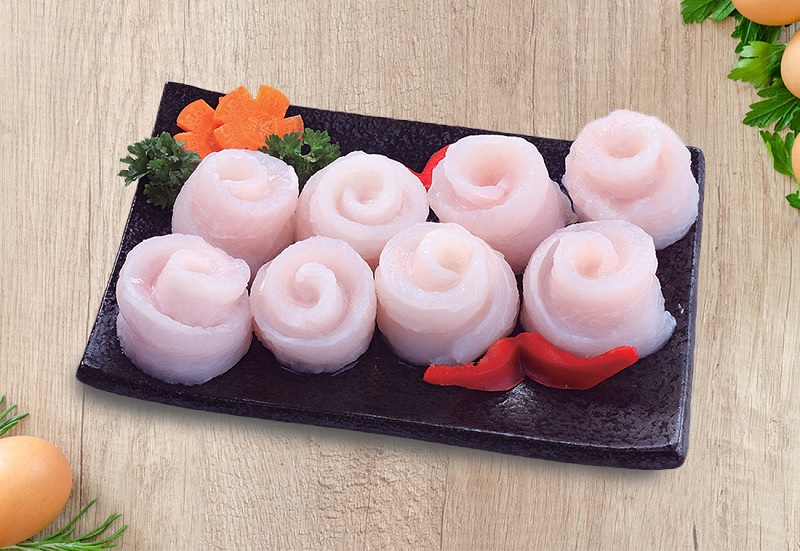
At the beginning of 2023, the active working atmosphere of seafood enterprises, including pangasius enterprises, showed optimistic signals on the recovery of orders from the markets. On the first working day after the Tet holiday, workers of Hung Ca Co., Ltd. are busy preparing for an export order of 21 containers of pangasius fillets. At Vinh Hoan JSC, nearly 10,000 workers also return to the company to prepare for new orders.
Although in the last quarter of 2022, Vietnam's pangasius exports had fallen to the lowest level of the year with 475 million USD, down 12% compared to the same period in 2021 due to the impact of inflation causing orders from markets to decrease. However, compared to other seafood sectors, pangasius still has a better prospect in 2023, thanks to positive signals from two major markets, China and the US.
The full opening of China has created opportunities for many agricultural export products of Vietnam, including pangasius. With 712 million USD in 2022, pangasius accounts for 40% of Vietnam's seafood exports to China (accounts for the largest proportion). Chinese people tend to prefer pangasius over tilapia. Both importing and exporting seafood is now easier. Freight costs have also dropped below pre-pandemic levels, further facilitating trade.
China's lifting of restrictions on Covid has not been able to bring about a strong recovery for seafood orders in the first month of the year, because the epidemic is still a concern of many people and the restaurant segment has not been able to open yet. Everything changes after a few months, this market will adapt and explode in demand in the consumption segments.
For the US market, the supply and demand of white fish is beneficial for pangasius. Experts and traders in the US market are optimistic about the demand for pangasius and tilapia in the US market in 2023. Both species have reasonable prices and stable supply. Meanwhile, the ban with Russia continues to reduce the supply of cod - a popular white fish in the US. Especially during Lent (from late February to mid-April), demand will increase and will have to be replaced by others such as pangasius, tilapia, pollock.
This year, the US will increase its pollock quota by 16% to nearly 1.5 million tons, but it cannot meet immediate demand. For tilapia, the trade war and Covid epidemic still limit China's exports to the US. Therefore, pangasius still has a bright spot in this market. In the first 11 months of 2022, the US imported 120 thousand tons of pangasius fillets, while tilapia fillets reached 96 thousand tons. This is the first time that pangasius imports to the US have surpassed tilapia.
120 thousand tons of imported fish fillets into the US is also the second highest number since 2007, compared to the record level of over 130 thousand tons in 2016.
In 2022, Vietnam's pangasius exports to the US reached 537 million USD, an increase of 45% compared to 2021, maintaining a positive growth of 23% - 123% in the first 3 quarters of the year, but the increase in inventories caused a decrease in demand in the fourth quarter, so the last quarter of the year exports to the market decreased by 32%.
The US economy has a slight recovery signal, the inventory decreases and supply and demand factors may stimulate orders for pangasius to increase again after the Lunar New Year.
Those expectations can bring confidence in the resilience of pangasius businesses in 2023.
Compiled by Thu Hang
(vasep.com.vn) Vietnam’s shrimp exports reached US$3.7 billion in the first nine months of 2026, up 11% year on year. Although growth has been supported by China and several markets within the CPTPP, momentum is slowing as exports to the United States and the European Union decline. Tariff pressures, international competition, and raw material challenges are creating significant hurdles for exporters in the final months of the year.
(vasep.com.vn) Markets are changing faster, buyer requirements are becoming more demanding, and trade barriers are growing increasingly complex. In this environment, seafood businesses need more than an understanding of current market conditions. They need a longer-term perspective to answer a critical question: Where will growth opportunities come from in 2027–2029, and what should businesses do now to prepare? This is one of the key reasons why VASEP is organizing Vietnam Seafood Summit 2026.
(vasep.com.vn) In the first eight months of 2026, Vietnam’s pangasius exports to the Middle East reached US$113 million, up 7% year on year from the same period in 2025. Growth has become more pronounced in recent months. In August alone, exports to the region totaled US$20 million, an increase of 24%. This indicates that demand for Vietnamese pangasius in the Middle East is gradually recovering after a slowdown in March, although the pace of recovery varies across markets.
(vasep.com.vn) China’s shrimp imports continued to grow strongly in 2026, while Vietnam’s shrimp exports to the market also recorded notable growth. However, behind these positive figures lie two distinct trends: Chinese consumption is growing more slowly than imports, and lobster accounts for a substantial share of Vietnam’s shrimp exports to China, making its product mix significantly different from those of Ecuador and India. Exporters therefore need to assess each segment carefully to understand the opportunities and risks.
(vasep.com.vn) Changing markets, shifting buyer demand, and increasingly complex trade barriers are raising a key question for Vietnam’s seafood industry: Where will the new growth opportunities lie in 2027–2029?
(seafood.vasep.com.vn) As of the end of August 2026, Vietnam’s tilapia exports to the United States reached $21 million, representing a steep 48% year-over-year decline and accounting for 23% of the country's total tilapia export turnover. Frozen fillets accounted for 78% with the remainder consisting of whole frozen tilapia and frozen cuts.
(seafood.vasep.com.vn) After a volatile first half of the year, Vietnam’s pangasius exports to Brazil registered robust growth in July and August 2026. In August alone, export turnover reached $19 million, surging 73% compared to the same period in 2025. Cumulatively for the first eight months, total export value reached $124 million, reflecting an 8% year-over-year increase.
(seafood.vasep.com.vn) Besides modifying their boats, many fishermen in Dak Lak province are making efforts to venture out to sea to harvest seafood during the rough sea season.
(seafood.vasep.com.vn) At the Responsible Seafood Summit and TCRS Shrimp Summit 2026, organized by the GSA (Global Seafood Alliance) in Bangkok, Thailand, the conversation about the future of the shrimp industry began with one of its most important foundations: seedstock quality.
(seafood.vasep.com.vn) In the first eight months of 2026, Vietnam’s tuna exports to Lithuania surpassed $14 million, up 8% year on year. While the increase remains modest, it is notable given the continued pressure on Vietnamese tuna exports to the EU as a whole. More importantly, export turnover to Lithuania has shown a clearer recovery in recent months, making the market a destination worth monitoring for Vietnamese businesses in Europe.
VASEP - HIỆP HỘI CHẾ BIẾN VÀ XUẤT KHẨU THỦY SẢN VIỆT NAM
Chịu trách nhiệm: Ông Nguyễn Hoài Nam - Phó Tổng thư ký Hiệp hội
Đơn vị vận hành trang tin điện tử: Trung tâm VASEP.PRO
Trưởng Ban Biên tập: Bà Phùng Thị Kim Thu
Giấy phép hoạt động Trang thông tin điện tử tổng hợp số 138/GP-TTĐT, ngày 01/10/2013 của Bộ Thông tin và Truyền thông
Tel: (+84 24) 3.7715055 – (ext.203); email: kimthu@vasep.com.vn
Trụ sở: Số 7 đường Nguyễn Quý Cảnh, Phường An Phú, Quận 2, Tp.Hồ Chí Minh
Tel: (+84) 28.628.10430 - Fax: (+84) 28.628.10437 - Email: vasephcm@vasep.com.vn
VPĐD: số 10, Nguyễn Công Hoan, Ngọc Khánh, Ba Đình, Hà Nội
Tel: (+84 24) 3.7715055 - Fax: (+84 24) 37715084 - Email: vasephn@vasep.com.vn