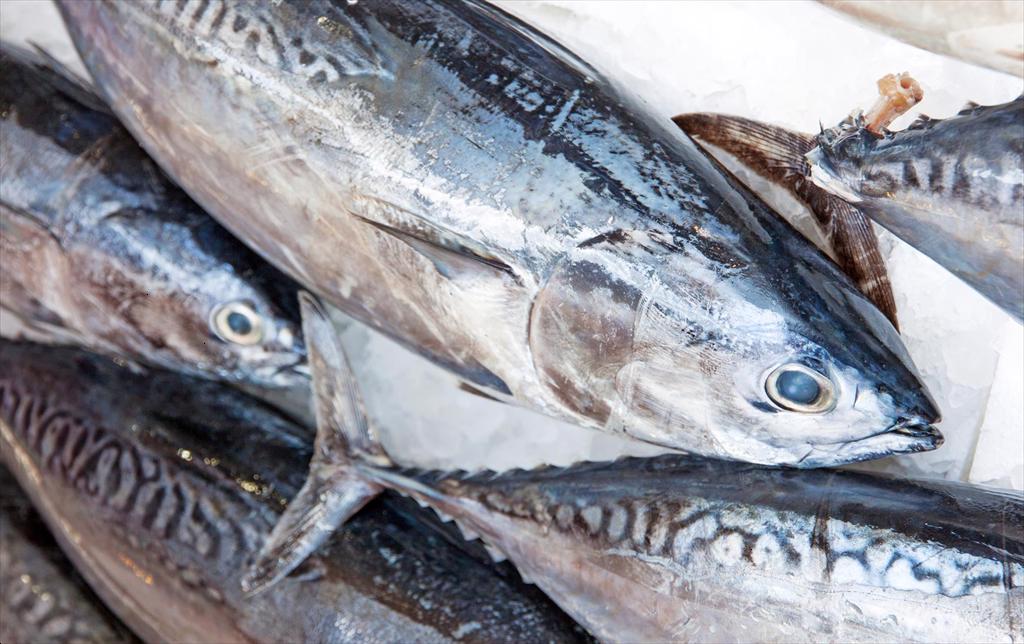
Modest Growth, but an Unstable Trend
According to Vietnam Customs data, Vietnam’s tuna exports to Sweden reached more than US$3 million in the first five months of 2026, up around 5% year-on-year. In the same period of 2025, exports had already increased by nearly 29% compared to 2024. Looking at the two-year trend, Sweden still offers a certain amount of room for Vietnamese tuna products.
However, this year’s growth has clearly slowed. This suggests that after a period of relatively rapid expansion last year, the market is entering a phase of adjustment. For a destination such as Sweden, this development is not entirely unexpected. The market is relatively small, with stable but selective demand, meaning growth tends to come in cycles linked to import schedules rather than through prolonged surges.
A Cautious Buying Pattern
The most noteworthy aspect is not the cumulative export value but the monthly fluctuations. Exports surged by 160% in January 2026, then fell by 37% in February, 47% in March, and 62% in April, before rebounding sharply by 382% in May.
Such volatility suggests that Swedish buyers are purchasing according to specific procurement cycles, closely linked to distributor plans and retail inventory levels, rather than maintaining consistent buying patterns throughout the year. Sweden is not a market where demand is declining, but neither is it one showing sustained and predictable growth.
A Small Market That Should Not Be Overlooked
Sweden is not among the largest destinations for Vietnamese tuna. Nevertheless, it remains an important market because it is part of the Nordic region, where buyers typically place high demands on quality, traceability, reliable supply, and compatibility with modern retail systems.
Maintaining a presence in this market is significant not only because of the export value itself but also because it demonstrates that Vietnamese products can gain a foothold in highly selective markets. This is an advantage that should not be underestimated, particularly as competition in the EU increasingly favors suppliers capable of delivering consistent quality and reliable supply.
Competition in Sweden Reflects Competition Across the EU
Vietnamese exporters are not only competing with suppliers selling directly into Sweden. In reality, Sweden is part of the EU’s broader import and distribution network. This means that competition in Sweden also involves competing with suppliers that have already established positions throughout the bloc.
As Nordic buyers become increasingly selective, price is no longer the only determining factor. Supply reliability, consistent quality, the ability to meet specifications, and on-time delivery have become increasingly important. Companies with unstable supply chains or overly diversified product portfolios may therefore find it difficult to maintain their position in this market.
Slow but Steady
For Sweden, the most realistic objective may not be rapid growth but maintaining a steady presence. The market is better suited to well-standardized products with consistent quality that cater to retail and at-home consumption.
If Vietnamese exporters can maintain product quality, align with import cycles, and target the right segments, Sweden can remain an important link in their strategy to strengthen their presence in the Nordic region.
Looking at the first five months of 2026, Vietnamese tuna has not achieved strong growth momentum in Sweden. Yet, in an increasingly selective market, maintaining positive growth is already an encouraging sign. The challenge now is how to turn that presence into a more sustainable market position, rather than relying solely on occasional spikes in demand.
(seafood.vasep.com.vn) In the first eight months of 2026, Vietnam’s tuna exports to Lithuania surpassed $14 million, up 8% year on year. While the increase remains modest, it is notable given the continued pressure on Vietnamese tuna exports to the EU as a whole. More importantly, export turnover to Lithuania has shown a clearer recovery in recent months, making the market a destination worth monitoring for Vietnamese businesses in Europe.
(seafood.vasep.com.vn) Vietnam’s squid and octopus exports exceeded $527 million in the first eight months of 2026, marking a 15% year-on-year increase. This growth is particularly notable given the strong baseline established in 2025, when export turnover for the same period reached $458 million, a 13% rise from 2024.
(seafood.vasep.com.vn) Vietnamese pangasius is gaining traction in Japan, where competitive prices and reliable supplies have helped the fish enter professional distribution channels and a major sushi chain.
(vasep.com.vn) A circular economy does not create a “new type of shrimp” or a new certification. Its value lies in helping the shrimp value chain use resources more efficiently, stabilize production, generate additional value from by-products and build the data and evidence needed to meet increasingly stringent market requirements. This was the perspective shared by VASEP at the Public-Private Partnership (PPP) Forum on Promoting a Circular Economy in the Shrimp Industry in the Mekong Delta, held in Can Tho on September 21.
(vasep.com.vn) Vietnam’s pangasius exports to CPTPP markets reached $264 million in the first eight months of 2026, up 12% year-on-year and accounting for 17% of the nation’s total pangasius export turnover. In August alone, export value reached $34 million, inching up 3%.
(seafood.vasep.com.vn) Golden pompano is being selected as a high-value species for the development of high-tech marine aquaculture in Lam Dong Province. In 2026, the provincial Agricultural Extension Center launched a golden pompano farming model using circular HDPE cages in Lien Huong Commune, opening opportunities to apply technology to marine farming at a scale suited to local coastal conditions.
(vasep.com.vn) Vietnam’s shrimp exports reached $3.3 billion in the first eight months of 2026, up 12% year on year. However, growth momentum is moderating and market divergece is becoming more pronounced, while the US and EU continue to present significant challenges. The latest insights from the Global shrimp forum 2026 (GSF 2026), held in early September, also indicate that the final months of the year will remain highly competitive as global supply continues to expand and buyers place greater emphasis on quality, product specifications, supply consistency and the ability to meet market-specific demand.
(vasep.com.vn) Vietnam’s pangasius exports continued to grow in August 2026, bringing total export value in the first eight months of the year to US$1.5 billion, up 10% year-on-year. August exports alone reached US$205 million, up 6%. However, market performance has become increasingly divergent, with China and Brazil posting positive growth while the U.S. continued to record a sharp decline.
(vasep.com.vn) Vietnam’s seafood exports reached US$1.14 billion in August 2026, up 6.4% year on year, bringing the total for the first eight months to more than US$8.0 billion, an increase of 11.9%. Monthly export value remained above US$1 billion, but August growth was only around half the rate recorded cumulatively through the first eight months. This indicates that the eight-month result was supported significantly by stronger performance in earlier months, while market conditions are entering a less predictable period.
(seafood.vasep.com.vn) Pangasius is attracting growing interest from Japanese seafood companies as prices of many traditional whitefish species remain high and supply becomes increasingly volatile. Notably, seafood group Kyokuyo has recently continued to feature pangasius among its priority products, highlighting its competitive pricing and stable supply.
VASEP - HIỆP HỘI CHẾ BIẾN VÀ XUẤT KHẨU THỦY SẢN VIỆT NAM
Chịu trách nhiệm: Ông Nguyễn Hoài Nam - Phó Tổng thư ký Hiệp hội
Đơn vị vận hành trang tin điện tử: Trung tâm VASEP.PRO
Trưởng Ban Biên tập: Bà Phùng Thị Kim Thu
Giấy phép hoạt động Trang thông tin điện tử tổng hợp số 138/GP-TTĐT, ngày 01/10/2013 của Bộ Thông tin và Truyền thông
Tel: (+84 24) 3.7715055 – (ext.203); email: kimthu@vasep.com.vn
Trụ sở: Số 7 đường Nguyễn Quý Cảnh, Phường An Phú, Quận 2, Tp.Hồ Chí Minh
Tel: (+84) 28.628.10430 - Fax: (+84) 28.628.10437 - Email: vasephcm@vasep.com.vn
VPĐD: số 10, Nguyễn Công Hoan, Ngọc Khánh, Ba Đình, Hà Nội
Tel: (+84 24) 3.7715055 - Fax: (+84 24) 37715084 - Email: vasephn@vasep.com.vn