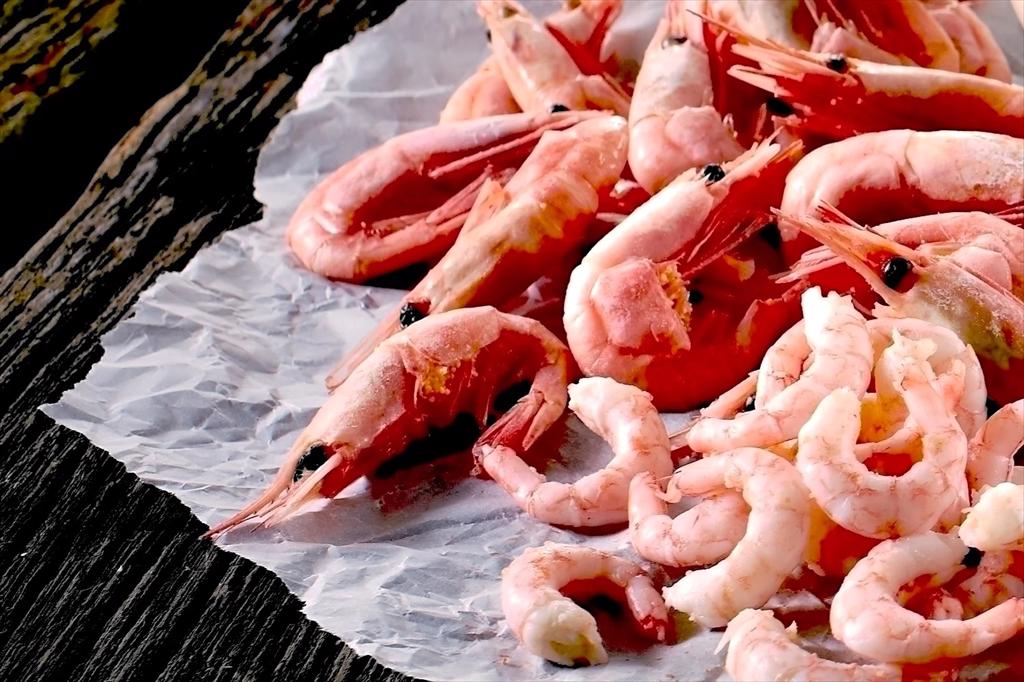
China’s shrimp imports surge in the first five months
According to China Customs data, the country imported 85,458 metric tons of shrimp in May 2026, up 15% year-on-year. This marked the fifth consecutive month of positive growth, following increases of 36% in January, 15% in February, 24% in March, and 33% in April.
Cumulatively, China imported 429,077 metric tons of shrimp in the first five months of 2026, up 25% in volume, with import value reaching USD 2.2 billion, an increase of 21%.
These figures suggest that the Chinese market is recovering more clearly than in 2025, when total shrimp imports reached 901,563 metric tons, down 2% in volume but still up 5% in value. The strong growth in early 2026 reflects not only seasonal factors but also the expanding role of imported seafood in Chinese consumers’ spending patterns.
However, the slower growth in value compared with volume indicates that average import prices remain under pressure. This aligns with abundant global shrimp supplies, particularly from Ecuador and India, while China’s domestic consumption recovery has not been uniform across all market segments.
Ecuador leads as competition among suppliers intensifies
Ecuador remains China’s largest shrimp supplier. In May 2026 alone, Ecuador exported 65,423 metric tons of shrimp to China, up 26% year-on-year. During the first five months, Ecuador’s shipments reached 328,740 metric tons, up 29%, accounting for nearly three-quarters of China’s total shrimp imports.
Ecuador’s strengths lie in its large production volume, competitive pricing, stable supply of raw whiteleg shrimp, and industrial-scale production model. These products are well suited to mass consumption, reprocessing, wholesale markets, retail channels, and casual dining restaurants in China.
Nevertheless, Ecuador is facing growing pressure from China’s tighter inspections of sodium metabisulfite residues. In May, approximately 4% of Ecuadorian shrimp shipments to China were denied customs clearance due to exceeding permitted limits. If this issue persists, it could slow deliveries, increase quality-control costs, and create opportunities for other suppliers.
India remains the second-largest supplier. In May 2026, India exported 12,352 metric tons of shrimp to China, down 12% after four months of strong growth. However, cumulative exports during the first five months still reached 62,100 metric tons, up 31%. India competes directly with Ecuador in frozen whiteleg shrimp, but its advantages are becoming less pronounced as Ecuador continues to strengthen its dominance in both scale and pricing.
Other suppliers such as Thailand, Argentina, and Indonesia have smaller market shares but remain noteworthy. Thailand exported 10,145 metric tons during the first five months, up 10%, benefiting from its strengths in processed products and consistent quality standards. Indonesia shipped 5,868 metric tons, up 28%, while Argentina exported 8,165 metric tons, down 15%, mainly competing in the natural red shrimp segment.
For Vietnamese companies, these developments indicate that China is a large but challenging market for low-priced raw whiteleg shrimp. Competing with Ecuador and India on price alone will be difficult without advantages in scale, farming costs, and supply chain efficiency. A more suitable strategy is to focus on higher-value segments requiring superior quality, rapid delivery, specialty products, black tiger shrimp, processed shrimp, live and fresh shrimp, and particularly lobster.
Chinese consumers are becoming more selective
China has been a net importer of seafood since 2022, marking a major shift in consumption patterns. Previously, imports mainly served reprocessing and re-export activities, but an increasing share of imported seafood is now consumed domestically.
The expansion of the middle class, growing demand for high-quality protein, healthier eating habits, and the development of modern retail, e-commerce, and restaurant chains are all supporting seafood demand. However, growth is uneven across market segments.
Premium products such as salmon, lobster, and live crab continue to have strong growth potential due to demand from higher-income consumers, restaurants, holiday consumption, and gifting occasions. Meanwhile, low-priced products are also growing as consumers become increasingly price-sensitive. The mid-range segment faces greater pressure as consumers either upgrade to premium products or shift to more affordable options.
This trend is also evident in the shrimp sector. Ecuadorian whiteleg shrimp dominate the mass-market segment due to their competitive pricing and abundant supply. Processed and conveniently packaged shrimp products are gaining opportunities in modern retail channels. Lobster and live seafood continue to fit the premium segment, but requirements related to compliance, traceability, quarantine, and supply stability are becoming increasingly stringent.
Lobster: Vietnam’s bright spot amid rising competition
Within China’s shrimp imports, lobster is a high-value segment of particular importance to Vietnam. In May 2026, China imported 5,652 metric tons of lobster, nearly unchanged year-on-year but still above the five-year average.
Vietnam was the largest supplier by volume in May, exporting 2,239 metric tons and accounting for 40% of China’s lobster imports, ahead of Canada with 1,996 metric tons and a 35% share.
In 2025, China’s lobster imports reached a record 69,774 metric tons. Vietnam became the largest supplier with 24,067 metric tons, accounting for 34.5% of total imports and surpassing Canada, the United States, and Australia.
Vietnam’s advantages include its proximity to China, shorter transportation times, flexibility in supplying live products, and green lobster products that are priced appropriately for a broader consumer segment.
However, these advantages are becoming less secure. Canada has an opportunity to regain market share after China suspended its 25% tariff on Canadian lobster and crab from March 2026 through the end of the year. Australia has also returned to the Chinese market with live rock lobster, competing in the premium restaurant and gift segments.
As a result, Vietnam’s lobster industry needs to move beyond short-term advantages in pricing and geographic proximity toward long-term competitiveness based on quality, traceability, farm codes, packing facility registration, and formal trade channels.
Strong export growth but challenges remain in maintaining competitiveness
According to VASEP data based on Vietnam Customs statistics, Vietnam’s shrimp exports reached USD 1.9 billion in the first five months of 2026, up 12.1% year-on-year.
China was Vietnam’s largest market, with exports reaching USD 681.7 million, accounting for 36.1% of total shrimp exports and increasing by 49.3%. Including Hong Kong, exports totaled USD 711.4 million, representing 37.6% of total shrimp exports and rising by 46.4%.
In May 2026 alone, shrimp exports to China reached USD 125.9 million, up 27.7% year-on-year. The biggest growth driver came from lobster. During the first five months, Vietnam’s lobster exports to China exceeded USD 506 million, up 44.3%, while green lobster exports reached USD 503.9 million, accounting for 99.53% of total lobster export value to the market.
Demand for shrimp in China is expected to remain positive in the second half of the year, particularly as peak consumption seasons, restaurant channels, and e-commerce continue to support purchasing activity. However, the market is becoming increasingly selective.
For whiteleg shrimp, Vietnamese companies will struggle to compete with Ecuador on price. For lobster, opportunities remain significant, but the risks associated with market dependence, quarantine policies, and traceability requirements are also becoming more apparent.
Therefore, companies should prioritize quality control at the farming level, standardize export documentation, fully register facilities with China’s General Administration of Customs (GACC), and develop value-added products to avoid being drawn into purely price-based competition.
(seafoo.vasep.com.vn) Ca Mau Province is stepping up efforts to protect aquatic resources and promote transparent and sustainable fisheries, joining the country’s efforts to have the European Commission (EC) remove its “yellow card” warning for illegal, unreported and unregulated (IUU) fishing.
(vasep.com.vn) Vietnam has strengthened its position in China’s massive seafood market, becoming the largest lobster supplier while maintaining a dominant share of the country’s imported pangasius.
(vasep.com.vn) Vietfish 2026 was more than just a larger exhibition space. Through B2B meetings, booth discussions, production-chain visits and post-show feedback, businesses and buyers found something more concrete: suitable suppliers, processing capabilities, technology solutions, new markets and a foundation for building long-term trust and partnerships.
(vasep.com.vn) Vietnam’s tilapia exports to the United States declined significantly in the first seven months of 2026. Cumulative export value reached US$18 million, down 42% from the same period in 2025. In July alone, exports amounted to just US$2 million, plunging 70%, indicating a clear slowdown in import demand from the US market.
(vasep.com.vn) At the seminar “Global Seafood Markets and the Future Workforce: Trends, Opportunities and Directions for the Sustainable Development of Vietnam’s Fisheries Sector,” held as part of VIETFISH 2026, Ms. Shirlene Maria Anthonysamy, Fisheries Officer (Markets) and GLOBEFISH Coordinator at the Food and Agriculture Organization of the United Nations (FAO), presented initiatives aimed at promoting youth participation in fisheries and aquaculture.
(vasep.com.vn) In the first seven months of 2026, Vietnam’s pangasius exports to the United States reached US$189 million, down 8% year-on-year. In July alone, export value reached US$22 million, down 28%. This trend indicates that U.S. demand for pangasius imports has remained relatively cautious this year, as importers tend to maintain moderate inventory levels and limit stockpiling.
(vasep.com.vn) After three days at the Saigon Exhibition and Convention Center (SECC) in Ho Chi Minh City, the Vietnam International Fisheries Exhibition – VIETFISH 2026 – has successfully concluded, leaving a strong impression in terms of scale, visitor numbers, the quality of business connections, and innovative activities. With more than 14,000 m² of exhibition space, 335 companies, 568 booths, participation from representatives of 17 countries and territories, and nearly 15,000 visitors, VIETFISH 2026 has once again affirmed its role as an important meeting point for Vietnam’s and the global seafood industry.
(seafood.vasep.com.vn) Held as part of Vietfish 2026 from August 19–21 at SECC in Ho Chi Minh City, a series of five specialized seminars provided the seafood business community with updates on markets, technology, standards, human resources and cooperation opportunities. With the participation of experts, international organizations, government agencies and businesses from Vietnam and abroad, the seminars created an additional platform for professional exchange alongside the exhibition’s product showcases and business networking activities.
(seafood.vasep.com.vn) On the morning of August 19, 2026, the Vietnam International Seafood Exhibition – VIETFISH 2026 officially opened at the Saigon Exhibition and Convention Center (SECC) in Ho Chi Minh City. With 568 booths representing 335 companies, alongside the presence of senior government officials, local authorities, diplomatic missions and international partners, VIETFISH 2026 kicks off three days of business networking, technology exchange and market engagement under the overarching theme “Innovation and Sustainability.”
The Vietnam Association of Seafood Exporters and Producers (VASEP) officially announces that the Vietnam International Seafood Exhibition (Vietfish 2026) will take place from August 19–21, 2026, at the Saigon Exhibition and Convention Center (SECC), Ho Chi Minh City.
VASEP - HIỆP HỘI CHẾ BIẾN VÀ XUẤT KHẨU THỦY SẢN VIỆT NAM
Chịu trách nhiệm: Ông Nguyễn Hoài Nam - Phó Tổng thư ký Hiệp hội
Đơn vị vận hành trang tin điện tử: Trung tâm VASEP.PRO
Trưởng Ban Biên tập: Bà Phùng Thị Kim Thu
Giấy phép hoạt động Trang thông tin điện tử tổng hợp số 138/GP-TTĐT, ngày 01/10/2013 của Bộ Thông tin và Truyền thông
Tel: (+84 24) 3.7715055 – (ext.203); email: kimthu@vasep.com.vn
Trụ sở: Số 7 đường Nguyễn Quý Cảnh, Phường An Phú, Quận 2, Tp.Hồ Chí Minh
Tel: (+84) 28.628.10430 - Fax: (+84) 28.628.10437 - Email: vasephcm@vasep.com.vn
VPĐD: số 10, Nguyễn Công Hoan, Ngọc Khánh, Ba Đình, Hà Nội
Tel: (+84 24) 3.7715055 - Fax: (+84 24) 37715084 - Email: vasephn@vasep.com.vn