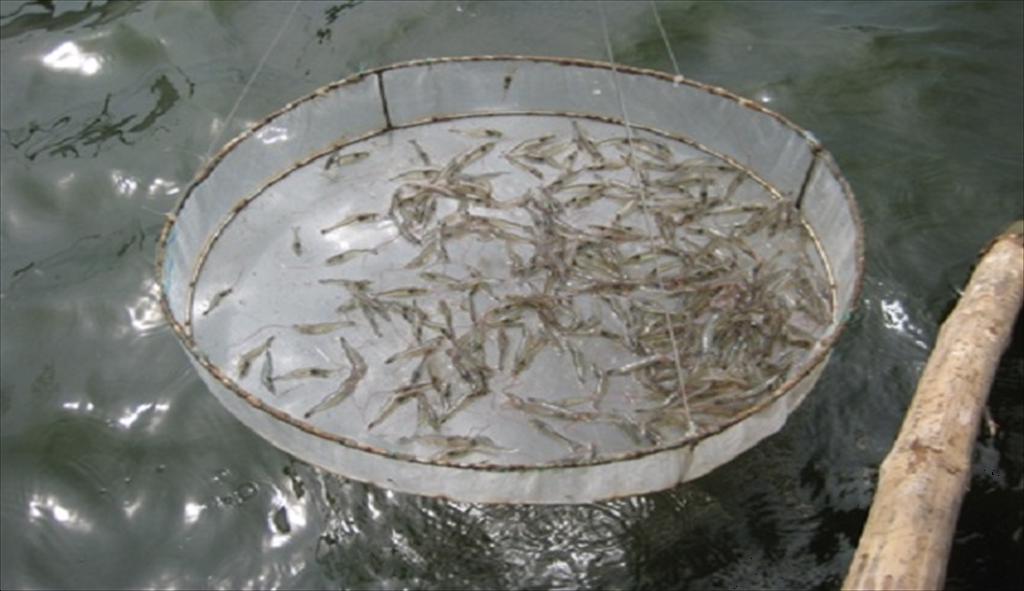
With its 130-kilometer coastline, Vinh Long is gradually leveraging its natural advantages to develop high-tech shrimp farming toward greater efficiency and sustainability. Initial production results indicate that the model not only improves productivity and product quality but also transforms traditional farming practices, creating strong momentum for economic development in coastal areas.
During the first six months of 2026, aquaculture remained one of the province's key growth drivers in the agricultural sector. Total aquatic production reached 477,110 metric tons, including 352,770 metric tons from aquaculture, accounting for 74% of total output, while capture fisheries contributed 124,340 metric tons.
Brackish-water shrimp farming continued to play a pivotal role, with 65,185 hectares under cultivation, equivalent to 91.42% of the annual plan. Harvest output reached 162,900 metric tons, fulfilling 51.66% of the yearly target. Notably, 6,325 hectares were devoted to intensive whiteleg shrimp farming using high-tech production systems, yielding more than 88,000 metric tons and demonstrating the effectiveness of modern farming models.
High-Tech Farming Delivers Higher Efficiency
Trường Long Hòa Ward is one of Vinh Long's major aquaculture areas, covering 4,418 hectares. The locality currently has 265 whiteleg shrimp farming households operating intensive ponds over 560 hectares. Many farms have invested in industrial-scale production systems, applying advanced technologies and closed-loop management to control environmental conditions and disease.
One pioneering farmer, Nguyễn Minh Vương from Nhà Mát Hamlet, has invested in nine shrimp ponds covering 8 hectares. His farm adopts a fully lined pond system with closed-loop water treatment and comprehensive environmental management to prevent disease outbreaks.
According to Mr. Vương, although the initial investment is substantial, high-tech shrimp farming significantly reduces disease risks, lowers environmental pollution, improves survival rates and productivity, and generates much higher profits than conventional farming. The model is also better suited to coping with climate change and increasingly complex aquatic animal diseases.
Similarly, in early 2020, Lê Thanh Truyện from Ba Đông Hamlet invested in a two-phase industrial shrimp farming system. On his 12-hectare farm, about 5 hectares are dedicated to industrial shrimp ponds. Each production cycle lasts approximately four months, with yields ranging from 7–10 metric tons per pond, depending on management practices. In addition, Mr. Truyện maintains around seven extensive shrimp ponds using improved farming methods over another 7 hectares, providing a stable supplementary income.
The success of these farming models has encouraged wider adoption in neighboring coastal communities. Long Thành Commune, in particular, is considered to have significant potential for expanding intensive shrimp farming and high-tech aquaculture.
According to Đào Văn Năng, Chairman of the Long Thành Commune People's Committee, the locality generated approximately VND 461.45 billion in fisheries production during the first half of 2026, accounting for more than 41% of the commune's total production value and 96% of its agriculture-forestry-fisheries output. By the end of May, aquatic production had reached 5,563.8 metric tons, fulfilling 58.77% of the annual target.
Within the production structure, whiteleg shrimp remained the dominant cultured species, with output reaching 2,889 metric tons, equivalent to 62.4% of the annual plan. The commune currently has 467 shrimp ponds covering about 416 hectares, including 58 hectares of intensive farming that produced approximately 4,630 metric tons, accounting for over 83% of the locality's total aquatic production.
Despite these encouraging results, Vinh Long's aquaculture sector continues to face challenges from climate change, unpredictable weather, rising input costs, fluctuating market prices, and disease risks.
Infrastructure Investment Needed for Further Expansion
During the first six months of 2026, more than 580 hectares of aquaculture ponds across the province suffered losses, representing around 2.78% of the total farming area. For brackish-water shrimp, most losses occurred during the 20–50-day grow-out stage due to diseases such as white feces syndrome, white spot disease, hepatopancreatic disease, and intestinal disorders.
According to Mr. Năng, Long Thành still has around 1,500 hectares of improved extensive shrimp farming, of which approximately 750 hectares could be converted to high-density intensive farming if supporting infrastructure is adequately developed. Such a transition could increase local shrimp production by approximately 8,300 metric tons annually, raising total output to around 13,000 metric tons.
However, inadequate transportation infrastructure remains a major obstacle to expanding farming areas. Difficulties in transporting seed, feed, and harvested shrimp continue to increase production costs and reduce competitiveness. The locality has proposed investment in D3 and D4 roads, totaling 15.36 kilometers, connecting Long Thành–Đông Hải–Long Vĩnh, along with an additional 6-kilometer route to improve access for high-tech shrimp farming zones and unlock the economic potential of the coastal region.
Caption: Leaders of the Vinh Long Provincial People's Committee inspect high-tech shrimp farming areas in Trường Long Hòa Ward and Long Thành Commune. Photo: Vinh Long Newspaper.
Following field visits to innovative aquaculture models, Lê Văn Hòa, Vice Chairman of the Vinh Long Provincial People's Committee, emphasized that sustainable aquaculture development must be accompanied by synchronized investment in transportation, irrigation, electricity, and water supply infrastructure to meet the industry's long-term development needs.
He also urged the agricultural sector to work closely with local authorities in developing a master plan for aquaculture development, reviewing existing farming areas, high-tech production zones, traditional farming regions, and land resources suitable for expansion to attract investment and establish concentrated aquaculture production areas.
According to Mr. Hòa, aquaculture is one of the province's key contributors to agricultural growth. He stressed that localities should shift from a production-oriented mindset to an economic approach, focusing on product value and market demand while encouraging the adoption of advanced technologies, digital transformation, and stronger market linkages to enhance competitiveness and promote the modern, sustainable development of the aquaculture sector.
(vasep.com.vn) Vietnam’s pangasius export value reached US$1.7 billion in the first nine months of 2026, up 11% year on year. In September alone, exports totaled US$210 million, an increase of 16%. China, the United States, and Brazil were the three largest markets, accounting for 49% of total export value. While China and Brazil maintained their growth momentum, exports to the US remained below the level recorded in the same period last year.
(vasep.com.vn) On November 11, 2026, in Can Tho, the Vietnam Association of Seafood Exporters and Producers (VASEP) will organize the Vietnam Seafood Summit 2026 (VSS 2026) under the theme “Seafood Market Outlook 2027–2029: Opportunities and Headroom for Double-Digit Export Growth.”
(seafood.vasep.com.vn) Business leader Do Ngoc Tai, General Director of Tai Kim Anh Seafood Processing Joint Stock Company, was honored by the Vietnam Chamber of Commerce and Industry (VCCI) with the title “Outstanding Vietnamese Entrepreneur – Thanh Giong Cup 2026” at a ceremony celebrating Vietnam Entrepreneurs’ Day (October 13). The event took place on the evening of October 11, 2026, at the National Convention Center in Hanoi.
(vasep.com.vn) The global tilapia market is becoming increasingly segmented, not only among producing countries but also by product type and destination market. Supply is divided into groups with distinct competitive advantages: large volumes of whole fish and frozen fillets from Asia, high-value fresh fillets from Latin America, and substantial domestic consumption in several major producing countries.
(vasep.com.vn) Vietnam’s tuna exports to the UK grew in the first eight months of 2026, despite signs of slowing import demand in the market. However, sharp fluctuations in orders, competition from major suppliers, and new traceability requirements are creating challenges for Vietnamese exporters.
(seafood.vasep.com.vn) Vietnam is stepping up efforts to combat illegal fishing, protect marine ecosystems, expand digital monitoring, and develop science-based management to ensure the sea can support communities and the economy for generations to come.
(seafood.vasep.com.vn) The EU remains a critical market for Vietnamese shrimp; however, purchasing demand and import patterns are undergoing notable changes. According to Vietnam Customs data, as of September 15, 2026, Vietnam’s shrimp exports to the EU reached nearly $374 million, down 5% year-over-year and accounting for 10.7% of the country’s total shrimp export value. Meanwhile, the EU’s stotal shrimp imports through July 2026 contracted by 7% in volume, exhibiting divergent trends across Southern Europe, Northwestern Europe and Eastern Europe. These dynamics necessitate that Vietnamese enterprises closely monitor individualized market demand, rather than approaching the EU as a monolithic consumer block.
(seafood.vasep.com.vn) In the first eight months of 2026, Vietnam’s exports of surimi and fish cakes remained relatively stable year-over-year compared to 2025. Following a contraction in the initial months, export performance demonstrated improvement from June onward, peaking in August. However, the recovery has been uneven, characterized by divergent trends across major markets: robust growth was recorded in China, Japan, Malaysia, the United States, and Taiwan, whereas export volumes to South Korea, Indonesia, and select European markets contracted.
(seafood.vasep.com.vn) Pangasius remains one of Dong Thap’s key aquaculture species, with the province focusing on developing an integrated value chain covering seed production, commercial farming, deep processing and by-product utilization. The province is promoting high-tech, circular pangasius farming models featuring reduced water exchange and enhanced biosecurity, aiming to improve production efficiency and strengthen control over raw material quality.
(vasep.com.vn) Vietnam’s seafood exports in September 2026 are estimated at US$1.135 billion, up 11.9% year-on-year, bringing total exports in the first nine months of the year to US$9.103 billion, up 11.4%. Behind this double-digit growth, however, increasingly divergent market trends are emerging: China–Hong Kong and ASEAN posted strong growth, while the U.S., EU and Japan all recorded declines in September.
VASEP - HIỆP HỘI CHẾ BIẾN VÀ XUẤT KHẨU THỦY SẢN VIỆT NAM
Chịu trách nhiệm: Ông Nguyễn Hoài Nam - Phó Tổng thư ký Hiệp hội
Đơn vị vận hành trang tin điện tử: Trung tâm VASEP.PRO
Trưởng Ban Biên tập: Bà Phùng Thị Kim Thu
Giấy phép hoạt động Trang thông tin điện tử tổng hợp số 138/GP-TTĐT, ngày 01/10/2013 của Bộ Thông tin và Truyền thông
Tel: (+84 24) 3.7715055 – (ext.203); email: kimthu@vasep.com.vn
Trụ sở: Số 7 đường Nguyễn Quý Cảnh, Phường An Phú, Quận 2, Tp.Hồ Chí Minh
Tel: (+84) 28.628.10430 - Fax: (+84) 28.628.10437 - Email: vasephcm@vasep.com.vn
VPĐD: số 10, Nguyễn Công Hoan, Ngọc Khánh, Ba Đình, Hà Nội
Tel: (+84 24) 3.7715055 - Fax: (+84 24) 37715084 - Email: vasephn@vasep.com.vn