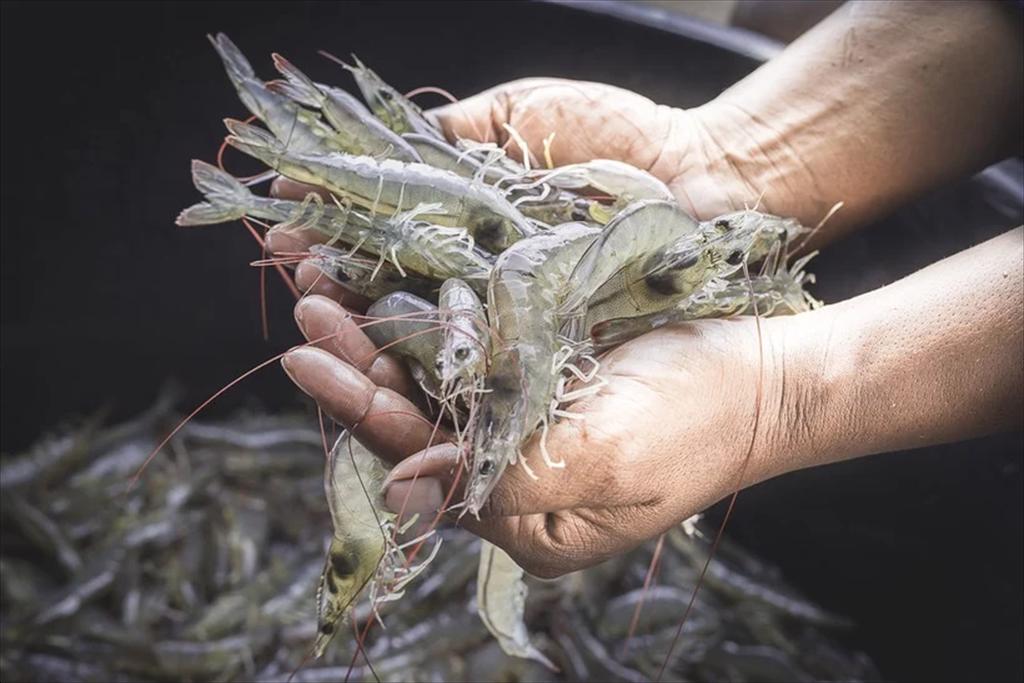
The project is jointly funded by the European Union (EU) and ActionAid International, with the objective of promoting a greener, cleaner, low-carbon, and socially responsible shrimp industry in Ca Mau.
Ca Mau is Vietnam's largest shrimp farming province, with approximately 411,000 hectares of shrimp farming area and an annual production of around 547,000 metric tons. The shrimp sector is not only the province's leading economic industry but also a key driver of socio-economic development and one of Vietnam's major seafood export sectors.
Despite these achievements, Ca Mau's shrimp industry continues to face significant challenges. International markets are becoming increasingly competitive, while major importing countries are imposing stricter requirements on greenhouse gas emissions, traceability, environmental protection, social responsibility, and supply chain transparency under Environmental, Social and Governance (ESG) standards.
Against this backdrop, shifting the shrimp industry toward higher quality and greater value addition—rather than simply expanding production—is considered an urgent priority. Science and technology, digital transformation, and comprehensive governance are regarded as essential foundations for strengthening the industry's competitiveness.
According to representatives of ActionAid International, the four-year "Sustainable Shrimp Industry Governance" project aims to help Ca Mau enhance governance capacity, promote sustainable shrimp production, and improve the international competitiveness of its shrimp products.
The project, with a total budget of VND 42 billion (approximately USD 1.6 million), will be implemented from May 24, 2026, to March 31, 2029 in five communes: Song Doc, Dong Hai, Khanh Hai, Hoa Dinh Thanh, and An Trach. Nature and Environment e-magazine will participate in communication activities under the project.
One of the project's key objectives is to develop the "Low-Carbon Shrimp" brand for Ca Mau. Under the initiative, shrimp farmers will gradually adopt environmentally friendly farming models, reduce greenhouse gas emissions, improve farming practices to meet international standards, and strengthen traceability systems to better satisfy export market requirements, thereby increasing incomes and supporting sustainable livelihoods.
For enterprises, cooperatives, and cooperative groups, the project will support the development of transparent value chains, strengthen traceability, improve management capacity, and expand export markets, while gradually building the Low-Carbon Shrimp brand associated with sustainable development.
For government agencies, the project will facilitate the shrimp sector's transition toward greener and more sustainable development by improving policy frameworks, strengthening public administration, and enhancing coordination among stakeholders across the shrimp value chain.
The project consists of three main components.
The first component focuses on strengthening the capacity of local communities and businesses through the establishment and operation of 10 farmer groups, 10 shrimp farming cooperatives, the development of a Green Business Alliance, the training of master trainers, technical training on shrimp farming and ESG standards, and communications activities to raise awareness of the practical implementation of these standards.
The second component aims to enhance community-based monitoring and support compliance with the Aquaculture Stewardship Council (ASC) standards for responsible aquaculture. Activities include developing community monitoring tools, providing traceability training, simplifying certification processes, supporting farming households in transitioning to ASC standards, and assisting businesses in integrating ESG principles throughout their value chains.
The third component focuses on market research for certified shrimp products, strengthening sustainable purchasing systems, promoting policy dialogue, connecting domestic and international markets, developing ESG communications, and implementing broader awareness campaigns on sustainable shrimp development.
Under the project's overall targets, 500 shrimp farming households in the Mekong Delta will receive support to improve management capacity, adopt low-carbon farming practices, and meet social responsibility and governance standards. In addition, 300 enterprises operating in shrimp farming and processing will be assisted in improving quality management systems, labor conditions, and traceability to maintain and expand access to export markets.
(vasep.com.vn) The global tilapia market is becoming increasingly segmented, not only among producing countries but also by product type and destination market. Supply is divided into groups with distinct competitive advantages: large volumes of whole fish and frozen fillets from Asia, high-value fresh fillets from Latin America, and substantial domestic consumption in several major producing countries.
(vasep.com.vn) Vietnam’s tuna exports to the UK grew in the first eight months of 2026, despite signs of slowing import demand in the market. However, sharp fluctuations in orders, competition from major suppliers, and new traceability requirements are creating challenges for Vietnamese exporters.
(seafood.vasep.com.vn) Vietnam is stepping up efforts to combat illegal fishing, protect marine ecosystems, expand digital monitoring, and develop science-based management to ensure the sea can support communities and the economy for generations to come.
(seafood.vasep.com.vn) The EU remains a critical market for Vietnamese shrimp; however, purchasing demand and import patterns are undergoing notable changes. According to Vietnam Customs data, as of September 15, 2026, Vietnam’s shrimp exports to the EU reached nearly $374 million, down 5% year-over-year and accounting for 10.7% of the country’s total shrimp export value. Meanwhile, the EU’s stotal shrimp imports through July 2026 contracted by 7% in volume, exhibiting divergent trends across Southern Europe, Northwestern Europe and Eastern Europe. These dynamics necessitate that Vietnamese enterprises closely monitor individualized market demand, rather than approaching the EU as a monolithic consumer block.
(seafood.vasep.com.vn) In the first eight months of 2026, Vietnam’s exports of surimi and fish cakes remained relatively stable year-over-year compared to 2025. Following a contraction in the initial months, export performance demonstrated improvement from June onward, peaking in August. However, the recovery has been uneven, characterized by divergent trends across major markets: robust growth was recorded in China, Japan, Malaysia, the United States, and Taiwan, whereas export volumes to South Korea, Indonesia, and select European markets contracted.
(seafood.vasep.com.vn) Pangasius remains one of Dong Thap’s key aquaculture species, with the province focusing on developing an integrated value chain covering seed production, commercial farming, deep processing and by-product utilization. The province is promoting high-tech, circular pangasius farming models featuring reduced water exchange and enhanced biosecurity, aiming to improve production efficiency and strengthen control over raw material quality.
(vasep.com.vn) Vietnam’s seafood exports in September 2026 are estimated at US$1.135 billion, up 11.9% year-on-year, bringing total exports in the first nine months of the year to US$9.103 billion, up 11.4%. Behind this double-digit growth, however, increasingly divergent market trends are emerging: China–Hong Kong and ASEAN posted strong growth, while the U.S., EU and Japan all recorded declines in September.
(vasep.com.vn) In the first eight months of 2026, Brazil became the largest market for Vietnamese tilapia, with export value reaching US$44 million, up 22,142% year-on-year and accounting for 49% of Vietnam’s total tilapia exports. In August alone, exports to Brazil reached US$4 million. However, behind this remarkable growth is a market that is imposing increasingly stringent requirements on imported supplies.
(vasep.com.vn) Vietnam’s tuna exports sustained their upward trajectory in August 2026, though the pace remained modest at just 2%. The month saw divergent trends across key markets: the US maintained its leading position, Japan and Canada improved, Russia surged and the EU continued to experience a steep downturn. These developments suggest that exporters are entering the final months of the year amid a market environment marked by greater uncertainty.
(seafood.vasep.com.vn) Congalsa has acquired the entire charter capital of Lenger Seafood Vietnam, giving it full ownership of the business and its Nam Dinh processing facility.
VASEP - HIỆP HỘI CHẾ BIẾN VÀ XUẤT KHẨU THỦY SẢN VIỆT NAM
Chịu trách nhiệm: Ông Nguyễn Hoài Nam - Phó Tổng thư ký Hiệp hội
Đơn vị vận hành trang tin điện tử: Trung tâm VASEP.PRO
Trưởng Ban Biên tập: Bà Phùng Thị Kim Thu
Giấy phép hoạt động Trang thông tin điện tử tổng hợp số 138/GP-TTĐT, ngày 01/10/2013 của Bộ Thông tin và Truyền thông
Tel: (+84 24) 3.7715055 – (ext.203); email: kimthu@vasep.com.vn
Trụ sở: Số 7 đường Nguyễn Quý Cảnh, Phường An Phú, Quận 2, Tp.Hồ Chí Minh
Tel: (+84) 28.628.10430 - Fax: (+84) 28.628.10437 - Email: vasephcm@vasep.com.vn
VPĐD: số 10, Nguyễn Công Hoan, Ngọc Khánh, Ba Đình, Hà Nội
Tel: (+84 24) 3.7715055 - Fax: (+84 24) 37715084 - Email: vasephn@vasep.com.vn