(seafood.vasep.com.vn) Despite investing in world-class technology, Vietnamese seafood enterprises are still struggling to access the EU due to the IUU yellow card, stringent regulations and limited distribution channels.
Mr. Nguyen Thanh Loc, Chairman of the Ho Chi Minh City Fisheries Association, most seafood processing enterprises in Ba Ria - Vung Tau area focus on products derived from wild-caught raw materials such as octopus, cuttlefish, anchovies, sardines and skipjack tuna. After processing, products mainly fall into two categories: frozen seafood (whole, filleted or breaded) and dried seafood (dried squid, sun-dried or without seasoning dried seafood).
“However, over 90% of exported products are still marketed under foreign importers’ brands. Vietnamese enterprises primarily play the role of subcontractors, without building their own supply chains or distribution systems. This results in thin profit margins and makes it difficult to directly accessing EU consumer demand.” Mr. Loc emphasized.
Notably, the processing capacity of Vietnamese enterprises is by no means inferior. Machinery and equipment are imported from Japan, South Korea, Germany and the Netherlands, while the workforce is abundant and highly skilled. However, indirect personnel responsible for sales and international market remain weak, lacking practical experience and confidence to independently expand in the EU.
As a result, over the past five years, export turnover to the EU for many enterprises in Ba Ria - Vung Tau has plummeted by 70-80%. Quite a few members of the Fisheries Association have had to shift to other markets, accepting lower profit margins.
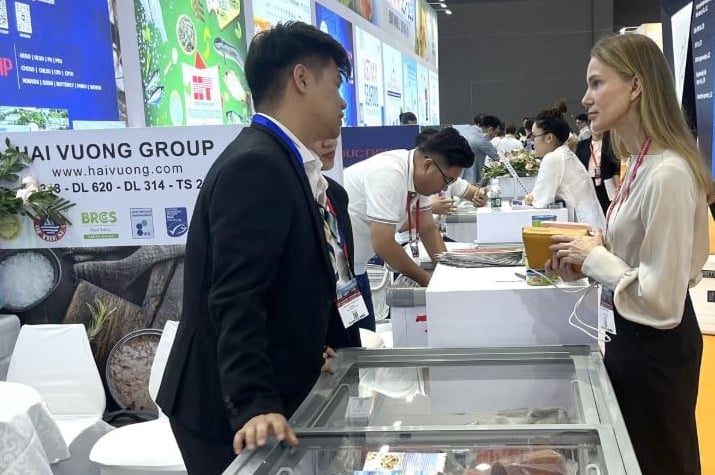
In contrast to many subcontractors, HaiVuong Group (HVG) - a Vietnam’s leading tuna enterprise, presents a picture of both opportunities and challenges in EU integration.
According to Mr. Nguyen Van Du, Director of Vietnam Tuna Co., Ltd. (HVG), the group’s revenue in 2024 reached $301 million with the EU contributing nearly $68 million (22.78%). With five modern factories, cold storage capacity of over 30,000 tons and over 3,000 skilled workers, HVG exports more than 60,000 tons of finished products annually, reaching over 40 countries.
“The enterprise has met numerous international standards such as HACCP, BRC, Dolphin Safe and MSC, along with a transparent traceability system from fishing vessels to the dining table. The EVFTA helps HVG take advantage of tariff advantages, enhancing competitive.” Mr. Du stated.
However, HVG still faces significant challenges. The IUU yellow card remains the biggest non-tariff barrier, subjecting exports to the EU to strict monitoring. Additionally, high production costs, global logistics fluctuations and intense competition from Thailand, Indonesia and South America further erode profitability.
.jpg)
Mr. Du emphasized that to maintain market share in the EU, enterprises need comprehensive support: from lifting the IUU yellow card to establishing green transition investment funds, European trade promotion centers and developing a communication strategy to build the Vietnamese seafood brand.
According to the Ho Chi Minh City Fisheries Association, for enterprises to overcome difficulties, the government needs to urgently address impractical regulations in fisheries management while also creating mechanisms to support human resources specialized in international market development.
At the enterprise level, linking production–processing–distribution chains is essential to build collective strength instead of fragmented efforts. Some long-established exporters such as Baseafood, Hai Viet and Coimex are expected to act as “locomotives” to lead and support others in penetrating the EU market.
“As long as the IUU bottleneck is not resolved and we fail to establish our own distribution systems, our modern machinery and skilled workforce cannot be transformed into real value in the EU market” said Mr. Nguyen Thanh Loc, Chairman of the Ho Chi Minh City Fisheries Association.