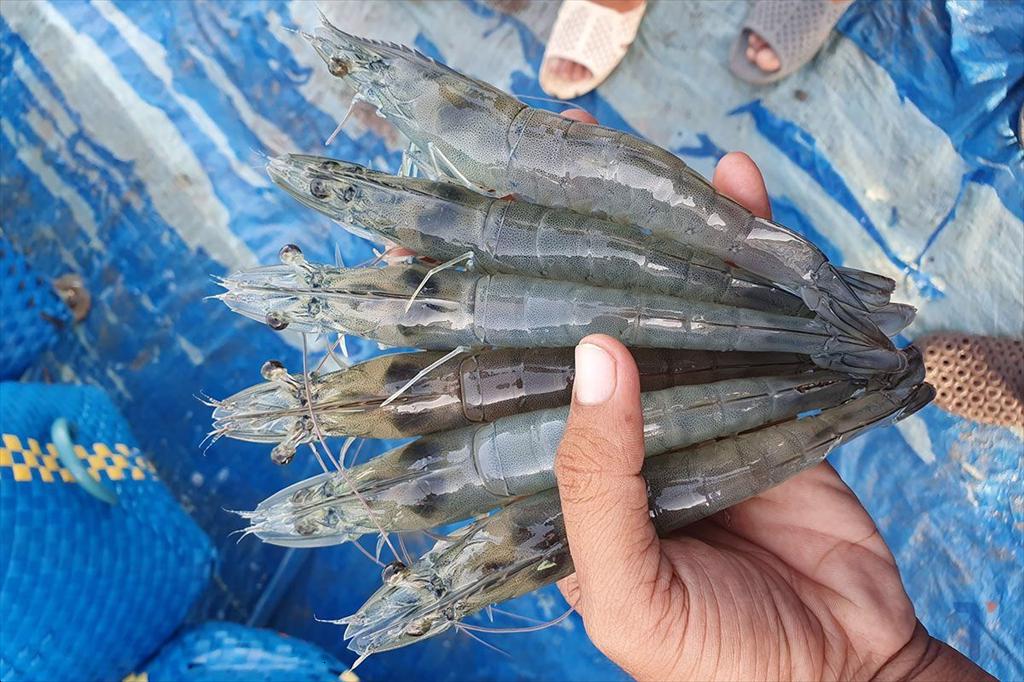
Vietnam maintains growth in shrimp exports
According to Vietnam Customs data, shrimp exports to Japan reached US$52.3 million in September 2026, up 8.6% year on year. Cumulative exports for the first nine months totaled US$440.9 million, up 6.4%, accounting for 11.8% of Vietnam’s total shrimp export value. Japan remained Vietnam’s third-largest shrimp export market, after China and the United States.
Meanwhile, according to International Trade Centre (ITC) data, Japan imported approximately US$1.25 billion worth of shrimp in the first eight months of 2026, down 3% year on year. Imports from Vietnam totaled nearly US$330 million, broadly unchanged from the same period in 2025, accounting for approximately 26.4% of Japan’s total shrimp import value.
Vietnam remained Japan’s largest shrimp supplier by value, followed by Indonesia at US$194.6 million, down 6%; India at US$193.8 million, up 5%; Thailand at US$153.1 million, down 25%; and Ecuador at US$87.9 million, down 8%.
These figures show that although Japan’s overall shrimp imports declined, Vietnam maintained its position among the country’s leading suppliers. However, the increase in imports from India also highlights growing competitive pressure in this market.
Import demand shifts across product categories
In the first eight months of 2026, Japan imported US$737 million worth of frozen warm-water shrimp, down 4% year on year. Meanwhile, imports of prepared or preserved warm-water shrimp not in airtight containers reached nearly US$423 million, up 1%. Frozen cold-water shrimp imports totaled US$56 million, down 13%.
These developments indicate that frozen raw shrimp is facing greater pressure, while processed shrimp products have remained relatively stable.
According to an analysis by Minato News, processed shrimp accounted for approximately 31% of Japan’s total shrimp import volume in 2025, excluding certain peeled and stretched shrimp products classified under frozen goods.
Labor shortages, the need to reduce preparation time, and the growing preference for convenient foods continue to influence purchasing decisions among Japanese importers, retailers, and foodservice operators.
However, demand has not increased uniformly across all product categories. In the first half of 2026, imports of boiled shrimp, including sushi shrimp, rose 5%, while breaded shrimp imports fell 6%. This suggests that exporters need to monitor demand in individual segments rather than assume that all processed products offer equal growth potential.
Competition among suppliers intensifies
Japan’s shrimp market is increasingly differentiated across raw materials, semi-processed products, and value-added processed shrimp.
India benefits from competitive raw material prices and its ability to meet Japanese customers’ detailed processing specifications. According to Minato News, India’s peeled and stretched shrimp products still have room for growth, while the market for shell-on shrimp is trending downward.
Ecuador has a strong position in headless, shell-on whiteleg shrimp supplied to the retail channel. According to estimates by Nosui, approximately 80% of Ecuadorian products in this category sold in Japan are distributed through retail networks, supported by freezing methods suited to thawing and supermarket display requirements.
Vietnam, meanwhile, has a strong position in peeled shrimp and, together with Thailand, holds advantages in value-added products such as boiled shrimp, sushi shrimp, and products processed to customers’ specific requirements.
This indicates that competition in Japan is determined not only by selling prices but also by suppliers’ ability to meet the specific needs of different customer groups and distribution channels.
Vietnamese exporters need to capitalize on processing advantages
According to Vietnam Customs data, Sao Ta led Vietnamese shrimp exporters to Japan in the first nine months of 2026, followed by Minh Phu – Hau Giang and Minh Phu Seafood Corporation.
Several other companies, including Tai Kim Anh, Thuan Phuoc, Hai Viet, and Quang Minh Seafood, also recorded positive growth.
As Japan’s market is unlikely to achieve strong growth in import volumes, opportunities for Vietnamese exporters will increasingly depend on adding value to products and meeting demand for convenient, ready-to-use shrimp.
Peeled shrimp, stretched shrimp, boiled shrimp, sushi shrimp, and products processed to customers’ specific requirements remain promising segments. At the same time, exporters need to control raw material costs, improve processing productivity, accelerate automation, and maintain consistent quality to compete with suppliers that enjoy price advantages.
Japan remains an important market for Vietnamese shrimp, particularly in the processed and value-added segments. Going forward, closely monitoring consumer trends, developing products tailored to market demand, and maintaining stable relationships with importers will be key to strengthening Vietnam’s position in this market.
(seafood.vasep.com.vn) Vietnam’s tuna exports kept growing in October 2026, lifting the 10-month total past $816 million. Behind the positive figures, though, the global market remains uneven: demand is slow to recover and raw material prices are climbing. Exporters now have to hold on to orders while keeping production profitable.
(seafood.vasep.com.vn) Vietnam’s shrimp exports reached $4.21 billion in the first 10 months of 2026, up 8.8% from a year earlier. Sales to China and several CPTPP markets kept the sector growing, but October’s results were weaker. Exports to the U.S. fell sharply again, and tariff pressure, international competition and rising production costs leave exporters with a tough end to the year.
(seafood.vasep.com.vn) Nearly US$1.7 billion is the projected gap in 2029 between the baseline scenario and a scenario in which Vietnam’s seafood exports grow by 10% annually, according to calculations by VASEP to be presented at Vietnam Seafood Summit 2026. This gap raises a key question for the entire industry: Which markets, products and supply chain improvements will generate the additional growth?
(seafood.vasep.com.vn) Although Germany’s tuna imports have declined, Vietnam’s tuna exports to the market continue to show positive signs. Notably, export value recovered strongly in Q3/2026, and German import data also show Vietnamese products strengthening their position amid competition among suppliers.
(seafood.vasep.com.vn) Seafood exports are holding double-digit growth, but the opportunities are not spread evenly across product groups and markets. As businesses draw up their plans for 2027, Vietnam Seafood Summit 2026 (VSS2026) offers a chance to look ahead together: what to sell, where to sell it, and how to prepare for growth in the coming years.
(seafood.vasep.com.vn) With less than two weeks to go, the Vietnam Seafood Summit 2026 (VSS 2026) will officially take place in Can Tho. Under the theme “Seafood Market Outlook 2027–2029 – Opportunities and Potential for Double-Digit Export Growth,” the Summit is organized by VASEP at a time when seafood businesses are facing rapid market shifts, changing buyer demand, trade policy changes and growing competitive pressure all at once.
(seafood.vasep.com.vn) On October 28, 2026, the China Fisheries & Seafood Expo opened in Qingdao, China. The expo takes place over three days from October 28 to 30, 2026. This is a prestigious specialized seafood exhibition organized annually by Sea Fare Exposition Inc.
(vasep.com.vn) In the first nine months of 2026, Vietnam’s tilapia exports to the CPTPP bloc reached $7 million, marking a 51% year-on-year increase. The bloc rstands as the fourth-largest market for Vietnamese tilapia, trailing Brazil, the US, and Saudi Arabia.
(vasep.com.vn) VASEP has officially announced the program for Vietnam Seafood Summit 2026 (VSS 2026), featuring five in-depth sessions covering industry outlooks, trade barriers, buyer demand, the domestic market, and solutions to improve productivity and reduce costs across the seafood value chain.
(vasep.com.vn) Vietnam’s shrimp exports reached US$3.7 billion in the first nine months of 2026, up 11% year on year. Although growth has been supported by China and several markets within the CPTPP, momentum is slowing as exports to the United States and the European Union decline. Tariff pressures, international competition, and raw material challenges are creating significant hurdles for exporters in the final months of the year.
VASEP - HIỆP HỘI CHẾ BIẾN VÀ XUẤT KHẨU THỦY SẢN VIỆT NAM
Chịu trách nhiệm: Ông Nguyễn Hoài Nam - Phó Tổng thư ký Hiệp hội
Đơn vị vận hành trang tin điện tử: Trung tâm VASEP.PRO
Trưởng Ban Biên tập: Bà Phùng Thị Kim Thu
Giấy phép hoạt động Trang thông tin điện tử tổng hợp số 138/GP-TTĐT, ngày 01/10/2013 của Bộ Thông tin và Truyền thông
Tel: (+84 24) 3.7715055 – (ext.203); email: kimthu@vasep.com.vn
Trụ sở: Số 7 đường Nguyễn Quý Cảnh, Phường An Phú, Quận 2, Tp.Hồ Chí Minh
Tel: (+84) 28.628.10430 - Fax: (+84) 28.628.10437 - Email: vasephcm@vasep.com.vn
VPĐD: số 10, Nguyễn Công Hoan, Ngọc Khánh, Ba Đình, Hà Nội
Tel: (+84 24) 3.7715055 - Fax: (+84 24) 37715084 - Email: vasephn@vasep.com.vn