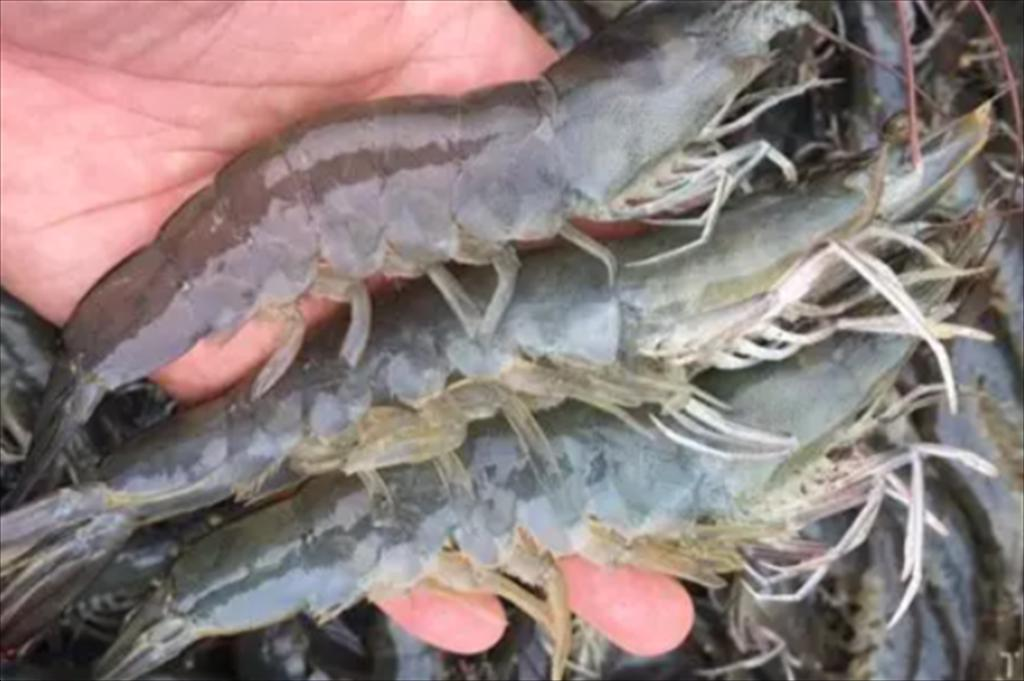
In 2025, Vietnam produced approximately 1.29 million tonnes of shrimp, with exports reaching a record-high $4.6 billion and products shipped to more than 100 markets. Vietnam is among the world’s four largest shrimp producers and ranks third in shrimp export value, after Ecuador and India. A notable strength of Vietnam’s shrimp industry is its advanced processing capacity, ability to fulfill complex orders, and diverse product portfolio, ranging from peeled, cooked, breaded and seasoned shrimp to nobashi, sushi, ready-to-cook and ready-to-eat products. However, larger production volumes do not necessarily translate into proportionately higher export value. During 2021-2025 period, shrimp output increased by nearly 40%, yet export revenue experienced significant volatility: dropping from over $4.3 billion in 2022 to roughly $3.4 billion in 2023, before rebounding to $4.6 billion in 2025. This indicates that higher output needs to be accompanied by more stable production, greater cost competitiveness and stronger value creation per kilogram of shrimp. Competition extends beyond raw shrimp In the first eight months of 2026, Vietnam’s shrimp exports reached approximately $3.3 billion, a 12% year-on-year increase. However, growth diverged significantly across major markets. Exports to China and Hong Kong surpassed $1.1 billion - surging nearly 36% and accounting for over a third of total export turnover. Conversely, the U.S market declined by nearly 12% and the EU by 3.6%, while Japan grew by over 6% and South Korea remained largely flat. On the supply side, the competitive landscape is also shifting. Discussions at the Global Shrimp Forum 2026 showed that Ecuador is not only continuing to expand production but also investing more heavily in peeling, processing and value-added products. The share of whole, head-on shrimp in Ecuador’s exports fell from around 74% in 2019 to 44%, indicating that the country is moving closer to processed segments that have traditionally been a strength of Vietnam’s shrimp industry. Domestically, the shrimp supply chain continues to face significant bottlenecks: fragmented production, inconsistent raw material supply, high production costs, expanding market access requirements and the underutilization of by-products, which have yet to be fully standardized into a high-value material stream. These challenges are interconnected: farming risks raise costs, fluctuations in raw material supplies disrupt processing plans, while uncertain economic returns make farmers and businesses more cautious about investing further in technology, certification and data. No one-size-fits-all circular odel for the Mekong Delta A notable takeaway from the Forum's discussions is that the Mekong Delta can pursue two circular pathways simultaneously. For shrimp–rice, shrimp–mangrove, improved extensive farming and other ecological models, production relies more heavily on natural ecosystems, biodiversity and the ability to utilize material flows between production cycles. Conversely, in intensive, super-intensive and high-tech farming, the focus is on managing feed, water, sludge, energy, alongside biosecurity, sensor technology, automated feeding and water recycling. Some multi-stage, biofloc and recirculating systems have been reported to reduce wastewater volumes by 30-70%. This distinction is crucial: the circular economy should not be deployed as a universal formula across all farming areas. Solutions need to be tailored to the production model, farm scale, infrastructure conditions and target market. Markets need suitable products, not just a “circular shrimp” concept An important point is that international buyers are not necessarily looking for a separate product category called “circular shrimp.” Their primary concern is whether the product meets consumer demands and whether suppliers can substantiate the attributes valued by the market. In the EU, particularly Northern and Western Europe, demand is increasingly shifting toward peeled, cooked, seasoned and breaded shrimp, as well as ready-to-cook and ready-to-eat products. This product group aligns well with Vietnam's processing capabilities. Concurrently, buyers are paying greater attention to certification, traceability, antibiotic controls, social responsibility and environmental impact data across the supply chain. Consumer trends such as clean labels, high-protein content, convenience, transparency and smaller packaging are also influencing product development. In Japan, quality, precise specifications, appearance, color, food safety and reliable delivery remain fundamental requirements. The market is highly suitable for large black tiger shrimp, nobashi, sushi, cooked and processed products with stringent specifications. Sustainability and circularity data can bolster confidence in sourcing and production practices, but cannot substitute core requirements for quality and consistency. In the US, opportunities remain strong for peeled, cooked, breaded, ready-to-cook and ready-to-eat shrimp. However, food safety and regulatory compliance must take precedence over sustainability-related differentiators. Claims such as “sustainable” or “responsibly sourced” also need to be supported by relevant documentation, data and evidence. Meanwhile, China and Hong Kong have a distinctly different demand structure, with strengths in live and fresh shrimp, large-size shrimp, lobster, black tiger shrimp and restaurant and premium segments. In these markets, the value of circularity can be translated into more readily recognizable attributes, such as safety, clear origin, traceability, consistent quality and the reputation of the production region. The “second raw material stream” unlocks additional value for the supply chain One of the clearest areas of untapped potential lies in shrimp heads and shells. If systematically collected and further processed, these by-products could contribute an additional 10-15% to the total value of the shrimp value chain through products such as chitin, chitosan, glucosamine, hydrolyzed protein, animal feed and biofertilizers. A company in Ca Mau is currently collecting and processing tens of thousands of tonnes of shrimp by-products annually to produce raw materials for food, animal feed, healthcare and other industries. This demonstrates that by-products are not merely a matter of reducing disposal costs, but can become a B2B raw material stream with its own market. However, major challenges remain in collecting, preserving and standardizing raw materials from thousands of dispersed processing facilities. Unless logistics and input standards are resolved, translating the high-value potential of shrimp by-products will be difficult to translate into a stable commercial scale. From individual models to a market-driven value chain Discussions at the Forum indicate that the shrimp industry does not lack technologies or individual initiatives. The larger gap lies in connecting these solutions into a value chain with established markets, reliable data and mechanisms for sharing benefits. Rather than developing a model first and looking for a market afterward, the value chain should start with buyer demand: identifying the required products and specifications, then organizing farming areas, designing the supply chain, selecting appropriate technologies and determining suitable investment strategies. Farmers need to see tangible benefits; businesses need stable raw material supplies and market outlets; buyers need products that meet their requirements and financial institutions need commercially viable models to participate. This also shows that there is no single “circular shrimp product” for all markets. The value of circularity can only be translated into a competitive advantage when it is aligned with the right product, requirements and customer segment. “Circularity” does not automatically mean that the market will pay a premium. Products must first be tasty, convenient, safe, aligned with consumer needs and competitively priced. Environmental and social responsibility attributes create additional value only when backed by credible evidence and linked to tangible improvements across the value chain. That value can come from multiple sources: lower costs, reduced risks, higher farming success rates, more stable supplies, stronger customer retention, access to new markets, more reliable data and new revenue streams from by-products. This is also the key to ensuring that the circular economy does not remain merely an environmental requirement, but gradually becomes a tool for improving production efficiency, increasing value and strengthening the competitiveness of Vietnam’s shrimp value chain.
(vasep.com.vn) Vietnam’s pangasius export value reached US$1.7 billion in the first nine months of 2026, up 11% year on year. In September alone, exports totaled US$210 million, an increase of 16%. China, the United States, and Brazil were the three largest markets, accounting for 49% of total export value. While China and Brazil maintained their growth momentum, exports to the US remained below the level recorded in the same period last year.
(vasep.com.vn) On November 11, 2026, in Can Tho, the Vietnam Association of Seafood Exporters and Producers (VASEP) will organize the Vietnam Seafood Summit 2026 (VSS 2026) under the theme “Seafood Market Outlook 2027–2029: Opportunities and Headroom for Double-Digit Export Growth.”
(seafood.vasep.com.vn) Business leader Do Ngoc Tai, General Director of Tai Kim Anh Seafood Processing Joint Stock Company, was honored by the Vietnam Chamber of Commerce and Industry (VCCI) with the title “Outstanding Vietnamese Entrepreneur – Thanh Giong Cup 2026” at a ceremony celebrating Vietnam Entrepreneurs’ Day (October 13). The event took place on the evening of October 11, 2026, at the National Convention Center in Hanoi.
(vasep.com.vn) The global tilapia market is becoming increasingly segmented, not only among producing countries but also by product type and destination market. Supply is divided into groups with distinct competitive advantages: large volumes of whole fish and frozen fillets from Asia, high-value fresh fillets from Latin America, and substantial domestic consumption in several major producing countries.
(vasep.com.vn) Vietnam’s tuna exports to the UK grew in the first eight months of 2026, despite signs of slowing import demand in the market. However, sharp fluctuations in orders, competition from major suppliers, and new traceability requirements are creating challenges for Vietnamese exporters.
(seafood.vasep.com.vn) Vietnam is stepping up efforts to combat illegal fishing, protect marine ecosystems, expand digital monitoring, and develop science-based management to ensure the sea can support communities and the economy for generations to come.
(seafood.vasep.com.vn) The EU remains a critical market for Vietnamese shrimp; however, purchasing demand and import patterns are undergoing notable changes. According to Vietnam Customs data, as of September 15, 2026, Vietnam’s shrimp exports to the EU reached nearly $374 million, down 5% year-over-year and accounting for 10.7% of the country’s total shrimp export value. Meanwhile, the EU’s stotal shrimp imports through July 2026 contracted by 7% in volume, exhibiting divergent trends across Southern Europe, Northwestern Europe and Eastern Europe. These dynamics necessitate that Vietnamese enterprises closely monitor individualized market demand, rather than approaching the EU as a monolithic consumer block.
(seafood.vasep.com.vn) In the first eight months of 2026, Vietnam’s exports of surimi and fish cakes remained relatively stable year-over-year compared to 2025. Following a contraction in the initial months, export performance demonstrated improvement from June onward, peaking in August. However, the recovery has been uneven, characterized by divergent trends across major markets: robust growth was recorded in China, Japan, Malaysia, the United States, and Taiwan, whereas export volumes to South Korea, Indonesia, and select European markets contracted.
(seafood.vasep.com.vn) Pangasius remains one of Dong Thap’s key aquaculture species, with the province focusing on developing an integrated value chain covering seed production, commercial farming, deep processing and by-product utilization. The province is promoting high-tech, circular pangasius farming models featuring reduced water exchange and enhanced biosecurity, aiming to improve production efficiency and strengthen control over raw material quality.
(vasep.com.vn) Vietnam’s seafood exports in September 2026 are estimated at US$1.135 billion, up 11.9% year-on-year, bringing total exports in the first nine months of the year to US$9.103 billion, up 11.4%. Behind this double-digit growth, however, increasingly divergent market trends are emerging: China–Hong Kong and ASEAN posted strong growth, while the U.S., EU and Japan all recorded declines in September.
VASEP - HIỆP HỘI CHẾ BIẾN VÀ XUẤT KHẨU THỦY SẢN VIỆT NAM
Chịu trách nhiệm: Ông Nguyễn Hoài Nam - Phó Tổng thư ký Hiệp hội
Đơn vị vận hành trang tin điện tử: Trung tâm VASEP.PRO
Trưởng Ban Biên tập: Bà Phùng Thị Kim Thu
Giấy phép hoạt động Trang thông tin điện tử tổng hợp số 138/GP-TTĐT, ngày 01/10/2013 của Bộ Thông tin và Truyền thông
Tel: (+84 24) 3.7715055 – (ext.203); email: kimthu@vasep.com.vn
Trụ sở: Số 7 đường Nguyễn Quý Cảnh, Phường An Phú, Quận 2, Tp.Hồ Chí Minh
Tel: (+84) 28.628.10430 - Fax: (+84) 28.628.10437 - Email: vasephcm@vasep.com.vn
VPĐD: số 10, Nguyễn Công Hoan, Ngọc Khánh, Ba Đình, Hà Nội
Tel: (+84 24) 3.7715055 - Fax: (+84 24) 37715084 - Email: vasephn@vasep.com.vn