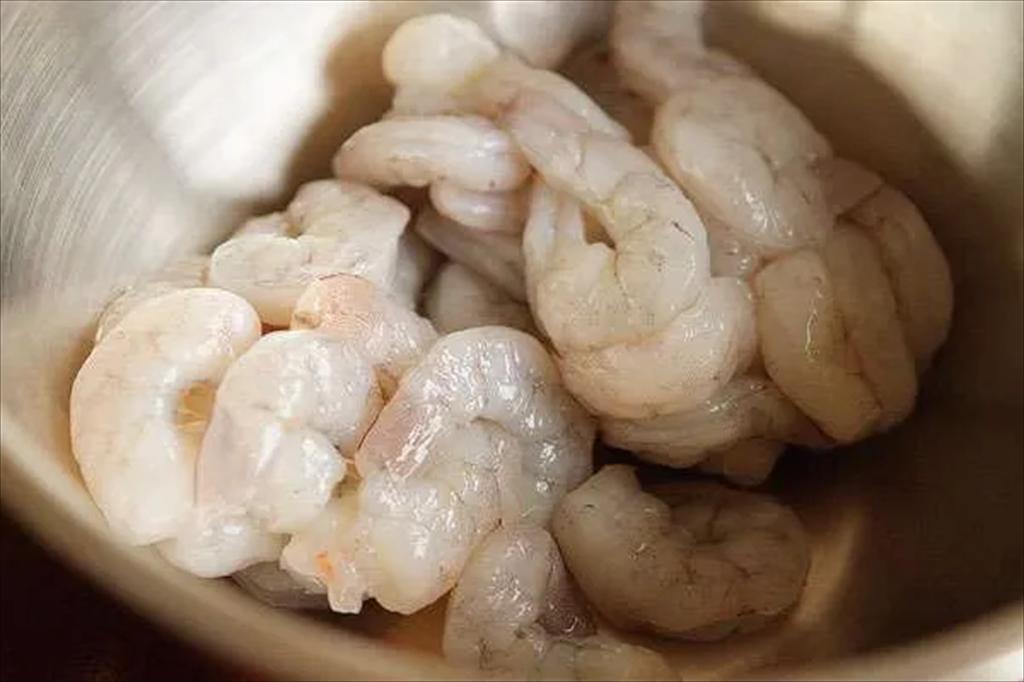
China drives growth as exports to the US and EU continue to decline
According to Vietnam Customs data, shrimp exports in September 2026 reached US$467.9 million, up 4% year on year but slightly lower than in August. Cumulative exports for the first nine months totaled US$3.7 billion, an increase of 11%. Compared with the 14% growth recorded in the first half of the year, export growth is slowing.
China remained Vietnam’s largest shrimp export market, with exports reaching nearly US$1.2 billion, up 37% and accounting for 33% of total export value. Including Hong Kong, exports totaled US$1.3 billion, an increase of 35%. Demand for lobster, particularly green lobster, continued to make a significant contribution to this performance.
Meanwhile, exports to the US reached only US$498 million, down 15%, with September shipments plunging 32% year on year. Exports to the EU also declined 4.9% to US$406.4 million, including a 12.5% drop in September.
On a more positive note, exports to Japan reached US$440.9 million, up 6.4%; Australia totaled US$211.9 million, up 18.5%; and Canada reached US$130.5 million, up 11%. Exports to CPTPP markets exceeded US$1 billion, increasing 10.2% and helping offset declines in the US and EU.
By product, whiteleg shrimp remained the largest category, generating US$2.31 billion, up 5.9%. Black tiger shrimp exports reached US$360.3 million, up 7.3%. Notably, other shrimp products totaled US$1.08 billion, surging 25.4%, with live, fresh, and frozen products increasing 34.8%.
The export structure indicates that growth is increasingly dependent on the Chinese market and the “other shrimp” category, while whiteleg shrimp—the industry's mainstay in processed exports—is growing at a relatively modest pace.
Raw material supply increases, but production costs remain high
According to the Directorate of Fisheries and Fisheries Surveillance, domestic brackish-water shrimp production continued to perform positively. In the first nine months of the year, output exceeded 1.07 million tonnes, equivalent to 76.6% of the annual target. This included 791,400 tonnes of whiteleg shrimp and 281,500 tonnes of black tiger shrimp. To achieve the annual target of 1.4 million tonnes, approximately 327,200 additional tonnes will need to be produced in the fourth quarter.
However, shrimp farming continues to face significant challenges. Feed, post-larvae, electricity, and environmental treatment costs remain high, while fluctuations in raw shrimp prices are affecting profitability and restocking decisions. Disease outbreaks, particularly EHP, white spot disease, and acute hepatopancreatic necrosis disease (AHPND), continue to pose risks to production.
For processors, the challenge is not simply total production volume, but also the ability to secure a stable supply of raw materials with consistent quality, size specifications, and competitive prices. As export competition intensifies, high raw material costs may weaken Vietnam’s price competitiveness against Ecuador and India.
US market: tariff pressures and competition continue to weigh on exports
Vietnamese shrimp exports to the US continue to face pressure from trade-related tariffs, including anti-dumping and countervailing duties, as well as adjustments to import tariffs. These factors, combined with a consumer market that has yet to show a clear recovery and competition from major suppliers such as Ecuador and India, are affecting exporters’ ability to maintain orders and price competitiveness.
In particular, the final results of the 20th administrative review of anti-dumping duties (POR20), expected to be announced in November 2026, remain a key concern for exporters and importers. Uncertainty over import costs may make buyers more cautious when signing contracts, negotiating prices, and planning purchases for the final months of 2026 and early 2027.
In this context, exporters need to carefully assess the profitability of each order, control costs and contractual terms, maintain relationships with established customers, develop more value-added products, and expand into additional markets to mitigate risks.
Limited prospects for a strong breakthrough in the fourth quarter
Entering the fourth quarter, import demand for year-end holidays and Lunar New Year celebrations in Asian markets is expected to continue supporting Vietnam’s shrimp exports. China, Japan, Australia, and Canada may remain positive contributors, while prospects in the US and EU will continue to be affected by purchasing power, inventory levels, and trade policies.
Based on performance in the first nine months, Vietnam’s shrimp industry has grounds to expect that it can meet its 2026 export target. However, the outlook for the remaining months of the year will depend significantly on demand from China, developments in US tariff policies, and the industry’s ability to maintain a stable supply of raw materials at competitive prices.
Amid continued market volatility, exporters’ priorities extend beyond maintaining export value to ensuring order profitability, controlling costs, and mitigating trade risks. In the longer term, improving production efficiency, developing value-added products, and diversifying export markets will remain essential to strengthening the competitiveness of Vietnam’s shrimp industry and sustaining long-term growth.
(vasep.com.vn) Vietnam’s shrimp exports reached US$3.7 billion in the first nine months of 2026, up 11% year on year. Although growth has been supported by China and several markets within the CPTPP, momentum is slowing as exports to the United States and the European Union decline. Tariff pressures, international competition, and raw material challenges are creating significant hurdles for exporters in the final months of the year.
(vasep.com.vn) Markets are changing faster, buyer requirements are becoming more demanding, and trade barriers are growing increasingly complex. In this environment, seafood businesses need more than an understanding of current market conditions. They need a longer-term perspective to answer a critical question: Where will growth opportunities come from in 2027–2029, and what should businesses do now to prepare? This is one of the key reasons why VASEP is organizing Vietnam Seafood Summit 2026.
(vasep.com.vn) In the first eight months of 2026, Vietnam’s pangasius exports to the Middle East reached US$113 million, up 7% year on year from the same period in 2025. Growth has become more pronounced in recent months. In August alone, exports to the region totaled US$20 million, an increase of 24%. This indicates that demand for Vietnamese pangasius in the Middle East is gradually recovering after a slowdown in March, although the pace of recovery varies across markets.
(vasep.com.vn) China’s shrimp imports continued to grow strongly in 2026, while Vietnam’s shrimp exports to the market also recorded notable growth. However, behind these positive figures lie two distinct trends: Chinese consumption is growing more slowly than imports, and lobster accounts for a substantial share of Vietnam’s shrimp exports to China, making its product mix significantly different from those of Ecuador and India. Exporters therefore need to assess each segment carefully to understand the opportunities and risks.
(vasep.com.vn) Changing markets, shifting buyer demand, and increasingly complex trade barriers are raising a key question for Vietnam’s seafood industry: Where will the new growth opportunities lie in 2027–2029?
(seafood.vasep.com.vn) As of the end of August 2026, Vietnam’s tilapia exports to the United States reached $21 million, representing a steep 48% year-over-year decline and accounting for 23% of the country's total tilapia export turnover. Frozen fillets accounted for 78% with the remainder consisting of whole frozen tilapia and frozen cuts.
(seafood.vasep.com.vn) After a volatile first half of the year, Vietnam’s pangasius exports to Brazil registered robust growth in July and August 2026. In August alone, export turnover reached $19 million, surging 73% compared to the same period in 2025. Cumulatively for the first eight months, total export value reached $124 million, reflecting an 8% year-over-year increase.
(seafood.vasep.com.vn) Besides modifying their boats, many fishermen in Dak Lak province are making efforts to venture out to sea to harvest seafood during the rough sea season.
(seafood.vasep.com.vn) At the Responsible Seafood Summit and TCRS Shrimp Summit 2026, organized by the GSA (Global Seafood Alliance) in Bangkok, Thailand, the conversation about the future of the shrimp industry began with one of its most important foundations: seedstock quality.
(seafood.vasep.com.vn) In the first eight months of 2026, Vietnam’s tuna exports to Lithuania surpassed $14 million, up 8% year on year. While the increase remains modest, it is notable given the continued pressure on Vietnamese tuna exports to the EU as a whole. More importantly, export turnover to Lithuania has shown a clearer recovery in recent months, making the market a destination worth monitoring for Vietnamese businesses in Europe.
VASEP - HIỆP HỘI CHẾ BIẾN VÀ XUẤT KHẨU THỦY SẢN VIỆT NAM
Chịu trách nhiệm: Ông Nguyễn Hoài Nam - Phó Tổng thư ký Hiệp hội
Đơn vị vận hành trang tin điện tử: Trung tâm VASEP.PRO
Trưởng Ban Biên tập: Bà Phùng Thị Kim Thu
Giấy phép hoạt động Trang thông tin điện tử tổng hợp số 138/GP-TTĐT, ngày 01/10/2013 của Bộ Thông tin và Truyền thông
Tel: (+84 24) 3.7715055 – (ext.203); email: kimthu@vasep.com.vn
Trụ sở: Số 7 đường Nguyễn Quý Cảnh, Phường An Phú, Quận 2, Tp.Hồ Chí Minh
Tel: (+84) 28.628.10430 - Fax: (+84) 28.628.10437 - Email: vasephcm@vasep.com.vn
VPĐD: số 10, Nguyễn Công Hoan, Ngọc Khánh, Ba Đình, Hà Nội
Tel: (+84 24) 3.7715055 - Fax: (+84 24) 37715084 - Email: vasephn@vasep.com.vn