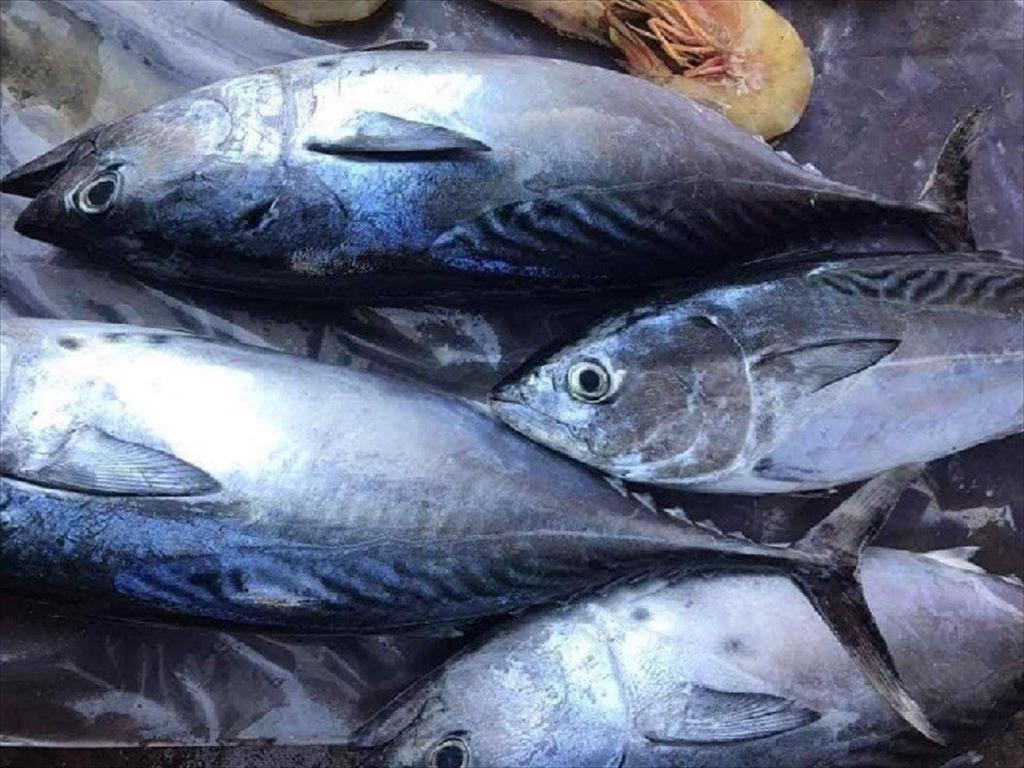
According to statistics from Vietnam Customs, in the first 10 months of 2026, Vietnam’s tuna exports to Israel exceeded US$34 million, up 12% year on year. Notably, after surging 91% in July, exports unexpectedly fell 35% in August and continued to decline by 3% in September. In October, export value recovered to nearly US$4.6 million, up 19% year on year.
These developments indicate that exports to Israel are improving but have yet to stabilize. Notably, the market’s 12% growth exceeded the 5% increase in Vietnam’s total tuna exports during the same period, reflecting positive signs of order recovery.
Shrinking import market and intensifying competition among suppliers
According to UN Comtrade data, in 2025, Israel imported nearly US$133 million worth of prepared or preserved tuna under HS code 160414, down approximately 33% from 2024. Import volume also fell by nearly 32%, to 24,704 tonnes.
Notably, Thailand maintained its dominant position, with exports valued at US$79.3 million, accounting for nearly 60% of the market. Vietnam ranked second with US$14.4 million, representing a 10.8% market share, while China followed closely with US$13.6 million.
The significant gap with Thailand and increasingly close competition from China highlight the considerable pressure facing Vietnamese exporters in the processed tuna segment. Thailand benefits from large-scale production and an established supply network, while China is competitive in terms of both pricing and volume.
Meanwhile, the sharp decline in Israel’s imports of processed tuna in 2025 also raises questions about the actual recovery in demand. Vietnam’s export growth in 2026 is not yet sufficient to confirm that Israel’s market is expanding, as part of the increase may reflect order shifts among suppliers.
Opportunities from convenience food demand and improving economic conditions
One encouraging sign is that inflationary pressure in Israel is easing. According to figures released in mid-November 2026, the country’s inflation rate fell to 1.1% in October, from 1.6% in the previous month. This could help improve consumer purchasing power, although the specific impact on imported tuna demand remains to be seen.
With its convenience, long shelf life, and ease of storage, canned tuna has the potential to maintain its position among essential food products. This offers an advantage to Vietnamese exporters capable of providing a stable supply of products that meet the requirements of Israel’s retail sector.
However, the market also has specific requirements regarding product quality, labeling, and Kosher certification. Meeting importers’ standards effectively could help Vietnamese exporters strengthen their competitiveness rather than relying primarily on selling prices.
Outlook: Selective growth rather than expansion at any cost
In the final months of 2026 and into 2027, Vietnam’s tuna exports to Israel are expected to have opportunities for further improvement. However, a sharp increase is unlikely, as ongoing uncertainties in the Middle East continue to pose risks to logistics, transportation costs, and trade activities.
In addition, rising raw tuna prices and competitive pressure from major suppliers could continue to weigh on Vietnamese exporters’ profit margins.
In this context, opportunities to expand market share in Israel will increasingly depend on exporters’ ability to maintain a stable supply, control costs, and develop processed products tailored to local demand. Taking advantage of tariff preferences under the Vietnam–Israel Free Trade Agreement (VIFTA) must also go hand in hand with compliance with rules of origin and the requirements applicable to each product category.
The recovery recorded in the first 10 months of 2026 is a positive sign. However, the more important challenge for Vietnamese tuna exporters in Israel is not simply to increase export value, but also to defend market share and improve export efficiency in an increasingly competitive market.
(seafood.vasep.com.vn) After a sharp decline in 2025, Vietnam’s tuna exports to Israel are recovering in 2026. However, volatile monthly export performance, coupled with fierce competition from Thailand and China, indicates that sustaining growth in this market remains a challenge.
(seafood.vasep.com.vn) In the first nine months of 2026, Vietnam’s tilapia exports to the Middle East reached $10 million, up 48% over the same period last year and accounting for 10% of the country’s total tilapia export value. September reached $3 million, a 203% increase year-on-year, making up 21% of the month's total tilapia export turnover.
(seafood.vasep.com.vn) On November 11, 2026, in Can Tho City, the Vietnam Association of Seafood Exporters and Producers (VASEP) held the Vietnam Seafood Summit 2026 (VSS 2026). The summit brought together more than 300 delegates, including business leaders, government regulators, experts and partners from across the seafood value chain. Over five in-depth panel sessions, participants looked at opportunities and challenges and discussed practical ways to sustain growth and make Vietnam’s seafood industry more competitive in 2027–2029.
On November 11, 2026, in Can Tho, the Vietnam Association of Seafood Exporters and Producers (VASEP) will host Vietnam Seafood Summit 2026 under the theme “Seafood Market Outlook 2027–2029: Opportunities and Headroom for Double-Digit Export Growth.” The summit will discuss market scenarios and strategic options to help Vietnam’s seafood industry unlock new growth opportunities, increase export value, and strengthen its competitiveness.
(seafood.vasep.com.vn) In the first nine months of 2026, Vietnam’s tilapia exports to the EU reached more than USD 4 million, up 2% year on year. The EU accounted for 4% of total tilapia export value, ranking behind major markets such as Brazil, the United States, Saudi Arabia and the CPTPP bloc.
(seafood.vasep.com.vn) On October 31, 2026, in Hanoi, Sa Giang Import-Export Corporation, a member of the Vietnam Association of Seafood Exporters and Producers (VASEP), was awarded the Top 30 Outstanding Cultural and Reputable Enterprises of 2026 certificate by the Vietnam Chamber of Commerce and Industry (VCCI). This group represents the most distinguished companies among the 100 enterprises honored at the “Cultural and Reputable Enterprises 2026” announcement ceremony.
(vasep.com.vn) In the first nine months of 2026, Vietnam’s pangasius exports to the EU reached approximately $148 million, up 12% compared to the same period in 2025. In September 2026 alone, export turnover to this market hit $18 million, a 27% year-on-year increase. Despite diverging demand across member states, the EU remains a market with growth potential for Vietnamese pangasius, particularly as supplies of several traditional whitefish species face mounting pressure.
(seafood.vasep.com.vn) Vietnam’s tuna exports to the US are showing a clear recovery after a difficult start to the year. However, the rebound is taking place against a backdrop of declining US tuna imports and a shifting supply structure, posing new challenges for Vietnamese businesses.
(vasep.com.vn) In the first nine months of 2026, Vietnam’s shrimp exports to Japan reached US$440.9 million, up 6.4% year on year. This result is noteworthy as Japan’s total shrimp imports continued to decline slightly and competition among suppliers intensified. Demand for convenience foods and processed products continues to create opportunities for Vietnamese exporters, but capitalizing on these opportunities requires stronger competitiveness and the ability to meet increasingly specific market requirements.
(vasep.com.vn) After slowing in the first months of the year, Vietnam’s tuna exports have shown a clear improvement since June 2026. However, behind September’s double-digit growth lies a notable reality: export value is recovering, but pressures from markets, trade policies, and competition among suppliers remain.
VASEP - HIỆP HỘI CHẾ BIẾN VÀ XUẤT KHẨU THỦY SẢN VIỆT NAM
Chịu trách nhiệm: Ông Nguyễn Hoài Nam - Phó Tổng thư ký Hiệp hội
Đơn vị vận hành trang tin điện tử: Trung tâm VASEP.PRO
Trưởng Ban Biên tập: Bà Phùng Thị Kim Thu
Giấy phép hoạt động Trang thông tin điện tử tổng hợp số 138/GP-TTĐT, ngày 01/10/2013 của Bộ Thông tin và Truyền thông
Tel: (+84 24) 3.7715055 – (ext.203); email: kimthu@vasep.com.vn
Trụ sở: Số 7 đường Nguyễn Quý Cảnh, Phường An Phú, Quận 2, Tp.Hồ Chí Minh
Tel: (+84) 28.628.10430 - Fax: (+84) 28.628.10437 - Email: vasephcm@vasep.com.vn
VPĐD: số 10, Nguyễn Công Hoan, Ngọc Khánh, Ba Đình, Hà Nội
Tel: (+84 24) 3.7715055 - Fax: (+84 24) 37715084 - Email: vasephn@vasep.com.vn