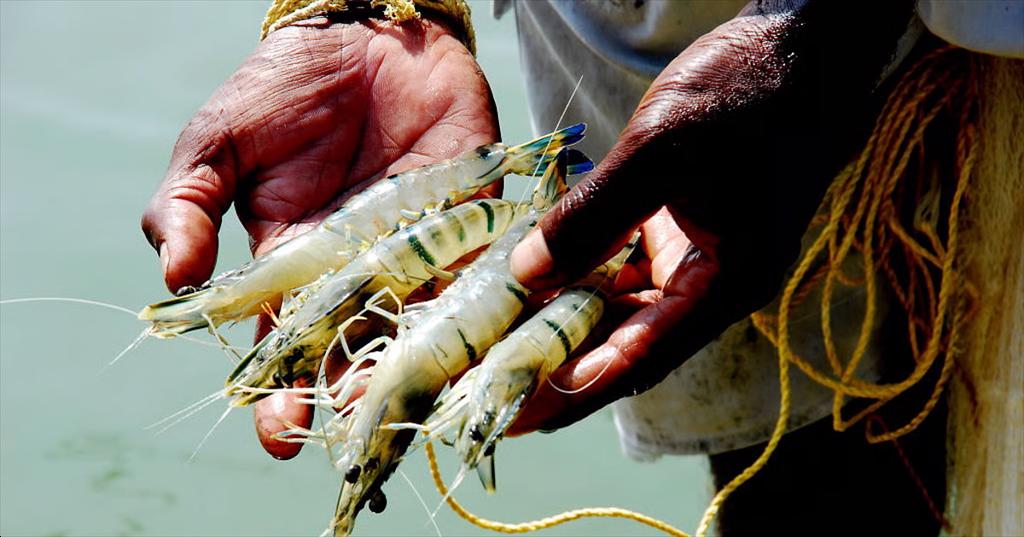
Exports Accelerate Despite Tariff Barriers
Amid ongoing volatility in global seafood trade, India’s shrimp sector recorded impressive growth. In the first 11 months of 2025, India exported 734,593 tons of shrimp worth approximately USD 5.23 billion, up 10% in volume and 17% in value year-on-year. In October and November alone, export volumes remained above 75,000 tons per month, continuing to post positive growth.
This development suggests that U.S. tariff measures did not significantly reduce overall demand for Indian shrimp, but rather redirected trade flows toward other markets.
Product Structure: Raw Shrimp Still Dominates
Export composition shows that raw whiteleg shrimp remained the mainstay, with over 562,000 tons exported (+9%). Value-added products reached 70,370 tons (+18%), while black tiger shrimp saw notable recovery in the second half of the year.
This reflects India’s familiar strategy: prioritize high volumes and competitive pricing to capture market share, then gradually expand into deeper processing. Such an approach allows exporters to flexibly pivot toward markets requiring large volumes of raw materials.
EU Emerges as a New Growth Destination
While exports to the U.S. declined due to higher tariffs, the EU became a bright spot. In the first 11 months of 2025, India’s shrimp exports to the EU reached 107,649 tons, up 38%—the strongest growth among major markets. During the same period, China imported 141,002 tons (+10%).
This shift indicates that Indian exporters are proactively reallocating markets rather than relying excessively on the U.S.
EU–India FTA: A Long-Term Strategic Boost
The most significant turning point came on January 27, 2026, when India and the European Union concluded negotiations on a Free Trade Agreement, paving the way for tariff reductions on most goods, including seafood.
According to European importers, once the agreement takes effect, import tariffs on Indian shrimp could fall substantially, making prices far more competitive compared to previous levels, when tariffs were relatively high. This is expected to give Indian shrimp a significant edge over competing suppliers such as Ecuador and Vietnam.
Although the agreement still requires formal ratification, it has already delivered a “market psychology” benefit, encouraging companies to sign long-term contracts, invest in farming areas, and expand EU-oriented capacity in advance.
U.S. Tariff Reduction: An Opportunity, but Not a Breakthrough
Alongside developments in the EU, U.S.–India trade relations have also shown positive signs, with U.S. reciprocal tariffs on Indian goods reduced from 25% to around 18%.
However, Indian shrimp remains subject to anti-dumping and countervailing duties, meaning effective costs have not fallen as sharply as hoped.
This implies that while U.S. demand may partially recover, it is unlikely to regain its position as India’s overwhelmingly dominant market. The EU is therefore expected to remain India’s strategic pillar in the coming years.
Strategic Direction of Indian Exporters
Based on recent developments, Indian exporters’ strategy appears to be taking shape along three key directions:
This approach allows India to safeguard export volumes while mitigating policy risks.
Vietnamese Shrimp Under Intensifying Competitive Pressure
For Vietnam, India’s strategic shift creates direct competitive pressure, particularly in the EU—a market where Vietnam has traditionally enjoyed advantages under the EVFTA.
If Indian shrimp benefits from equivalent or lower tariffs, its price advantage—backed by large-scale farming and lower production costs—will become more pronounced. Consequently, competition in the raw and mid-range segments in the EU will intensify.
Nevertheless, Vietnam retains strengths in deep processing, value-added products, high quality standards, traceability, and sustainability compliance.
Vietnamese Shrimp Enterprises: Upgrading Value to Sustain Long-Term Advantage
As India expands its presence in the EU and gradually recovers market share in the U.S. through new trade agreements, competing directly on price or volume will become increasingly difficult for Vietnamese shrimp enterprises. Instead, the appropriate direction is to increase the share of value-added products, reduce dependence on frozen raw shrimp, fully leverage EVFTA tariff preferences and stable EU trade relations, and expand into other markets such as Japan, South Korea, and CPTPP member countries.
At the same time, strong investment in sustainability standards, ESG practices, traceability systems, and “green” certifications will become key strategic differentiators.
India’s shrimp story in 2025–2026 demonstrates its rapid adaptability to policy shifts: losing advantages in one market but swiftly pivoting to another, while leveraging FTAs to prepare for a new growth cycle.
For Vietnam’s shrimp exports, this represents both a challenge and a reminder to upgrade the growth model. In the coming period, competitive advantage in the shrimp industry will no longer lie in scale or low costs, but in added value, branding, and sustainable quality—factors that will determine the long-term position of Vietnamese shrimp in the global market.
(seafood.vasep.com.vn) From the very beginning of 2026, India’s shrimp industry has received a series of favorable trade signals: U.S. reciprocal tariffs have been reduced, while the successful conclusion of a Free Trade Agreement (FTA) with the EU has opened prospects for eliminating nearly all seafood tariffs in the coming years. This shift not only enables Indian shrimp to quickly offset declines in the U.S. market, but also reshapes the global competitive landscape, placing greater pressure on Vietnamese shrimp exporters in terms of price, market share, and strategic positioning.
(seafood.vasep.com.vn) Entering 2026, Vietnam’s pangasius industry is recording many positive signals, both in terms of raw fish prices and export prospects. Export turnover this year is projected to reach approximately USD 2.3 billion. Amid ongoing volatility in the global market, diversifying export destinations, reducing dependence on major markets, and effectively leveraging free trade agreements (FTAs) are considered key to maintaining sustainable growth and creating new momentum for the pangasius sector.
(seafood.vasep.com.vn) With forecasts indicating that weather conditions in 2026 may become more complex—featuring prolonged heatwaves, unseasonal rains, and increased salinity intrusion—the agricultural sector of Can Tho City advises brackish water shrimp farmers to strictly follow the seasonal farming calendar and strengthen pond environmental management to minimize risks and improve production efficiency.
(seafood.vasep.com.vn) On February 4, a working delegation led by the Authority of Telecommunications (Ministry of Science and Technology) met with the Management Board of Cat Lo Fishing Port (Phuoc Thang Ward, Ho Chi Minh City) to comprehensively review the installation of Vessel Monitoring Systems (VMS), assess signal connectivity, and evaluate the effectiveness of information technology applications in fisheries management across the city.
(seafood.vasep.com.vn) The year 2025 marked a significant milestone for China’s lobster market, with total imports reaching a record high and the supply structure undergoing major changes. Amid this surge, Vietnam’s lobster exports—especially green lobster—accelerated dramatically, reaching new highs and contributing substantially to Vietnam’s overall record shrimp export value.
(seafood.vasep.com.vn) With a range of synchronized solutions, from institutional improvements and strengthened communication to strict fleet control, Quang Ninh is stepping up efforts to combat illegal, unreported and unregulated (IUU) fishing, determined to join the country in soon having the European Commission’s (EC) “yellow card” lifted.
(seafood.vasep.com.vn) The year 2025 closed with a remarkable milestone for Vietnam’s shrimp industry. According to Vietnam Customs, the country’s total shrimp export turnover in 2025 reached USD 4.6 billion, up 19% compared to 2024 and the highest level ever recorded.
(seafood.vasep.com.vn) During the 2026–2030 period, Quang Tri province aims to convert 771 fishing vessels currently engaged in activities detrimental to marine resources and the ecological environment to more environmentally friendly fishing practices or shift entirely to other economic sectors.
(seafood.vasep.com.vn) 2025 recorded a breakthrough growth in Vietnam’s tilapia exports, in which the U.S market emerging as the primary growth driver. The total export turnover of Vietnamese tilapia to the United States reached $53.15 million during the year, surging 173% year-on-year and accounting for 54% of Vietnam’s total tilapia export value, thereby making the U.S the largest import market for this commodity. Compared to 2024, tilapia exports to the U.S posted robust growth, reflecting the import demand as well as the ability of Vietnamese enterprises to capitalize on market opportunities amidst volatile global competitive dynamics.
(seafood.vasep.com.vn) After two consecutive years of decline, Vietnam’s fish cake and surimi exports rebounded in 2025. Export turnover of this product group exceeded USD 344 million, up 15% year-on-year compared with 2024 and 13% higher than 2023, although still below the peak level recorded in 2022.
VASEP - HIỆP HỘI CHẾ BIẾN VÀ XUẤT KHẨU THỦY SẢN VIỆT NAM
Chịu trách nhiệm: Ông Nguyễn Hoài Nam - Phó Tổng thư ký Hiệp hội
Đơn vị vận hành trang tin điện tử: Trung tâm VASEP.PRO
Trưởng Ban Biên tập: Bà Phùng Thị Kim Thu
Giấy phép hoạt động Trang thông tin điện tử tổng hợp số 138/GP-TTĐT, ngày 01/10/2013 của Bộ Thông tin và Truyền thông
Tel: (+84 24) 3.7715055 – (ext.203); email: kimthu@vasep.com.vn
Trụ sở: Số 7 đường Nguyễn Quý Cảnh, Phường An Phú, Quận 2, Tp.Hồ Chí Minh
Tel: (+84) 28.628.10430 - Fax: (+84) 28.628.10437 - Email: vasephcm@vasep.com.vn
VPĐD: số 10, Nguyễn Công Hoan, Ngọc Khánh, Ba Đình, Hà Nội
Tel: (+84 24) 3.7715055 - Fax: (+84 24) 37715084 - Email: vasephn@vasep.com.vn