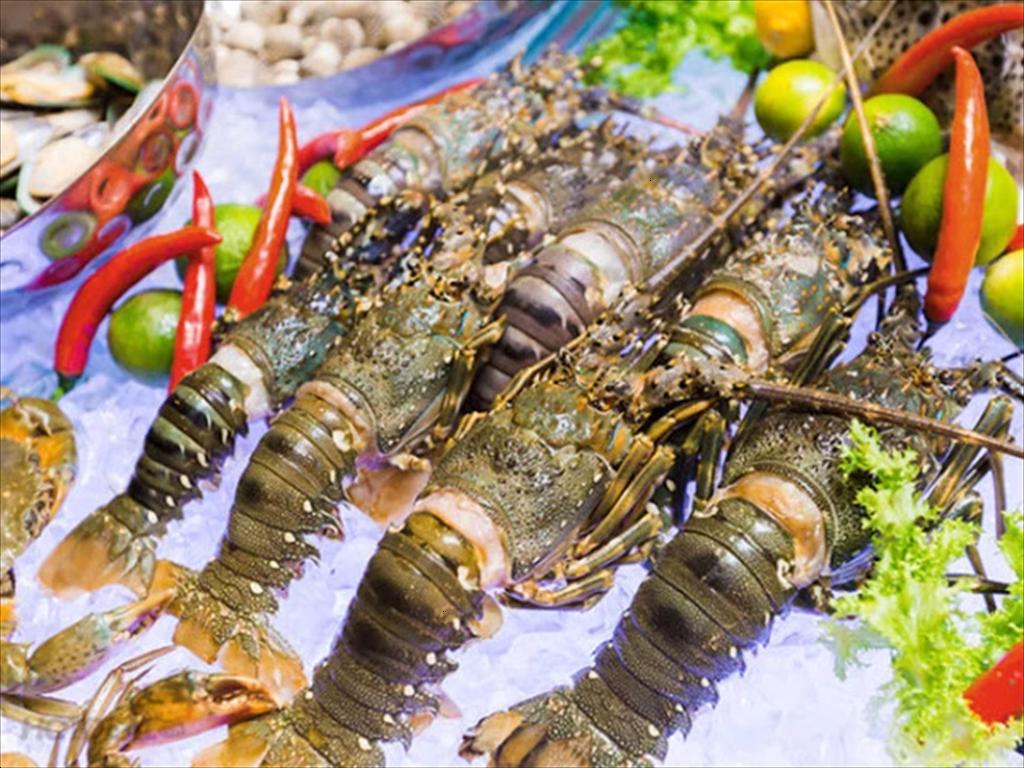
Premium demand drives lobster imports in China
Seafood consumption in China is becoming increasingly polarized. Budget-conscious consumers are purchasing more low-priced products, while high-income consumers continue to sustain strong demand for premium seafood such as large shrimp, live seafood including lobster, and processed or convenience products. The expansion of modern retail, e-commerce, and restaurant chains has also shifted consumers away from low-priced frozen shrimp, creating more room for high-value products like lobster.
This trend is particularly important for lobster suppliers, as lobster is a premium product closely tied to income levels and tends to see strong growth when demand for fine dining, experiential consumption, and gifting recovers. At the same time, mid-range products face pressure, while premium and convenience segments continue to grow steadily—areas where Vietnam has clear strengths in quality, flexibility, and processing capability.
China’s lobster imports reach record high in 2025
According to China Customs data, China’s lobster imports reached 69,774 metric tons in 2025, up from 60,834 metric tons in 2024, marking the highest level during the 2020–2025 period. Notably, the supply landscape shifted significantly within just one year.
In 2024, Canada was the largest supplier with 26,920 metric tons, accounting for about 44% of total imports, followed by Vietnam with 10,865 metric tons (about 18%). By 2025, Vietnam had risen to the top position with 24,067 metric tons, representing approximately 34.5% of total imports, while Canada’s exports declined to 15,355 metric tons, or about 22% market share. The United States supplied 9,931 metric tons (about 14.2%), and Australia increased sharply to 6,950 metric tons (nearly 10%), reflecting China’s growing diversification of suppliers.
Tariffs on Canada reshape trade flows in 2025
One of the most important factors influencing the market in 2025 was China’s tariff policy on Canadian seafood. China imposed an additional 25% tariff on several Canadian seafood products, including lobster, effective March 20, 2025.
As a high-value product with price-sensitive buyers, Canadian lobster became less competitive during this period, prompting Chinese buyers to seek alternative suppliers. Vietnam held clear advantages, including geographic proximity, shorter delivery times, flexible shipment volumes, and strong suitability for live and fresh products—critical factors for lobster exports.
By early 2026, a bilateral agreement between China and Canada removed the 25% tariff on Canadian lobster and crab, effective March 1, 2026. As a result, competition among lobster suppliers in China is expected to enter a new phase in 2026.
Australia returns, increasing premium supply
Australia also played a significant role in reshaping supply. The Australian government announced that live rock lobster exports to China resumed immediately on December 20, 2024, reopening the trade after a prolonged suspension. This development was reflected in 2025 import data, with Australian lobster exports rising sharply, contributing to China’s record import volume and intensifying competition in the premium segment.
Vietnam achieves record lobster exports to China in 2025
According to Vietnam Customs, 2025 was a breakthrough year for Vietnam’s lobster exports to China. Total shrimp export value from Vietnam to China and Hong Kong reached USD 1.3 billion, up 55% compared with 2024.
Within this total, green lobster was the key growth driver. Export value reached USD 840 million in 2025, up 131% from USD 363.5 million in 2024. In January 2026 alone, Vietnam’s green lobster exports to China and Hong Kong reached approximately USD 100.2 million, up 6% compared with USD 94.2 million in January 2025. These figures indicate continued strong demand entering 2026, despite increasing competition.
Vietnam’s competitive advantage in 2025 stemmed largely from shorter transportation times and more consistent quality upon delivery. While Canadian lobster faced tariff disadvantages and Australia re-entered the market, Chinese buyers diversified sourcing to optimize both pricing and supply reliability, benefiting Vietnam significantly.
2026: strong opportunities but fiercer competition ahead
Export data for January 2026 shows Vietnam maintaining positive momentum. However, from March 2026 onward, the removal of tariffs on Canadian lobster could quickly reshape competition. Canada will likely seek to regain market share, particularly in premium restaurant and gifting segments, while Australia continues strengthening its presence following trade normalization.
As Chinese consumption remains polarized, premium seafood continues to see strong demand, but buyers are becoming more selective. To maintain growth, Vietnamese exporters must focus on consistent quality, standardized product specifications, optimized logistics for live and fresh products, and stronger direct connections with modern distribution networks.
The record import levels in 2025 demonstrate China’s strong appetite for lobster when premium demand recovers. However, 2026 will be a test of competitiveness. Suppliers that maintain quality, delivery speed, and distribution access will be best positioned to retain market share as Canada returns and competition intensifies in the premium segment.
(vasep.com.vn) The global tilapia market is becoming increasingly segmented, not only among producing countries but also by product type and destination market. Supply is divided into groups with distinct competitive advantages: large volumes of whole fish and frozen fillets from Asia, high-value fresh fillets from Latin America, and substantial domestic consumption in several major producing countries.
(vasep.com.vn) Vietnam’s tuna exports to the UK grew in the first eight months of 2026, despite signs of slowing import demand in the market. However, sharp fluctuations in orders, competition from major suppliers, and new traceability requirements are creating challenges for Vietnamese exporters.
(seafood.vasep.com.vn) Vietnam is stepping up efforts to combat illegal fishing, protect marine ecosystems, expand digital monitoring, and develop science-based management to ensure the sea can support communities and the economy for generations to come.
(seafood.vasep.com.vn) The EU remains a critical market for Vietnamese shrimp; however, purchasing demand and import patterns are undergoing notable changes. According to Vietnam Customs data, as of September 15, 2026, Vietnam’s shrimp exports to the EU reached nearly $374 million, down 5% year-over-year and accounting for 10.7% of the country’s total shrimp export value. Meanwhile, the EU’s stotal shrimp imports through July 2026 contracted by 7% in volume, exhibiting divergent trends across Southern Europe, Northwestern Europe and Eastern Europe. These dynamics necessitate that Vietnamese enterprises closely monitor individualized market demand, rather than approaching the EU as a monolithic consumer block.
(seafood.vasep.com.vn) In the first eight months of 2026, Vietnam’s exports of surimi and fish cakes remained relatively stable year-over-year compared to 2025. Following a contraction in the initial months, export performance demonstrated improvement from June onward, peaking in August. However, the recovery has been uneven, characterized by divergent trends across major markets: robust growth was recorded in China, Japan, Malaysia, the United States, and Taiwan, whereas export volumes to South Korea, Indonesia, and select European markets contracted.
(seafood.vasep.com.vn) Pangasius remains one of Dong Thap’s key aquaculture species, with the province focusing on developing an integrated value chain covering seed production, commercial farming, deep processing and by-product utilization. The province is promoting high-tech, circular pangasius farming models featuring reduced water exchange and enhanced biosecurity, aiming to improve production efficiency and strengthen control over raw material quality.
(vasep.com.vn) Vietnam’s seafood exports in September 2026 are estimated at US$1.135 billion, up 11.9% year-on-year, bringing total exports in the first nine months of the year to US$9.103 billion, up 11.4%. Behind this double-digit growth, however, increasingly divergent market trends are emerging: China–Hong Kong and ASEAN posted strong growth, while the U.S., EU and Japan all recorded declines in September.
(vasep.com.vn) In the first eight months of 2026, Brazil became the largest market for Vietnamese tilapia, with export value reaching US$44 million, up 22,142% year-on-year and accounting for 49% of Vietnam’s total tilapia exports. In August alone, exports to Brazil reached US$4 million. However, behind this remarkable growth is a market that is imposing increasingly stringent requirements on imported supplies.
(vasep.com.vn) Vietnam’s tuna exports sustained their upward trajectory in August 2026, though the pace remained modest at just 2%. The month saw divergent trends across key markets: the US maintained its leading position, Japan and Canada improved, Russia surged and the EU continued to experience a steep downturn. These developments suggest that exporters are entering the final months of the year amid a market environment marked by greater uncertainty.
(seafood.vasep.com.vn) Congalsa has acquired the entire charter capital of Lenger Seafood Vietnam, giving it full ownership of the business and its Nam Dinh processing facility.
VASEP - HIỆP HỘI CHẾ BIẾN VÀ XUẤT KHẨU THỦY SẢN VIỆT NAM
Chịu trách nhiệm: Ông Nguyễn Hoài Nam - Phó Tổng thư ký Hiệp hội
Đơn vị vận hành trang tin điện tử: Trung tâm VASEP.PRO
Trưởng Ban Biên tập: Bà Phùng Thị Kim Thu
Giấy phép hoạt động Trang thông tin điện tử tổng hợp số 138/GP-TTĐT, ngày 01/10/2013 của Bộ Thông tin và Truyền thông
Tel: (+84 24) 3.7715055 – (ext.203); email: kimthu@vasep.com.vn
Trụ sở: Số 7 đường Nguyễn Quý Cảnh, Phường An Phú, Quận 2, Tp.Hồ Chí Minh
Tel: (+84) 28.628.10430 - Fax: (+84) 28.628.10437 - Email: vasephcm@vasep.com.vn
VPĐD: số 10, Nguyễn Công Hoan, Ngọc Khánh, Ba Đình, Hà Nội
Tel: (+84 24) 3.7715055 - Fax: (+84 24) 37715084 - Email: vasephn@vasep.com.vn