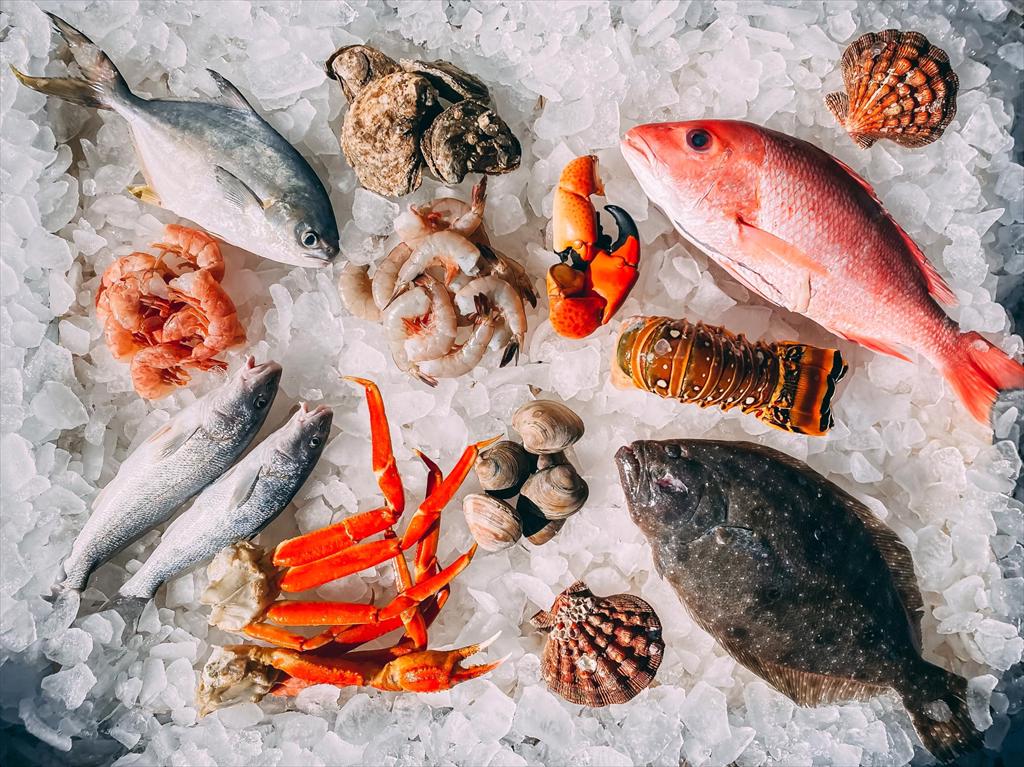
By product category, shrimp remained the leading driver, with export value in February 2026 reaching about USD 310 million, up 17% year-on-year. In the first two months, shrimp exports totaled USD 689.5 million, up nearly 20% compared to the same period last year. However, in the U.S. market, prospects for Vietnamese shrimp are facing new pressure after the U.S. Department of Commerce announced the final results of the 19th administrative review (POR19) on Vietnamese frozen shrimp. Accordingly, the two mandatory respondents—STAPIMEX and the Thong Thuan/TTCR group—were assigned a dumping margin of 25.76%, while 22 companies received a separate rate of 4.58%. This development increases cost risks and could reinforce caution among U.S. importers in the short term. In February, shrimp exports to the U.S. fell nearly 60% year-on-year.
In February 2026, pangasius exports reached USD 119.3 million, down 4.8% from the same period last year. However, the two-month total still reached USD 331.4 million, up a strong 28%. This indicates that most of the growth was driven by the very positive performance in January, while February showed signs of adjustment. Pangasius exports to the U.S. declined 20%, and shipments to several other markets fell slightly due to the Lunar New Year holiday effect. Meanwhile, exports to China increased by 15%.
In contrast, tuna exports raised greater concern, reaching only USD 53.3 million in February, down 14.7% year-on-year. In the first two months, exports totaled USD 128.7 million, nearly flat with a slight 0.2% decline. This suggests that wild-caught seafood products are facing simultaneous pressure from market demand, logistics costs, and particularly regulatory factors. From January 1, 2026, shipments from fisheries not recognized as equivalent by NOAA under the Marine Mammal Protection Act (MMPA) may face import restrictions into the U.S. In addition, countries partially denied equivalence must apply Certification of Admissibility (COA) for related shipments. NOAA also stated that Vietnam is among the countries denied recognition for certain fisheries, meaning compliance risks for wild-caught seafood exports to the U.S. have increased significantly this year. In February, tuna exports to most major markets declined slightly, while shipments to the U.S. dropped nearly 26% year-on-year.
Other product groups recorded relatively positive results. Crab and other crustacean exports surged strongly in February, rising 78.7%, bringing the two-month total to USD 66.2 million, up 24%. Exports of crab to China–Hong Kong alone reached USD 21.5 million in February, more than double the level of the same period last year, mainly driven by live crab shipments for Lunar New Year demand. China currently accounts for nearly 60% of Vietnam’s total crab exports.
Exports of squid and octopus were almost flat in February, declining 0.4%, but still posted 23.3% growth for the first two months. Bivalve mollusks recorded the fastest growth, with February up 70.3% and two-month exports up 38.5%. This indicates that the growth structure in early 2026 is not solely reliant on shrimp but is spreading across other seafood and mollusk categories.
By market, China and Hong Kong emerged as the brightest spot, with exports in February soaring 82%, pushing the two-month value to USD 513.5 million, up 54%. The Lunar New Year holiday generated strong demand for live and fresh seafood products in China. In the context of 2026, with tariff policy fluctuations and technical barriers in the U.S., along with logistical challenges stemming from Middle East conflicts, China is likely to become the most important growth driver for Vietnam’s seafood sector. Exports to ASEAN also performed well in the first two months, reaching USD 118.6 million, up 21.5%, although February alone declined 8%. The EU maintained a relatively stable growth pace, rising 2.5% in February and 16.9% in the two-month period. Japan posted a modest 4.8% increase over two months but fell 18.3% in February, indicating that demand remains somewhat unstable.
The U.S. remains an important market but is no longer a key growth driver this year. In February 2026, exports to the U.S. reached only about USD 80.8 million, down sharply 25.7%, while the two-month total declined 3% to USD 209.3 million. The market is currently affected by sluggish demand, importer caution, and policy uncertainties. In addition to POR19 and the MMPA, the White House has introduced an additional 10% import tariff on goods entering the U.S. for 150 days, effective February 24, 2026. The exact impact on specific seafood categories will depend on implementation and tariff classification, but the measure could make orders in March more cautious.
Looking ahead to March 2026, Vietnam’s seafood exports are likely to continue growing but with significant divergence across markets and product groups. A supportive factor is the Seafood Expo North America 2026 in Boston (March 15–17), which may create opportunities for companies to reconnect with buyers, secure new orders, and gauge demand for the second quarter. However, the business environment in the U.S. will likely remain unpredictable due to the impact of new tariffs, the POR19 results for shrimp, and tighter compliance requirements under the MMPA. Therefore, in March, shrimp exporters and wild-caught seafood producers should exercise particular caution in the U.S. market, while short-term growth opportunities may increasingly lie in China, the EU, and partly ASEAN.
(seafood.vasep.com.vn) In the first eight months of 2026, Vietnam’s exports of surimi and fish cakes remained relatively stable year-over-year compared to 2025. Following a contraction in the initial months, export performance demonstrated improvement from June onward, peaking in August. However, the recovery has been uneven, characterized by divergent trends across major markets: robust growth was recorded in China, Japan, Malaysia, the United States, and Taiwan, whereas export volumes to South Korea, Indonesia, and select European markets contracted.
(seafood.vasep.com.vn) Pangasius remains one of Dong Thap’s key aquaculture species, with the province focusing on developing an integrated value chain covering seed production, commercial farming, deep processing and by-product utilization. The province is promoting high-tech, circular pangasius farming models featuring reduced water exchange and enhanced biosecurity, aiming to improve production efficiency and strengthen control over raw material quality.
(vasep.com.vn) Vietnam’s seafood exports in September 2026 are estimated at US$1.135 billion, up 11.9% year-on-year, bringing total exports in the first nine months of the year to US$9.103 billion, up 11.4%. Behind this double-digit growth, however, increasingly divergent market trends are emerging: China–Hong Kong and ASEAN posted strong growth, while the U.S., EU and Japan all recorded declines in September.
(vasep.com.vn) In the first eight months of 2026, Brazil became the largest market for Vietnamese tilapia, with export value reaching US$44 million, up 22,142% year-on-year and accounting for 49% of Vietnam’s total tilapia exports. In August alone, exports to Brazil reached US$4 million. However, behind this remarkable growth is a market that is imposing increasingly stringent requirements on imported supplies.
(vasep.com.vn) Vietnam’s tuna exports sustained their upward trajectory in August 2026, though the pace remained modest at just 2%. The month saw divergent trends across key markets: the US maintained its leading position, Japan and Canada improved, Russia surged and the EU continued to experience a steep downturn. These developments suggest that exporters are entering the final months of the year amid a market environment marked by greater uncertainty.
(seafood.vasep.com.vn) Congalsa has acquired the entire charter capital of Lenger Seafood Vietnam, giving it full ownership of the business and its Nam Dinh processing facility.
(seafood.vasep.com.vn) Ninh Binh Province is entering a peak period of action against illegal, unreported and unregulated (IUU) fishing, focusing on thoroughly addressing violations, closely monitoring fishing vessels at ports and preventing vessels from violating regulations and operating illegally in foreign waters ahead of the European Commission’s (EC) upcoming inspection in 2026.
(vasep.com.vn) The application of biotechnology in seed production is increasingly viewed as a strategic imperative to upgrade pangasius fingerling quality, optimize farming efficiency and anchor sustainable industry development.
(vasep.com.vn) On September 15, 2026, in Can Tho, VASEP and ASC jointly organized a training course titled “New ASC standards: updates and practical implementation guidance for farms, businesses and aquafeed mills”. Beyond briefing stakeholders on updated ASC requirements for aquaculture facilities and feed production, the workshop dedicated substantial floor time to directly addressing on-the-ground compliance bottlenecks encountered by Vietnamese enterprises.
(searfood.vasep.com.vn) Vietnam’s tilapia exports continued to post positive results in the first eight months of 2026, with total export value reaching US$90 million, up 43% year-on-year. However, exports in August alone stood at US$11 million, down 8%, reflecting uneven market developments. Brazil remained the leading market, while Japan recorded notable growth, opening up new opportunities for Vietnamese tilapia products.
VASEP - HIỆP HỘI CHẾ BIẾN VÀ XUẤT KHẨU THỦY SẢN VIỆT NAM
Chịu trách nhiệm: Ông Nguyễn Hoài Nam - Phó Tổng thư ký Hiệp hội
Đơn vị vận hành trang tin điện tử: Trung tâm VASEP.PRO
Trưởng Ban Biên tập: Bà Phùng Thị Kim Thu
Giấy phép hoạt động Trang thông tin điện tử tổng hợp số 138/GP-TTĐT, ngày 01/10/2013 của Bộ Thông tin và Truyền thông
Tel: (+84 24) 3.7715055 – (ext.203); email: kimthu@vasep.com.vn
Trụ sở: Số 7 đường Nguyễn Quý Cảnh, Phường An Phú, Quận 2, Tp.Hồ Chí Minh
Tel: (+84) 28.628.10430 - Fax: (+84) 28.628.10437 - Email: vasephcm@vasep.com.vn
VPĐD: số 10, Nguyễn Công Hoan, Ngọc Khánh, Ba Đình, Hà Nội
Tel: (+84 24) 3.7715055 - Fax: (+84 24) 37715084 - Email: vasephn@vasep.com.vn