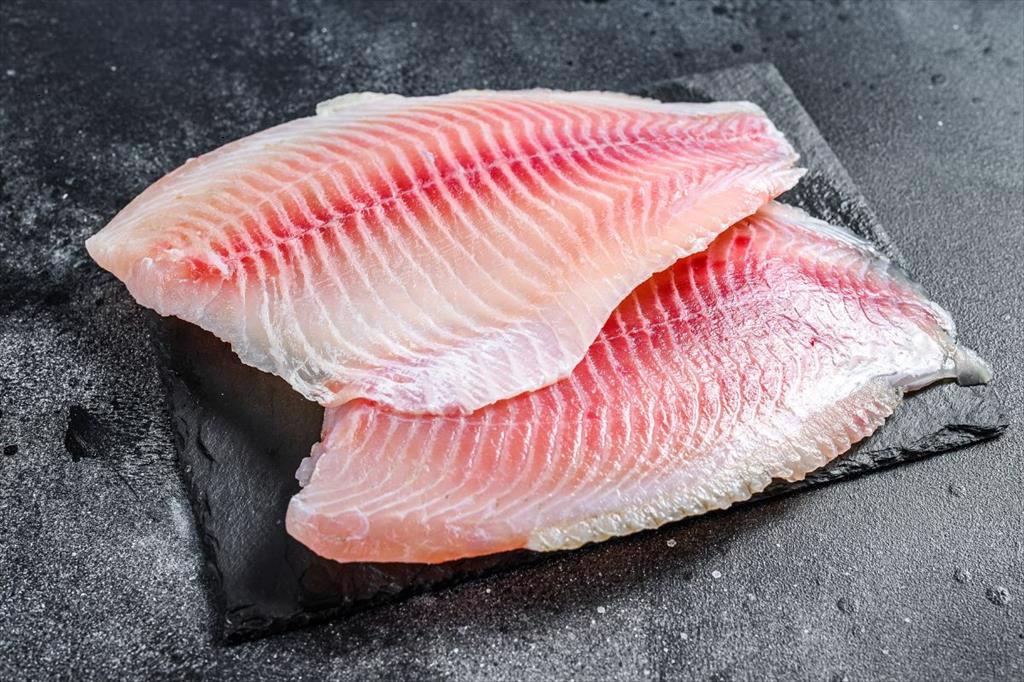
The global tilapia market size reached USD 10.6 billion in 2024 and is projected to grow to USD 14.5 billion by 2033, with a compound annual growth rate (CAGR) of 3.52%. Global tilapia production reached approximately 7 million tons in 2024 and is expected to rise to 7.3 million tons by 2025. By 2033, the market value of tilapia is anticipated to reach USD 14.5 billion.
Vietnam's tilapia exports include both black and red tilapia
In 2024, Vietnam’s tilapia exports reached USD 41 million, marking a 138% increase compared to 2023. Of this, red tilapia exports accounted for USD 13 million, up 20% year-on-year, while black tilapia exports reached USD 28 million, representing a remarkable 348% growth compared to the previous year.
Specifically, in 2024, Vietnam’s tilapia exports to the United States amounted to USD 19 million, soaring by 572%. Exports to the EU reached USD 4 million, down 8%; to South Korea, over USD 2 million, down 9%; to the Middle East, nearly USD 2 million, up 60%; to ASEAN countries, over USD 1 million, down 33%; and to Japan, USD 992,000, doubling from 2023.
In the first quarter of 2025, total tilapia exports reached nearly USD 14 million, an increase of 131%. Exports to the United States totaled over USD 6 million, tripling year-on-year and accounting for 46% of the share, making it the largest market for Vietnamese tilapia. Exports to Russia reached nearly USD 1.8 million (13% share), while exports to Belgium exceeded USD 700,000 (5% share).
Opportunities for Vietnam’s tilapia exports
Vietnam is globally recognized as the leading exporter of pangasius – a whitefish species with characteristics similar to tilapia. Both species thrive under similar farming conditions, benefitting from Vietnam’s tropical climate (27–32°C) and expansive water surface area (3,300 hectares in the Mekong Delta), which are ideal for tilapia farming. Tilapia can reach a harvestable size (600–800g) within a short cycle of 5–6 months at relatively low production costs. Moreover, the adoption of high-efficiency farming systems, such as intensive pond culture and tank-based production, has helped increase yields and reduce disease risks.
Meanwhile, global tilapia consumption continues to rise by 13% annually and is projected to reach USD 20 billion by 2030. The United States alone imports around 200,000 tons annually. Vietnamese tilapia is highly favored in the EU, a market known for its stringent import requirements, which, once met, can open up broader export opportunities.
Additionally, China's declining tilapia supply and the imposition of high tariffs on Chinese tilapia have indirectly benefited Vietnam and other suppliers. In 2025, the U.S. tariff on Chinese tilapia is set at 54%, significantly reducing supply and enabling Vietnam to expand its market share. Vietnam’s tilapia exports to the U.S. are projected to reach USD 12 million in 2025. Under the Regional Comprehensive Economic Partnership (RCEP), Vietnam’s tilapia exports to China will also enjoy zero tariffs starting in 2025.
Challenges facing Vietnam’s tilapia industry
One of the biggest challenges confronting Vietnam’s tilapia sector is related to seed quality and disease outbreaks. Inbreeding has led to slower growth rates and lower fillet yields, averaging only about 33%. The Tilapia Lake Virus (TiLV) alone has caused a 15% reduction in production. In February 2024, Brazil officially banned imports of Vietnamese tilapia due to concerns over TiLV.
Moreover, tilapia feed heavily relies on imported raw materials, limiting the industry's self-sufficiency and flexibility in responding to market and production demands.
Tariff and regulatory barriers also pose significant hurdles. In 2025, the U.S. imposed tariffs ranging from 10% to 46% on tilapia imports. Exporters must also meet increasingly stringent standards on food safety (FDA regulations), traceability, and sustainable labor practices.
International competition has intensified as well. Brazil, for instance, boosted its tilapia exports to the U.S. by 79% in 2024, offering a lower average price of approximately USD 3/kg. Meanwhile, China continues to improve its production efficiency, thus reducing its demand for Vietnamese imports.
Vietnam's tilapia supply chain remains fragmented, with loose linkages among stakeholders. Farm-gate prices fluctuate between VND 45,000 and 51,000 per kilogram, and a shortage of processing facilities meeting international standards persists. Logistics costs have also increased by 12% due to ongoing trade conflicts.
Proposed strategic solutions
Addressing these challenges requires a coordinated set of strategic solutions. Vietnamese enterprises should prioritize production improvements by investing in high-quality, disease-resistant broodstock, including research and development of GIFT strains with resistance to TiLV. Expanding recirculating aquaculture systems (RAS) and tank-based farming is critical to enhancing productivity and biosecurity.
Additionally, strengthening domestic feed production through partnerships with feed companies could help reduce production costs by up to 15%.
Further investment in value-added processing is equally important. Enterprises are encouraged to invest in automated fillet processing lines and develop value-added products such as smoked tilapia and tilapia snacks. Promoting certification standards such as ASC and BAP, enhancing supply chain transparency, and applying blockchain technology for traceability will significantly enhance competitiveness.
On the market side, greater efforts are needed to intensify trade promotion activities, including negotiations for tariff exemptions with the United States (scheduled for July 2025) and participation in international trade fairs targeting key markets such as the EU, the United States, Japan, and the Middle East. Developing value-added products and building strong linkages among farmers, cooperatives, and processing enterprises are crucial to strengthening the supply chain and improving export value.
From a policy perspective, the government should introduce more supportive measures for exporters, such as providing incentives for land lease funds, corporate income tax exemptions, insurance funds, trade defense mechanisms against anti-dumping claims, technical training programs, and financial support packages.
(vasep.com.vn) Changing markets, shifting buyer demand, and increasingly complex trade barriers are raising a key question for Vietnam’s seafood industry: Where will the new growth opportunities lie in 2027–2029?
(seafood.vasep.com.vn) As of the end of August 2026, Vietnam’s tilapia exports to the United States reached $21 million, representing a steep 48% year-over-year decline and accounting for 23% of the country's total tilapia export turnover. Frozen fillets accounted for 78% with the remainder consisting of whole frozen tilapia and frozen cuts.
(seafood.vasep.com.vn) After a volatile first half of the year, Vietnam’s pangasius exports to Brazil registered robust growth in July and August 2026. In August alone, export turnover reached $19 million, surging 73% compared to the same period in 2025. Cumulatively for the first eight months, total export value reached $124 million, reflecting an 8% year-over-year increase.
(seafood.vasep.com.vn) Besides modifying their boats, many fishermen in Dak Lak province are making efforts to venture out to sea to harvest seafood during the rough sea season.
(seafood.vasep.com.vn) At the Responsible Seafood Summit and TCRS Shrimp Summit 2026, organized by the GSA (Global Seafood Alliance) in Bangkok, Thailand, the conversation about the future of the shrimp industry began with one of its most important foundations: seedstock quality.
(seafood.vasep.com.vn) In the first eight months of 2026, Vietnam’s tuna exports to Lithuania surpassed $14 million, up 8% year on year. While the increase remains modest, it is notable given the continued pressure on Vietnamese tuna exports to the EU as a whole. More importantly, export turnover to Lithuania has shown a clearer recovery in recent months, making the market a destination worth monitoring for Vietnamese businesses in Europe.
(seafood.vasep.com.vn) Vietnam’s squid and octopus exports exceeded $527 million in the first eight months of 2026, marking a 15% year-on-year increase. This growth is particularly notable given the strong baseline established in 2025, when export turnover for the same period reached $458 million, a 13% rise from 2024.
(seafood.vasep.com.vn) Vietnamese pangasius is gaining traction in Japan, where competitive prices and reliable supplies have helped the fish enter professional distribution channels and a major sushi chain.
(vasep.com.vn) A circular economy does not create a “new type of shrimp” or a new certification. Its value lies in helping the shrimp value chain use resources more efficiently, stabilize production, generate additional value from by-products and build the data and evidence needed to meet increasingly stringent market requirements. This was the perspective shared by VASEP at the Public-Private Partnership (PPP) Forum on Promoting a Circular Economy in the Shrimp Industry in the Mekong Delta, held in Can Tho on September 21.
(vasep.com.vn) Vietnam’s pangasius exports to CPTPP markets reached $264 million in the first eight months of 2026, up 12% year-on-year and accounting for 17% of the nation’s total pangasius export turnover. In August alone, export value reached $34 million, inching up 3%.
VASEP - HIỆP HỘI CHẾ BIẾN VÀ XUẤT KHẨU THỦY SẢN VIỆT NAM
Chịu trách nhiệm: Ông Nguyễn Hoài Nam - Phó Tổng thư ký Hiệp hội
Đơn vị vận hành trang tin điện tử: Trung tâm VASEP.PRO
Trưởng Ban Biên tập: Bà Phùng Thị Kim Thu
Giấy phép hoạt động Trang thông tin điện tử tổng hợp số 138/GP-TTĐT, ngày 01/10/2013 của Bộ Thông tin và Truyền thông
Tel: (+84 24) 3.7715055 – (ext.203); email: kimthu@vasep.com.vn
Trụ sở: Số 7 đường Nguyễn Quý Cảnh, Phường An Phú, Quận 2, Tp.Hồ Chí Minh
Tel: (+84) 28.628.10430 - Fax: (+84) 28.628.10437 - Email: vasephcm@vasep.com.vn
VPĐD: số 10, Nguyễn Công Hoan, Ngọc Khánh, Ba Đình, Hà Nội
Tel: (+84 24) 3.7715055 - Fax: (+84 24) 37715084 - Email: vasephn@vasep.com.vn