(seafood.vasep.com.vn) On December 29, 2025, at the 2025 Pangasius Industry Review Conference held in Can Tho City, the Vietnam Pangasius Association announced that fingerling prices have surged to record levels due to acute supply shortages.
By contrast, raw pangasius prices at the end of 2025 "tend to decrease with sizes over 1kg/piece falling to around 19,500-19,700 VND/kg.
Pangasius production in 2025 is estimated at approximately 1.65 million tonnes, remaining stable or slightly decreasing compared to 2024 due to tightened supply in the second half of the year. Meanwhile, pangasius export turnover by the end of November 2025 officially surpassed $2 billion, up about 9% year-on-year. Full-year exports are forecast to exceed $2.1 billion.
The Association also noted that pangasius farming in the Mekong Delta remains resilient and stable despite challenges such as environmental pollution, disease outbreaks, pathogens and the impacts of climate change. This result is attributed to the reorganization of production and the proactive adoption of advanced technologies to improve productivity and efficiency. The industry is currently undergoing a restructuring process to enhance value added rather than focusing solely on output volumes.
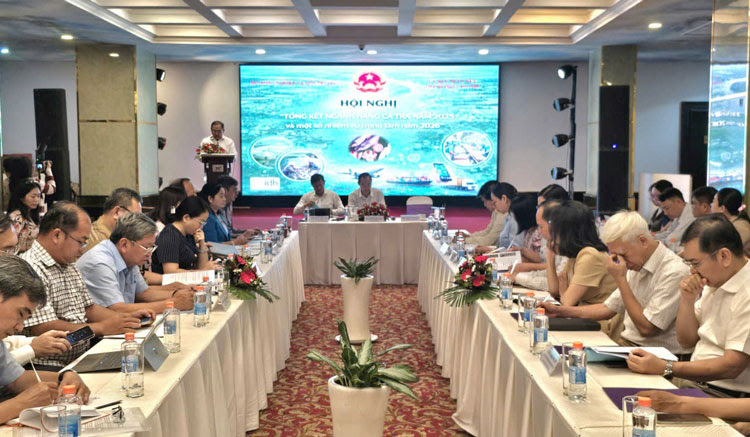 Scene from the 2025 pangasius industry year-end review conference
However, climate change has intensified disease risks and degraded water quality (low water levels in upstream provinces and saltwater intrusion in coastal provinces), thereby increasing demand for disease prevention and treatment chemicals, reducing survival rates and driving up costs for medicines and feed. At the same time, with rising fingerling prices and higher production costs coupled with declining raw fish prices, farmers are hesitant about restocking, leading to a year-on-year contraction in pangasius farming area.
Previously, pangasius production costs averaged around 1 USD/kg, but have now risen to 1.2–1.3 USD/kg, exceeding those of Alaska pollock. As production costs for competing products in the same market segment continue to fall, the competitiveness of Vietnamese pangasius is gradually eroding, placing farmers under increasing financial strain.
Recommendations to improve fingerling quality
Despite record-high fingerling prices, the Association stated that: “The quality of seed stock - one of the most critical links in this key value chain in the Mekong Delta - remains very poor. This necessitates a comprehensive upgrading, particularly as importing markets require all stages of the value chain be standardized. Poor fingerling quality results in low survival rates, while erratic weather conditions make fish more susceptible to off-season diseases.”
The Association recommended that the Ministry of Agriculture and Environment instruct specialized agencies, such as the Research Institute for Aquaculture No. 2, to work in coordination with provincial Departments of Agriculture and Environment to ensure sufficient resources for producing fingerlings that meet standards required by the Mekong Delta pangasius supply chain. This includes continuing the implementation of the three-tier pangasius seed project (focusing on seed quality, infrastructure and funding).
Regulatory authorities are also urged to align planning with actual demand, moving toward the establishment of concentrated pangasius fingerling production zones. In parallel, traceability systems should be strengthened to meet export requirements, while the continued application of standards such as GlobalGAP and ASC in nursing and intensive farming stages. These measures aim to enhance product quality while ensuring environmental protection and biosafety.