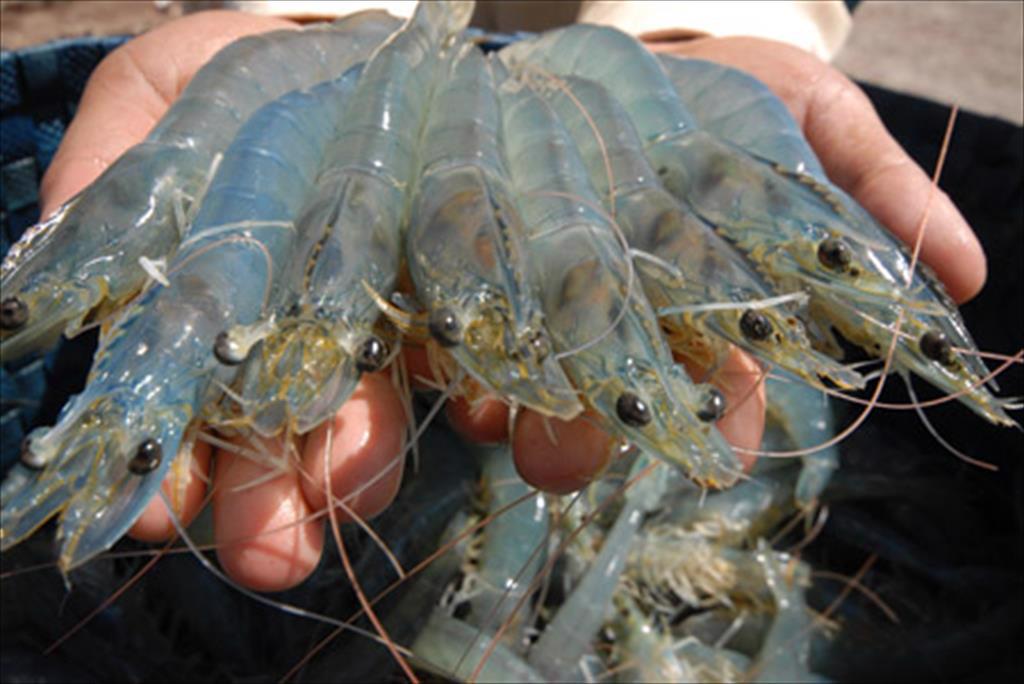
As global integration and sustainability demands intensify, Vietnam, a top-three global shrimp exporter, is strategically transitioning to green practices to elevate its role in the international seafood supply chain.
Deputy Minister of Agriculture and Environment Phung Duc Tien affirmed that shrimp, a key foreign currency earner, has accounted for 13-14% of global export value over the past two decades.
Nguyen Viet Thang, Chairman of the Vietnam Fisheries Society, noted that Vietnamese shrimp now reaches over 100 countries, including such demanding markets as the US, EU, Japan, the Republic of Korea (RoK), Australia, and Canada. Despite a positive 2025 outlook, the industry faces challenges like climate change, high production costs, disease outbreaks, competition from Ecuador and India, geopolitical instability, and stringent standards for food safety, traceability, and environmental protection.
To address these, Tien urged businesses to adopt eco-friendly technologies and digital transformation in shrimp farming. The industry is deploying advanced solutions like Biofloc, Micro-Nano Bubble Oxygen, Recirculating Aquaculture Systems (RAS), and the three-stage shrimp farming model to minimise waste and environmental impact. Biological products are also emerging as a key trend.
Embracing the circular economy, the sector aims to reuse 100% of shrimp by-products like shells, heads, wastewater, and sludge by 2030 to create high-value products.
Globally, Vietnam is studying sustainable models, particularly those from Ecuador, the world’s leading shrimp exporter known for its high output and market growth in China and the US.
Domestically, the southernmost province of Ca Mau is spearheading sustainable shrimp farming. Vice Chairman of the provincial People’s Committee Le Van Su reported that its 280,000 ha of shrimp farms, primarily shrimp-mangrove, shrimp-rice, and integrated extensive models, include tens of thousands of hectares already certified for organic and ecological farming by international bodies. Ca Mau’s eco-shrimp products command premium value in major markets like Europe and Japan, bolstering Vietnam’s reputation as a trusted source of sustainable seafood.
This year, the industry aims for 1.3-1.4 million tonnes in production and 4-4.3 billion USD in export turnover. Encouragingly, shrimp exports topped 605 million USD in the first two months of this year alone, up 46% year-on-year./.
Source: VietnamPlus
(seafood.vasep.com.vn) Vietnam is stepping up efforts to combat illegal fishing, protect marine ecosystems, expand digital monitoring, and develop science-based management to ensure the sea can support communities and the economy for generations to come.
(seafood.vasep.com.vn) The EU remains a critical market for Vietnamese shrimp; however, purchasing demand and import patterns are undergoing notable changes. According to Vietnam Customs data, as of September 15, 2026, Vietnam’s shrimp exports to the EU reached nearly $374 million, down 5% year-over-year and accounting for 10.7% of the country’s total shrimp export value. Meanwhile, the EU’s stotal shrimp imports through July 2026 contracted by 7% in volume, exhibiting divergent trends across Southern Europe, Northwestern Europe and Eastern Europe. These dynamics necessitate that Vietnamese enterprises closely monitor individualized market demand, rather than approaching the EU as a monolithic consumer block.
(seafood.vasep.com.vn) In the first eight months of 2026, Vietnam’s exports of surimi and fish cakes remained relatively stable year-over-year compared to 2025. Following a contraction in the initial months, export performance demonstrated improvement from June onward, peaking in August. However, the recovery has been uneven, characterized by divergent trends across major markets: robust growth was recorded in China, Japan, Malaysia, the United States, and Taiwan, whereas export volumes to South Korea, Indonesia, and select European markets contracted.
(seafood.vasep.com.vn) Pangasius remains one of Dong Thap’s key aquaculture species, with the province focusing on developing an integrated value chain covering seed production, commercial farming, deep processing and by-product utilization. The province is promoting high-tech, circular pangasius farming models featuring reduced water exchange and enhanced biosecurity, aiming to improve production efficiency and strengthen control over raw material quality.
(vasep.com.vn) Vietnam’s seafood exports in September 2026 are estimated at US$1.135 billion, up 11.9% year-on-year, bringing total exports in the first nine months of the year to US$9.103 billion, up 11.4%. Behind this double-digit growth, however, increasingly divergent market trends are emerging: China–Hong Kong and ASEAN posted strong growth, while the U.S., EU and Japan all recorded declines in September.
(vasep.com.vn) In the first eight months of 2026, Brazil became the largest market for Vietnamese tilapia, with export value reaching US$44 million, up 22,142% year-on-year and accounting for 49% of Vietnam’s total tilapia exports. In August alone, exports to Brazil reached US$4 million. However, behind this remarkable growth is a market that is imposing increasingly stringent requirements on imported supplies.
(vasep.com.vn) Vietnam’s tuna exports sustained their upward trajectory in August 2026, though the pace remained modest at just 2%. The month saw divergent trends across key markets: the US maintained its leading position, Japan and Canada improved, Russia surged and the EU continued to experience a steep downturn. These developments suggest that exporters are entering the final months of the year amid a market environment marked by greater uncertainty.
(seafood.vasep.com.vn) Congalsa has acquired the entire charter capital of Lenger Seafood Vietnam, giving it full ownership of the business and its Nam Dinh processing facility.
(seafood.vasep.com.vn) Ninh Binh Province is entering a peak period of action against illegal, unreported and unregulated (IUU) fishing, focusing on thoroughly addressing violations, closely monitoring fishing vessels at ports and preventing vessels from violating regulations and operating illegally in foreign waters ahead of the European Commission’s (EC) upcoming inspection in 2026.
(vasep.com.vn) The application of biotechnology in seed production is increasingly viewed as a strategic imperative to upgrade pangasius fingerling quality, optimize farming efficiency and anchor sustainable industry development.
VASEP - HIỆP HỘI CHẾ BIẾN VÀ XUẤT KHẨU THỦY SẢN VIỆT NAM
Chịu trách nhiệm: Ông Nguyễn Hoài Nam - Phó Tổng thư ký Hiệp hội
Đơn vị vận hành trang tin điện tử: Trung tâm VASEP.PRO
Trưởng Ban Biên tập: Bà Phùng Thị Kim Thu
Giấy phép hoạt động Trang thông tin điện tử tổng hợp số 138/GP-TTĐT, ngày 01/10/2013 của Bộ Thông tin và Truyền thông
Tel: (+84 24) 3.7715055 – (ext.203); email: kimthu@vasep.com.vn
Trụ sở: Số 7 đường Nguyễn Quý Cảnh, Phường An Phú, Quận 2, Tp.Hồ Chí Minh
Tel: (+84) 28.628.10430 - Fax: (+84) 28.628.10437 - Email: vasephcm@vasep.com.vn
VPĐD: số 10, Nguyễn Công Hoan, Ngọc Khánh, Ba Đình, Hà Nội
Tel: (+84 24) 3.7715055 - Fax: (+84 24) 37715084 - Email: vasephn@vasep.com.vn