(seafood.vasep.com.vn) Uncontrolled and widespread aquaculture (NTTS) in Cam Ranh Bay has caused numerous challenges. Alongside enforcement violations, the People’s Committee of Khanh Hoa Province recently issued new regulations on cage-culture aquaculture in the bay.
Cam Ranh Bay is simultaneously developing tourism and aquaculture, aiding poverty reduction and improving improvement for local communities. However, in recent years, spontaneous, large-scale aquaculture has caused negative impacts - not only encroaching on maritime infrastructure but also violating restricted waters.
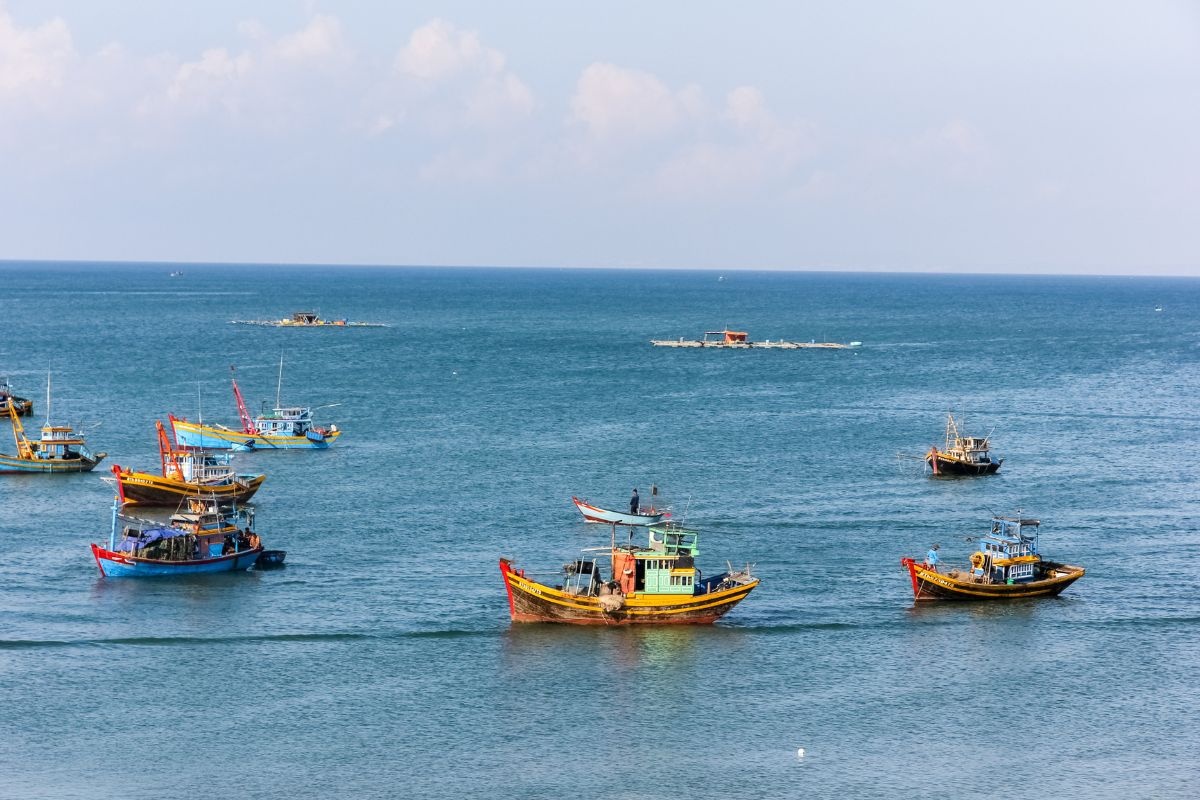
At its peak, over 100,000 submerged and floating cages with floats covering the bay’s surface. This unplanned growth created difficulties for local authorities in management, harmed the bay’s landscape and environment and fueled conflicts between different economic sectors, particularly with encroachment into shipping lanes and restricted zones.
Thanks to patrols, inspections and awareness campaigns urging households to relocate cages from restricted waters, reducing violations significantly. However, as of mid-July 2025, 89 aquaculture households and 5 floating-house households operating illegally in restricted zones.
Moving forward, inter-agency inspection teams will address violations, monitor coastal communes around the bay and ensure households in restricted zones are handled decisively per provincial directives.
Under the new regulations, marine aquaculture cages must meet strict technical and environmental standards: Cages must be made of high-quality HDPE, FRP,etc… Cages must be equivalent, ensuring durability, elasticity, resistant to oxidation, acids, alkalis and impacts; non-polluting, non-toxic to farmed species; cage systems must withstand wind levels 6-7 (38 - 61 km/h), wave height of 2-4m and moderate current speeds (0.5–1 m/s); easy to install.
Vessels used for aquaculture, along with engines and machinery, must ensure safety and prevent fuel or oil leaks that could pollute the water environment.
Equipment and tools used during farming must not harm the cultured species and should be easy to clean, disinfect and sterilize.
Only industrial feed that is within its shelf life and approved for circulation in Vietnam may be used. Farmers are encouraged to gradually replace fresh feed with high-protein industrial feed to help reduce environmental pollution.
Living, resting and eating areas must be kept clean and not interfere with farming activities. Sanitary facilities and waste treatment systems must be arranged separately to ensure no risks of polluting the environment or the farming area.
Storage facilities for materials (chemicals, medicines, feed, and environmental treatment products) must have a roof, be well-ventilated, free from dampness and not directly impact the aquaculture production area. Storage racks must be placed at least 0.3 meters above the floor and away from walls.
The decision also includes regulations on disease prevention and treatment, the use of medicines, chemicals, biological products and environmental treatment products in aquaculture; waste and garbage disposal; treatment of dead aquatic animals; record-keeping and documentation during farming and the installation of cameras on cages and rafts.
Regarding implementation, newly invested cage and raft aquaculture facilities must comply with the following roadmap: by the end of 2025, 10% of existing cages must be converted; in the 2026–2027 period, 50% must be converted and by 2028–2029, all remaining cages must be fully converted.
The Provincial People's Committee assigns commune-level People’s Committees along Cam Ranh Bay with developing plans and implementing the relocation of aquaculture cages to designated sea areas, leading and coordinating with relevant agencies to monitor compliance with legal regulations and collaborating with professional agencies and organizations to promote and encourage public adherence to these regulations.