(seafood.vasep.com.vn) An Giang ranks third in the Mekong Delta in terms of brackish water shrimp farming area, yet its shrimp production is only in fifth place. In reality, the province’s shrimp sector is developing more slowly compared to many other localities in the region.
An Giang has favorable natural conditions and human resources to strongly develop aquaculture, especially the shrimp industry. By 2025, the province aims to expand its brackish water shrimp farming area to 137,000 hectares, with an estimated output of over 155,000 tons. Shrimp farming in An Giang is mainly concentrated in two key ecological zones. The Long Xuyen Quadrangle applies intensive and semi-intensive farming methods on more than 5,000 hectares, while the U Minh Thuong area focuses primarily on the rice–shrimp farming model, covering over 107,000 hectares.
In recent years, many high-tech shrimp farming models have been widely adopted by local farmers and exporters, bringing high economic efficiency. Notable examples include white leg shrimp farming using Biofloc and Semi-Biofloc technology, Recirculating Aquaculture Systems (RAS), and IoT-based sensor applications for remote monitoring of environmental parameters via mobile devices.
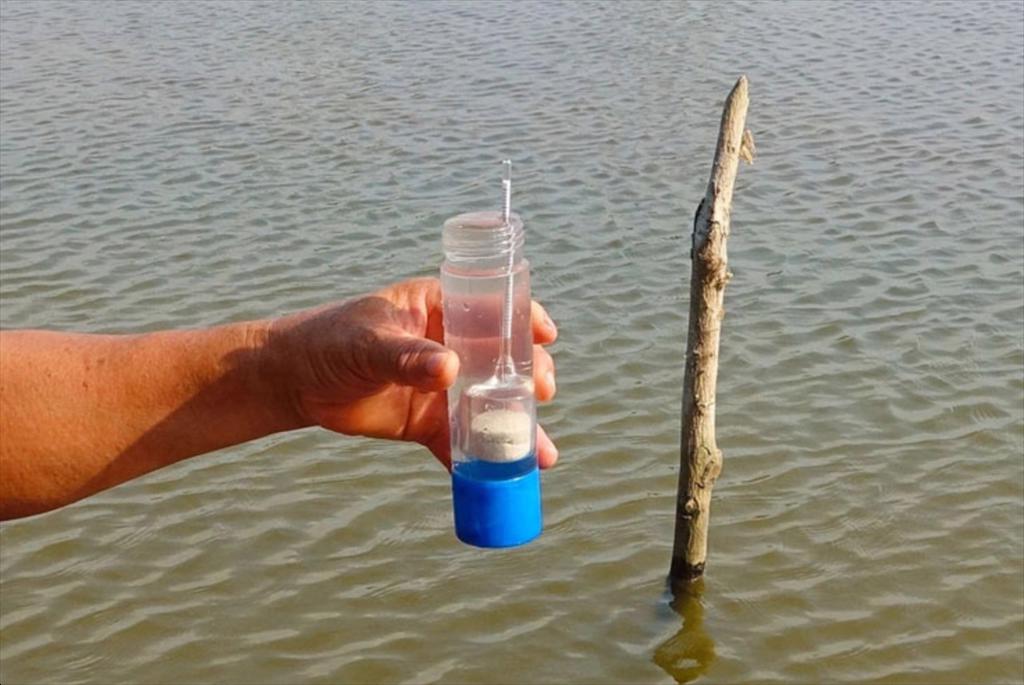
Orientation towards 2030, An Giang will increase its brackish water shrimp farming area to 145,440 hectares
However, the fact remains that An Giang’s shrimp industry is still developing at a slower pace than many provinces and cities in the Mekong Delta. Despite having the third-largest brackish water shrimp farming area in the region, An Giang only ranks fifth in terms of output.
According to industry experts, several factors are hindering the development of the shrimp sector. Infrastructure systems such as electricity, transportation, and irrigation have not met the production expansion needs of exporters and farmers. Although local authorities regularly dredge water supply and drainage canals, they cannot keep up with the rate of sedimentation. In some areas, there is also a shortage of saline water for shrimp farming. In addition, the province has yet to be proactive in producing its own shrimp seed supply.
Looking ahead to 2030, An Giang plans to expand brackish water shrimp farming to 145,440 hectares. To achieve this goal, the province has introduced several solutions. These include building concentrated shrimp farming zones with high-tech applications, converting improved extensive farming areas into intensive shrimp farming in Hon Dat, Kien Luong, Giang Thanh districts, and Ha Tien town. At the same time, An Giang will improve irrigation systems and essential infrastructure to meet over 50% of the demand in key aquaculture zones such as the Long Xuyen Quadrangle and U Minh Thuong.
In addition, the province will focus on developing and expanding high-tech shrimp farming models, including two and three-stage shrimp farming. It will continue to encourage exporters and farmers to apply VietGAP standards as well as international standards in production. Furthermore, production linkages along the value chain will be promoted, from seed, feed, and farming to product consumption. The province will also facilitate investment in brackish water shrimp farming through preferential policies on taxation, land, and credit. Step by step, An Giang aims to build brands, register trademarks, and establish geographical indications for shrimp products characteristic of each farming area in the province.