On the morning of July 17th, the Provincial People's Committee held a meeting of the Steering Committee for combating illegal, unreported, and unregulated fishing and for the sustainable development of the fisheries sector, to assess the results of the first six months of the year and implement key tasks for the coming period.
Vice Chairman of the Provincial People's Committee Ho Huy Thanh chaired the meeting. Also attending were leaders of relevant departments, agencies, localities, and member units of the Provincial Steering Committee for Combating IUU Fishing.
In the first six months of 2026, closely following the directives of the Government, the Prime Minister, and the Ministry of Agriculture and Environment , Ha Tinh province implemented a comprehensive set of tasks and solutions to combat IUU (Illegal, Unreported, and Unregulated) fishing. The Provincial People's Committee and the Provincial IUU Steering Committee issued 3 official dispatches, 3 plans, 2 decisions, and numerous other documents providing guidance and instructions on managing the fishing fleet, controlling the entry and exit of fishing vessels, operating vessel tracking devices, tracing the origin of seafood, and handling violations.
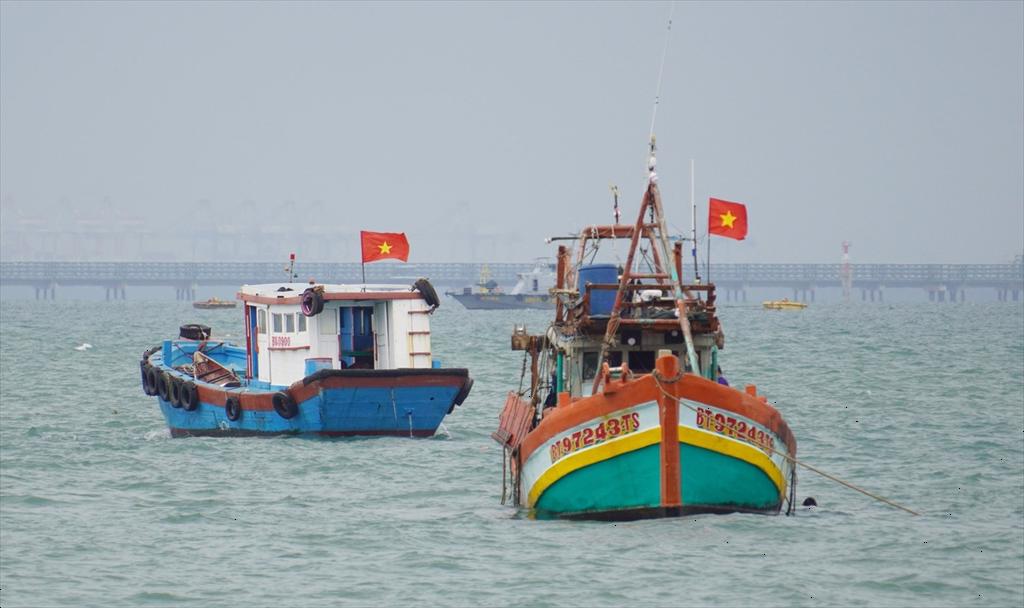
Regarding fleet management, in the first six months of the year, the province registered 127 fishing vessels. To date, Ha Tinh has 3,888 fishing vessels registered and updated in the National Fisheries Database; including 3,564 vessels under 12m in length, 268 vessels from 12m to under 15m, 55 vessels from 15m to under 24m, and 1 vessel 24m or longer. The province has issued fishing licenses to all 3,888 fishing vessels, achieving 100% compliance.
The inspection and control of fishing vessel operating conditions continued to be strengthened. By June 30, 2026, the province had 3,872 out of 3,888 fishing vessels meeting the requirements for marine resource exploitation, reaching 99.59%; 16 vessels remained ineligible due to expired registration or food safety certificates. Local authorities have identified mooring locations, assigned officials to monitor, manage, supervise, and guide vessel owners in completing the necessary procedures.
At the three designated fishing ports of Xuan Hoi, Cua Sot, and Cua Nhuong, the control of fishing vessels entering and leaving the ports is regularly maintained. From January 1st to June 30th, 2026, there were 6,419 vessel arrivals and 6,509 vessel departures; of which 6,143 vessels carried out unloading operations with a total catch of 662 tons of seafood. Procedures for vessel arrivals, departures, and unloading volumes are updated on the Electronic Seafood Traceability System, serving the control and traceability process.
Regarding vessel tracking, by June 30, 2026, all 57/57 fishing vessels operating in offshore waters in the province had installed VMS equipment, achieving 100%. Monitoring showed that Ha Tinh had no cases of exceeding permitted boundaries at sea, no fishing vessels or fishermen violating regulations on illegal fishing in foreign waters; and no cases of brokering or facilitating illegal fishing in foreign waters were detected. The entire province also completed the installation of the eCDT electronic seafood traceability software for all 3,888/3,888 fishing vessels with a length of 6 meters or more, achieving 100%.
Patrols, inspections, and enforcement of violations have been carried out vigorously by functional forces. From the beginning of 2026 to the present, the Border Guard, Fisheries Surveillance, and related forces have detected and handled 42 cases of violations in the fisheries sector, imposing administrative fines totaling 509.25 million VND. Regarding violations related to the disconnection of vessel tracking devices, one case was fined 35 million VND in the first six months of the year; cumulatively from January 1, 2024 to the present, 60 cases have been resolved, with no outstanding cases.
Despite the achievements, the fight against IUU fishing still faces some difficulties. Fishing vessels under 12m account for 3,564 out of 3,888 vessels, equivalent to 91.66%, mainly operating near the shore and having the practice of unloading and selling products at shallow waters. Meanwhile, the entire province only has 3 designated fishing ports, with many shallow waters located 30-50 km from the ports, making it difficult to control catch volume and trace the origin of the catch.
Some fishing vessels still have faded or peeling license plates; some vessel owners have not fully complied with reporting their location when their vessels lose VMS connectivity at shore. From the beginning of the year until now, the entire province has had 11 fishing vessels experiencing VMS connection loss at shore, with 2,050 instances requiring location reporting; of which 1,505 instances reported correctly, reaching 73.41%, while 545 instances did not report or reported incompletely.
In the last six months of 2026, Ha Tinh will continue to thoroughly address existing shortcomings and limitations in the fight against IUU fishing; prepare well for the content and working conditions with the inspection team from the Ministry of Agriculture and Environment in August 2026 and the 6th inspection team from the European Commission, expected in the fourth quarter of 2026. Departments, sectors, and localities with fishing vessels are required to strengthen inspection, supervision, and strict management of the fishing fleet, control catch through ports, and strictly handle violations, contributing to the nationwide effort to lift the European Commission's "yellow card" warning.
Speaking at the meeting, Vice Chairman of the Provincial People's Committee and Head of the Provincial IUU Steering Committee, Ho Huy Thanh, requested that departments, agencies, and localities continue to identify combating IUU fishing as a key and urgent political task; focusing on completely overcoming existing shortcomings and limitations. Functional forces need to strictly manage the fishing fleet, control vessels entering and leaving ports, cross-check data with the fishing port management board; promptly verify and handle cases of VMS disconnection, crossing fishing boundaries, fishing in prohibited areas or using prohibited fishing gear, and other violations.
The Vice Chairman of the Provincial People's Committee also requested the People's Committees of coastal communes and wards to review 100% of fishing vessels in their areas, assigning specific responsibilities to each responsible official; and to promptly address the situation of vessels that are not marked, do not have license plates, or have faded or peeling license plates. At the same time, they should continue to effectively implement the Co-management Project for the Protection of Coastal Fisheries Resources until 2030; strengthen propaganda and training, prepare for the launch of pilot models in Ky Xuan and Thien Cam communes, and mobilize resources to support community organizations to operate effectively and sustainably.
(seafood.vasep.com.vn) As of the end of August 2026, Vietnam’s tilapia exports to the United States reached $21 million, representing a steep 48% year-over-year decline and accounting for 23% of the country's total tilapia export turnover. Frozen fillets accounted for 78% with the remainder consisting of whole frozen tilapia and frozen cuts.
(seafood.vasep.com.vn) After a volatile first half of the year, Vietnam’s pangasius exports to Brazil registered robust growth in July and August 2026. In August alone, export turnover reached $19 million, surging 73% compared to the same period in 2025. Cumulatively for the first eight months, total export value reached $124 million, reflecting an 8% year-over-year increase.
(seafood.vasep.com.vn) Besides modifying their boats, many fishermen in Dak Lak province are making efforts to venture out to sea to harvest seafood during the rough sea season.
(seafood.vasep.com.vn) At the Responsible Seafood Summit and TCRS Shrimp Summit 2026, organized by the GSA (Global Seafood Alliance) in Bangkok, Thailand, the conversation about the future of the shrimp industry began with one of its most important foundations: seedstock quality.
(seafood.vasep.com.vn) In the first eight months of 2026, Vietnam’s tuna exports to Lithuania surpassed $14 million, up 8% year on year. While the increase remains modest, it is notable given the continued pressure on Vietnamese tuna exports to the EU as a whole. More importantly, export turnover to Lithuania has shown a clearer recovery in recent months, making the market a destination worth monitoring for Vietnamese businesses in Europe.
(seafood.vasep.com.vn) Vietnam’s squid and octopus exports exceeded $527 million in the first eight months of 2026, marking a 15% year-on-year increase. This growth is particularly notable given the strong baseline established in 2025, when export turnover for the same period reached $458 million, a 13% rise from 2024.
(seafood.vasep.com.vn) Vietnamese pangasius is gaining traction in Japan, where competitive prices and reliable supplies have helped the fish enter professional distribution channels and a major sushi chain.
(vasep.com.vn) A circular economy does not create a “new type of shrimp” or a new certification. Its value lies in helping the shrimp value chain use resources more efficiently, stabilize production, generate additional value from by-products and build the data and evidence needed to meet increasingly stringent market requirements. This was the perspective shared by VASEP at the Public-Private Partnership (PPP) Forum on Promoting a Circular Economy in the Shrimp Industry in the Mekong Delta, held in Can Tho on September 21.
(vasep.com.vn) Vietnam’s pangasius exports to CPTPP markets reached $264 million in the first eight months of 2026, up 12% year-on-year and accounting for 17% of the nation’s total pangasius export turnover. In August alone, export value reached $34 million, inching up 3%.
(seafood.vasep.com.vn) Golden pompano is being selected as a high-value species for the development of high-tech marine aquaculture in Lam Dong Province. In 2026, the provincial Agricultural Extension Center launched a golden pompano farming model using circular HDPE cages in Lien Huong Commune, opening opportunities to apply technology to marine farming at a scale suited to local coastal conditions.
VASEP - HIỆP HỘI CHẾ BIẾN VÀ XUẤT KHẨU THỦY SẢN VIỆT NAM
Chịu trách nhiệm: Ông Nguyễn Hoài Nam - Phó Tổng thư ký Hiệp hội
Đơn vị vận hành trang tin điện tử: Trung tâm VASEP.PRO
Trưởng Ban Biên tập: Bà Phùng Thị Kim Thu
Giấy phép hoạt động Trang thông tin điện tử tổng hợp số 138/GP-TTĐT, ngày 01/10/2013 của Bộ Thông tin và Truyền thông
Tel: (+84 24) 3.7715055 – (ext.203); email: kimthu@vasep.com.vn
Trụ sở: Số 7 đường Nguyễn Quý Cảnh, Phường An Phú, Quận 2, Tp.Hồ Chí Minh
Tel: (+84) 28.628.10430 - Fax: (+84) 28.628.10437 - Email: vasephcm@vasep.com.vn
VPĐD: số 10, Nguyễn Công Hoan, Ngọc Khánh, Ba Đình, Hà Nội
Tel: (+84 24) 3.7715055 - Fax: (+84 24) 37715084 - Email: vasephn@vasep.com.vn