In order to develop effective and sustainable aquaculture, proactively adapt to climate change, improve productivity, quality, value and competitiveness of aquaculture products, meet the requirement of the domestic and export markets, the People's Committee of Ba Ria - Vung Tau province has issued a Decision approving the Action Plan to implement Decision No. 985/QD-TTg dated August 16, 2021 of the Prime Minister. This Decision regulates the promulgation of the National Program for Aquaculture Development in the 2021-2030 period in Ba Ria - Vung Tau province.
Accordingly, the whole province strives to have a total aquaculture production of 20,000 tons/year by 2025; take the initiative in producing and nursing to supply enough quality aquaculture seed for the main farming species (black tiger shrimp, vannamei shrimp), and other high economic value aquatic species; give priority to the development of high-tech aquaculture, cage aquaculture on the sea, coast and islands; encourage the development of aquaculture with entertainment, fine arts and jewelry properties in the direction of producing goods for tourism and export; building a chain of production, processing and consumption, ensuring stable output for over 30% of aquaculture product output; develop and implement plans for environmental monitoring, warning and monitoring in aquaculture; develop and implement a plan for prevention of aquatic diseases.
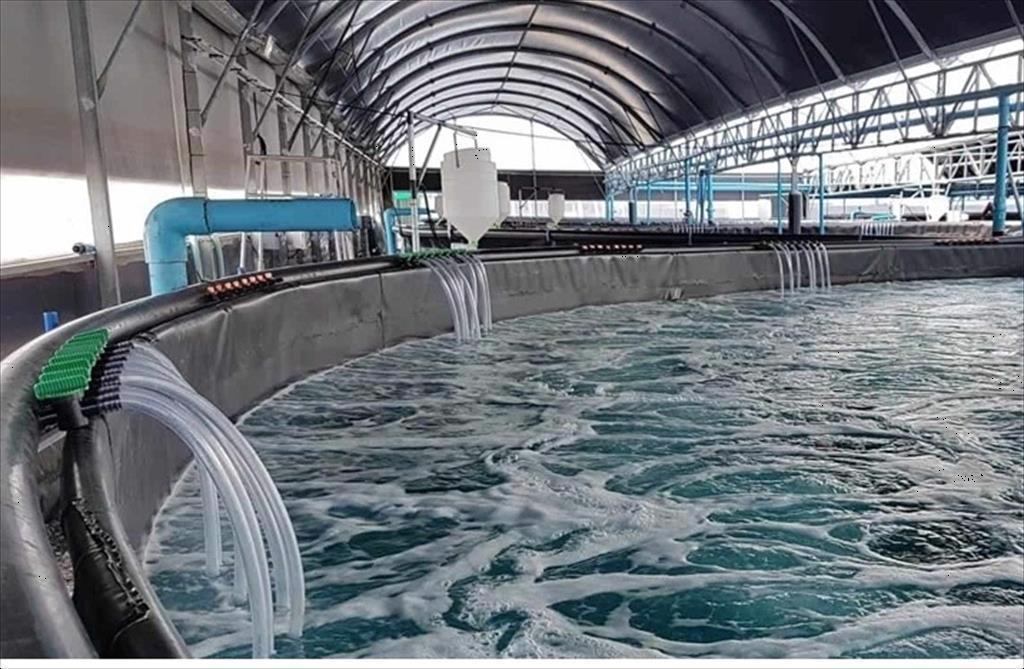
High technology application helps to balance the problem of economic - environmental efficiency in aquaculture.
Along with that, by 2030, the total aquaculture production will reach 23,000 tons/year; take the initiative in production and rearing in order to fully supply quality aquaculture seed for the main farming species (black tiger shrimp, vannamei shrimp), aquatic species of high economic value; improve the quality of breeding aquatic species with high economic value and large volume of commodity products; develop high-tech aquaculture, cage aquaculture on sea, coastal areas and islands; develop aquaculture for entertainment, fine arts and jewelry in the direction of producing goods for tourism and export; building a chain of production, processing and consumption, ensuring stable output for over 50% of aquaculture product output; develop and implement plans for environmental monitoring, warning and monitoring in aquaculture; develop and implement a plan for prevention of aquatic diseases.
In addition, the province also plan to implement a number of key tasks and solutions, such as: development of aquatic seed production; aquaculture development; invest in upgrading aquaculture infrastructure; develop the system of production, supply of materials and aquaculture supporting industries; improve the quality of human resources and production organization; research and apply technology in aquaculture.
On the other hand, the Provincial People's Committee requires relevant agencies and units to comply with the direction of the Government, the Ministry of Agriculture and Rural Development as well as the actual conditions of the locality to effectively implement the Plan. The province will implement aquaculture development action plan; follow a specific roadmap to ensure aquaculture development is harmonized with the development of other economic sectors, avoid overlapping and conflicts in the general planning space of the province; allocate resources and funds to ensure implementation, and at the same time take advantage of central support and other lawful capital sources to carry out the tasks of the Plan.
Compiled by Thuy Linh
(seafood.vasep.com.vn) Tilapia is easy to farm and provides high economic and nutritional value, making it a sought-after export commodity in many countries.
(seafood.vasep.com.vn) Vietnam’s seafood exports in the first 10 months of 2025 recorded significant progress, reaching more than USD 9.5 billion, up 15% year-on-year. This result reflects the sector’s persistent efforts amid a highly volatile market, especially policy shocks from the US Although signs of slowdown emerged in the third quarter due to countervailing taxes, key product groups still maintained strong momentum and created a foundation for full-year exports to reach USD 11 billion.
(seafood.vasep.com.vn) Vietnam’s agreement with the United States on a framework for reciprocal, fair, and balanced trade—reached during the 2025 ASEAN Summit in Malaysia—has generated strong optimism for Vietnamese exports, including tuna. Numerous positive points in the joint statement have raised high expectations for Vietnamese export goods, but turning these expectations into tangible benefits remains a long and challenging journey.
(seafood.vasep.com.vn) At the conference on “Linking the Production and Consumption Chain of Ca Mau Crab 2025,” Vice Chairman of the Ca Mau Provincial People’s Committee Lê Văn Sử posed a central question: how to shift the province’s crab exports toward official trade channels, instead of relying heavily on small-scale border trade with China as currently practiced.
(seafood.vasep.com.vn) The whitefish market in Japan is showing a clear divergence among supplying countries, in which Vietnam continues to affirm its role as a stable and high-potential exporter. Vietnam currently ranks third after the US and Russia in whitefish export value to Japan. Thanks to tariff incentives and the ability to meet Japan’s strict standards, Vietnamese pangasius continues to record a stable and positive growth trend.
(seafood.vasep.com.vn) The People's Committee of Ca Mau Province has just issued a plan to expand the super-intensive, low-water-exchange, biosecure white-leg shrimp farming model (RAS-IMTA) for whiteleg shrimp farming to a scale of 1,500 hectares, aiming to develop high-tech, sustainable and environmentally friendly shrimp farming.
(seafood.vasep.com.vn) Sa Giang Import-Export Joint Stock Company (HNX: SGC) plans to issue over 7.1 million shares to raise nearly 465 Billion VND for Hoan Ngoc M&A Deal.
(seafood.vasep.com.vn) According to Rabobank, global tilapia production is forecast to exceed 7 million tons in 2025, driven by a strong recovery in major producing countries including China, Indonesia, Egypt, Bangladesh and Vietnam. Among them, Vietnam is emerging as a potential tilapia supplier in the global supply chain, capitalizing on market fluctuations to expand production and exports.
By the end of Q3/2025, Vietnam’s seafood industry recorded a clear recovery as a series of leading companies reported strong profits — some even achieving the highest results in their history. After several quarters struggling with high costs and weakened demand, the latest business results indicate a robust comeback across the industry.
(seafood.vasep.com.vn) On November 12 in Ho Chi Minh City, the Embassy of the Netherlands, in coordination with the Ministry of Agriculture and Environment, organized the Vietnam–Netherlands Business Forum under the theme “Shaping the future of sustainable aquaculture in the Mekong Delta.”
VASEP - HIỆP HỘI CHẾ BIẾN VÀ XUẤT KHẨU THỦY SẢN VIỆT NAM
Chịu trách nhiệm: Ông Nguyễn Hoài Nam - Phó Tổng thư ký Hiệp hội
Đơn vị vận hành trang tin điện tử: Trung tâm VASEP.PRO
Trưởng Ban Biên tập: Bà Phùng Thị Kim Thu
Giấy phép hoạt động Trang thông tin điện tử tổng hợp số 138/GP-TTĐT, ngày 01/10/2013 của Bộ Thông tin và Truyền thông
Tel: (+84 24) 3.7715055 – (ext.203); email: kimthu@vasep.com.vn
Trụ sở: Số 7 đường Nguyễn Quý Cảnh, Phường An Phú, Quận 2, Tp.Hồ Chí Minh
Tel: (+84) 28.628.10430 - Fax: (+84) 28.628.10437 - Email: vasephcm@vasep.com.vn
VPĐD: số 10, Nguyễn Công Hoan, Ngọc Khánh, Ba Đình, Hà Nội
Tel: (+84 24) 3.7715055 - Fax: (+84 24) 37715084 - Email: vasephn@vasep.com.vn